



Type N (NBR 14136 / IEC 60906-1) - The Brazilian Mains Plug
Three round pins in a triangle - the IEC 60906-1 attempt at a global plug standard, adopted by Brazil and South Africa.
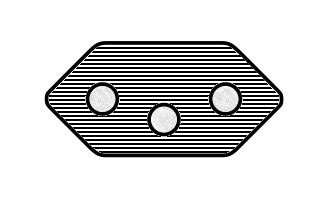
The Type N plug per NBR 14136 is electrically identical to IEC 60906-1 - the international standard proposed in 1986 as a global mains plug. Three round 4 mm pins arranged in a small triangle (earth at top, line and neutral below), recessed socket throat for finger safety. Rated 10 A or 20 A. Brazil made it mandatory in 2010, replacing a previous mix of Type A, B and C. South Africa adopted it as SANS 164-2 in 2018 to replace Type M. The plug is also Europlug-compatible: a Type C plug fits Type N sockets without protective earth.
Technical Specifications
| Standard | NBR 14136 / IEC 60906-1 / SANS 164-2 |
| Rated current | 10 A or 20 A |
| Rated voltage | 127 / 220 V AC (Brazil), 230 V (SA) |
| Pins | 3 round 4 mm in triangle |
| Recessed socket | Yes (finger safety) |
| Europlug compatibility | Yes (Type C fits) |
| Countries | Brazil (mandatory), South Africa (rollout since 2018) |
Matching products in the shop
Frequently Asked Questions
Why was IEC 60906-1 not adopted globally?
Each country protects its installed base of millions of sockets. A worldwide replacement would cost trillions and serves no urgent purpose. Only Brazil and South Africa moved to the standard from scratch.
Is Brazilian voltage really mixed?
Yes - parts of Brazil use 127 V (older grids), others 220 V (newer grids), depending on the city / state. Always check the rating before plugging in.
Type N is just a smaller Type J?
Visually similar but not compatible. Type J (Swiss) has hexagonal pin arrangement and 10 mm pin spacing; Type N is triangular with smaller spacing. Plugs do NOT interchange.
Related connectors in the glossary
- Type M - the previous SA standard
- Europlug Type C - compatible
- Type J - Swiss similar geometry
- World Plug Atlas
Procurement & engineering support: Phone +49 7666 88499-0 · sales@industry-electronics.com · B2B pricing, volume discounts, custom assemblies on request.