
Elsner 70681 built-in presence/light/climate sensor pure white
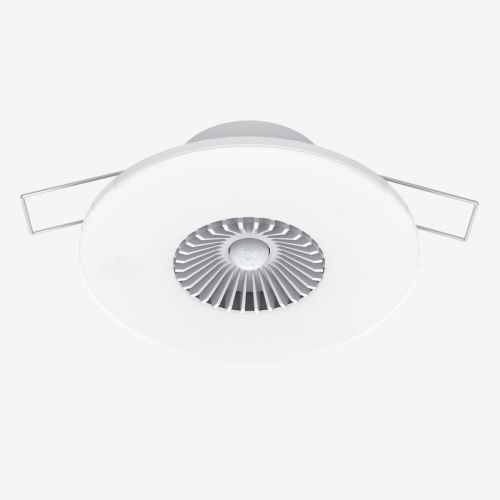
Elsner 70681 built-in presence/light/climate sensor pure white
| Lieske Part No. | 833089 |
|---|---|
| Mfg Part No | 70681 |
| EAN-Code | 4051996706816 |
| Manufacturer | Elsner |
| Here only | 223,53 EUR
266,00 EUR incl. VAT
|
Further information for Elsner 70681 built-in presence/light/climate sensor pure white
| General | |
| Housing plastic, glass | plastic, glass |
| Colours (similar) | RAL 9010 (white), RAL 9005 (black) |
| Dimensions (Ø × H) | 80mm × 36mm |
| Degree of protection | IP30 |
| Weight total | ≈ 50 g |
| Ambient temperature | 5…+45°C |
| Ambient air humidity (rH) (non-condensing) | 5...95% |
| Storage temperature | 25...+70°C |
| Over voltage category | III |
| Pollution degree | 2 |
| KNX bus | |
| Medium | TP1-256 |
| Configuration mode | S-Mode |
| Maximum group addresses | 254 |
| Maximum assignments | 254 |
| Communication objects | 252 / 122 |
| Nominal voltage | 30V DC SELV |
| Electricity consumption | ≤ 10mA |
| Connection KNX plug-in terminal conductor diameter | 0.8mm s |
| Connection KNX plug-in terminal stripping length | 5mm |
| Time until data reception after bus voltage recovery | ≈ 5 s |
| Sensors | |
| Detection method presence passive infrared technique | PIR |
| Presence detection angle | ≈ 94° × 82° |
| Presence detection range | ≈ 5 m |
| Brightness measurement range | 0 Lux … 2000 Lux |
| Temperature measurement range | 5…+60 °C |
| Humidity measurement range (rH) | 0...100 % |
Applications
The sensor is intended for integration into intelligent building automation systems, particularly in residential and office buildings where automated control of lighting, climate, and ventilation is required. It is suitable for rooms with low to medium ceiling height, as the presence detection has a range of approximately 5 m and a detection angle of about 94° × 82°. Light level measurement is performed in the range of 0 Lux to 2000 Lux, sufficient for typical indoor conditions. Temperature measurement covers 5 °C to +60 °C, while relative humidity is detected from 0 % to 100 %. These data are used to calculate the dew point and monitor the comfort zone according to DIN 1946.
Functions and Equipment in Detail
The sensor detects human presence using passive infrared (PIR) technology. Light level measurement enables automatic adjustment of lighting to ambient light conditions. Temperature and humidity sensors provide data for room climate control. The sensor can receive external temperature and humidity values via the KNX bus and combine them with internal measurements to calculate mixed values (e.g., room average). The proportions of internal and external values are adjustable in percentage terms. Integrated PI controllers regulate heating and cooling based on temperature and ventilation based on humidity. Ventilation control can be single- or two-stage, distinguishing between exhaust and supply ventilation. Additionally, two value comparators are integrated, which can calculate minimum, maximum, or average values from up to five received values.
Technology Explained Simply
The sensor communicates via the KNX bus medium TP1-256 in S-Mode. The nominal voltage is 30 V DC SELV, with current consumption limited to ≤ 10 mA. Configuration is performed using the KNX software ETS. The maximum number of group addresses and assignments is 254 each. Communication objects are equipped with 252 inputs and 122 outputs. The integrated KNX terminal allows connection of conductors with a diameter of 0.8 mm s and a stripping length of 5 mm. After bus voltage is restored, it takes approximately 5 seconds before data can be received. Overvoltage category III and pollution degree 2 meet requirements for indoor installations.
Compatibility and Accessories
The sensor is designed for use in KNX systems and can communicate with other KNX devices. Integrated logic gates (4 AND and 4 OR gates) allow linking of states, with inputs derived from switching events or communication objects. The outputs of the gates can be configured as either 1 bit or 2 x 8 bits. Configuration is done via ETS software. The device includes pre-mounted clips for hollow ceiling installation and a mounting ring for recessed installation. A data sheet with installation instructions (in German, English, French, Italian, Spanish) and a manual (available as download) are included in the delivery scope.
Installation and Mounting
Mounting is performed either in hollow ceilings using the pre-mounted clips or in a recessed mounting box using the included mounting ring. Installation requires connection to the KNX bus via the integrated terminal. The connecting conductors must have a diameter of 0.8 mm s and a stripping length of 5 mm. The device address is assigned via ETS software. Configuration of sensor settings, such as thresholds, control parameters, and logic functions, is also done via ETS software. Installation should be carried out according to the instructions in the data sheet.
Operational Advantages
The sensor enables automated and energy-efficient control of lighting and room climate. Integrated functions such as mixed value calculation, PI control, and logic linking reduce the need for additional control devices. The warning when leaving the comfort zone according to DIN 1946 supports room climate control. The use of communication objects for data transmission and processing allows flexible adaptation to different requirements. Configuration via ETS ensures standardized and documentable device settings.

This is an offer of:
79279 Vörstetten
https://industry-electronics.com
Tel. 07666/88499-0
Fax. 07666/88499-111
Diesen Artikel finden Sie unter:
industry-electronics.com/artikel/833089

Lieske Elektronik e.K.
Reutener Str. 1079279 Vörstetten
https://industry-electronics.com
Tel. 07666/88499-0
Fax. 07666/88499-111
Diesen Artikel finden Sie unter:
industry-electronics.com/artikel/833089