
Dold 0001039 insulation monitor 230V 50kOhm
Industrial Material > Industrial relays and contactors > Switching units / measuring, control relay
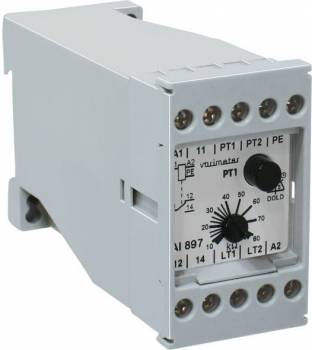
Dold 0001039 insulation monitor 230V 50kOhm
| Lieske Part No. | 887807 |
|---|---|
| Mfg Part No | 0001039 |
| EAN-Code | 4030641010393 |
| Manufacturer | Dold |
| Here only | 327,29 EUR
389,48 EUR incl. VAT
|
Further information for Dold 0001039 insulation monitor 230V 50kOhm
| General | |
| Manufacturer | Dold |
| Product type | insulation monitor |
| Operating voltage | 230 V |
| Frequency range | 45-400 Hz |
| Insulation resistance | 50 kOhm |
Applications
The insulation monitor is used in electrical installations where high insulation integrity is required to avoid short circuits, sparking, or dangerous touch voltages. Typical applications include pump stations, heating systems, industrial machines, or installations in high-humidity environments, where insulation may be impaired by moisture or contamination. The device is suitable for operating frequencies between 45 and 400 Hz, making it usable in a wide range of installations, including those with frequency converters.
Functions and Equipment in Detail
The AI897.07AC45-400HZ230V50K-OHM monitors insulation resistance in an electrical network and compares it with a set threshold value. If this value is undershot, a signal is triggered, for example activating a warning light or alarm. The setting is adjusted via a potentiometer, which defines the threshold value for insulation resistance. The built-in resistance is 50 kOhm, which affects the measurement accuracy and reliability of the monitoring. The device is designed for operation at a voltage of 230 V, making it suitable for standard networks in Europe.
Technology Explained Simply
The insulation monitor operates on the principle of resistance measurement. It measures the electrical resistance between the conductors and the protective earth (PE) or grounding point. A high resistance indicates intact insulation, while a low resistance indicates insulation degradation or a fault. The measurement is continuous, allowing a warning to be triggered before a fault occurs. The frequency range of 45 to 400 Hz enables use in installations with variable frequency, such as those with frequency converters. The operating voltage of 230 V is standard in most industrial and commercial installations in Europe.
Compatibility and Accessories
The device is designed for use in alternating current installations and is compatible with standard network voltages of 230 V at 50 Hz. It can be integrated into existing control systems, provided the electrical parameters match. Exact mounting and integration must follow the technical specifications of the respective system manufacturer.
Mounting and Installation
Mounting is carried out in a suitable enclosure or distribution unit. The device is designed for mounting on a screw or terminal strip. The connection terminals are designed for connection with cables according to the rated voltage and current. Installation requires compliance with applicable VDE and EN standards, as well as safety regulations for electrical installations.
Advantages in Operation
Continuous monitoring of insulation quality enables early detection of insulation defects, increasing the safety of the installation and reducing the risk of fires or electrical accidents. The simple operation via a potentiometer for threshold setting facilitates adaptation to different requirements. The high frequency range of 45 to 400 Hz makes the device flexible for use, even in installations with frequency converters. The operating voltage of 230 V is widely used in industry, simplifying integration into existing systems.

This is an offer of:
79279 Vörstetten
https://industry-electronics.com
Tel. 07666/88499-0
Fax. 07666/88499-111
Diesen Artikel finden Sie unter:
industry-electronics.com/artikel/887807

Lieske Elektronik e.K.
Reutener Str. 1079279 Vörstetten
https://industry-electronics.com
Tel. 07666/88499-0
Fax. 07666/88499-111
Diesen Artikel finden Sie unter:
industry-electronics.com/artikel/887807