
Zyxel 91-010-204001B SFP-SX-D Gigabit Transceiver
Networks > Router
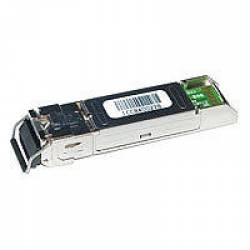
Zyxel 91-010-204001B SFP-SX-D Gigabit Transceiver
| Lieske Part No. | 373975 |
|---|---|
| Mfg Part No | 91-010-204001B |
| EAN-Code | 4718937510344 |
| Manufacturer | Zyxel |
| Here only | 40,04 EUR
47,65 EUR incl. VAT
|
Further information for Zyxel 91-010-204001B SFP-SX-D Gigabit Transceiver
| Certificates | |
| Safety | Class 1 Laser, CSA, TUV, 21 CFR 1040.10 & 1040.11 |
| Features | |
| Form factor | Plug-in |
| Logistics data | |
| Harmonized System (HS) code | 85369010 |
| Operational conditions | |
| Operating temperature (T-T) | 0 - 70 °C |
| Storage temperature (T-T) | -40 - 85 °C |
| Operating relative humidity (H-H) | 5 - 95% |
| Other features | |
| Dimensions (WxDxH) | 56 x 13.4 x 12.46 mm |
| Performance | |
| Maximum data transfer rate | 1000 Mbit/s |
| Maximum transfer distance | 550 m |
| Wavelength | 850 nm |
| Cabling technology | 1000Base-LHX |
| Technical data | |
| GBIC application site | Standard |
| Mode | Multimode SX |
| GBIC compatibility | uncoded |
| SFP | SFP |
| Speed Mini-GBIC | 1000Mbit |
| Distance | 500m |
| Weight & dimensions | |
| Width | 56 mm |
| Depth | 13.4 mm |
| Height | 12.5 mm |
Applications
The module is designed for networks requiring fiber optic connection via multimode cables, for example in local area networks (LAN) or industrial environments where high data rates over medium distances are required. The maximum transmission distance is 550 meters, making it suitable for connections within buildings or between adjacent rooms. The operating temperature range of 0 to 70 °C and storage temperature range of -40 to 85 °C indicate a robust construction suitable for use in environments with variable temperatures.
Functions and Equipment in Detail
The SFP-SX-D module is designed as a multimode SX transceiver, meaning it is optimized for use with multimode fiber optic cables. The connection is made via an LC connector, which is standardized for compact and secure fiber optic connections in switches and other network devices. The maximum data transfer rate of 1000 Mbit/s enables a full-duplex Gigabit Ethernet connection, sufficient for modern network requirements. The relative humidity during operation is 5 to 95 %, allowing flexible use in various indoor conditions.
Technology Explained Simply
The module uses the 1000Base-LHX technology, part of the IEEE 802.3z standardization for Gigabit Ethernet. The designation SX stands for Short Wavelength, indicating the use of 850 nm wavelength, typical for multimode fiber optic cables. The SFP technology (Small Form-factor Pluggable) enables a compact form factor, allowing multiple ports to be integrated into a single switch. The hot-plug capability means the module can be inserted or removed during operation without interrupting network service.
Compatibility and Accessories
The module is compatible with all switch models that support a Mini-GBIC slot. It is unkeyed, enabling universal use with various manufacturers. Suitable accessories include other SFP modules such as the ALL4750 SFP (Mini-GBIC) for multimode connections or the ALL4751-INDU for singlemode connections with industrial temperature resistance. The use of SFP modules allows flexible adaptation of the network topology to different requirements.
Installation and Mounting
Installation is performed by simply inserting the module into the corresponding SFP slot of the switch. The hot-plug capability allows mounting without switching off the device. The module dimensions are 56 mm (width) × 13.4 mm (depth) × 12.5 mm (height), conforming to the compact form factor standard for SFP modules. The mechanical construction is designed to function in standard switch ports without additional tools or adapters.
Operational Advantages
The module provides reliable and fast data transmission over fiber optic, with multimode technology offering a cost-effective solution for medium distances. The hot-plug capability and compact form factor increase network flexibility and maintainability. Certification according to Class 1 Laser, CSA, TUV, as well as 21 CFR 1040.10 & 1040.11 ensures safety and proper operation. The use of standard technologies such as IEEE 802.3z and SFP MSA guarantees interoperability with devices from various manufacturers.

This is an offer of:
79279 Vörstetten
https://industry-electronics.com
Tel. 07666/88499-0
Fax. 07666/88499-111
Diesen Artikel finden Sie unter:
industry-electronics.com/artikel/373975

Lieske Elektronik e.K.
Reutener Str. 1079279 Vörstetten
https://industry-electronics.com
Tel. 07666/88499-0
Fax. 07666/88499-111
Diesen Artikel finden Sie unter:
industry-electronics.com/artikel/373975