
Weidmüller 9025740000 wire end sleeve 0,25 mm²
Installation > Terminals > Sleeves, blank - isolated
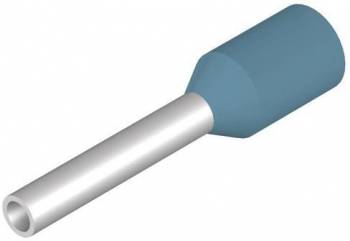
Weidmüller 9025740000 wire end sleeve 0,25 mm²
| Lieske Part No. | 385033 |
|---|---|
| Mfg Part No | 9025740000 |
| EAN-Code | 4008190092054 |
| Manufacturer | Weidmüller |
| Here only | 37,52 EUR
44,65 EUR incl. VAT
|
Further information for Weidmüller 9025740000 wire end sleeve 0,25 mm²
| General | |
| Material | Copper, galvanically tinned |
| Conductor cross section | 0,25 mm² |
Wire end ferrule
The wire end ferrule is specifically designed for use with flexible, stripped conductors. It prevents fraying of the conductor strands and protects them from mechanical stress, thereby increasing the service life of the connection. The ferrule is applied to the conductor using a crimping tool, creating a firm, electrically conductive connection. The connection is suitable for use in electrical installations where secure contact is required.
Material and coating
The wire end ferrule is made of copper, which is galvanically tinned. The tinning protects the copper from corrosion and oxidation, maintaining electrical conductivity over time. The galvanic tinning ensures an even coating and high mechanical strength, which is necessary for the crimp connection. The material is suitable for use in electrical installations where high reliability of the connection is required.
Conductor cross-section and dimensions
The wire end ferrule is designed for conductors with a conductor cross-section of 0.25 mm². The length of the ferrule is 6 mm, providing sufficient coverage of the stripped conductor ends. The precise fit ensures that the ferrule sits securely on the conductor and enables a firm crimp connection. The dimensions are chosen to be suitable for typical flexible conductors used in electrical installations.
Applications
The wire end ferrule is used in electrical installations where a secure and durable connection of flexible conductors is required. It is particularly suitable for applications in building electrical systems, machine construction, and industrial plants, where high mechanical load capacity and electrical reliability are required. The ferrule is often used in conjunction with crimping tools to create the connection.
Functions and equipment in detail
The wire end ferrule protects the stripped conductor ends from mechanical damage and oxidation. Crimping creates a firm, electrically conductive connection that remains stable over time. The galvanic tinning of the copper ensures high corrosion resistance, increasing the service life of the connection. The ferrule is suitable for use in electrical installations where secure contact is required.
Technology explained simply
The wire end ferrule is applied to the conductor using a crimping tool. The ferrule is fixed to the conductor by mechanical pressure, creating a firm, electrically conductive connection. The galvanic tinning of the copper protects the connection from corrosion and oxidation, maintaining electrical conductivity over time. The ferrule is designed to provide sufficient coverage of the stripped conductor ends to ensure a secure connection.
compatibility and accessories
The wire end ferrule is designed for use with flexible conductors having a conductor cross-section of 0.25 mm². It is used in conjunction with crimping tools to create the connection. The application is in electrical installations where a secure and durable connection is required.
Installation and mounting
Mounting is done by crimping the wire end ferrule onto the stripped conductor. A suitable crimping tool is used to firmly press the ferrule onto the conductor. The length of the ferrule is 6 mm, providing sufficient coverage of the conductor ends. The connection is immediately ready for use after crimping and can be integrated into electrical installations.
Advantages in operation
The wire end ferrule ensures a durable, stable electrical connection that is protected from mechanical stress and oxidation. The galvanic tinning of the copper increases corrosion resistance and ensures high electrical conductivity over time. The connection is easy and quick to create, reducing installation time. The ferrule is suitable for use in electrical installations where high reliability is required.

This is an offer of:
79279 Vörstetten
https://industry-electronics.com
Tel. 07666/88499-0
Fax. 07666/88499-111
Diesen Artikel finden Sie unter:
industry-electronics.com/artikel/385033

Lieske Elektronik e.K.
Reutener Str. 1079279 Vörstetten
https://industry-electronics.com
Tel. 07666/88499-0
Fax. 07666/88499-111
Diesen Artikel finden Sie unter:
industry-electronics.com/artikel/385033