
Vertiv ACS8048DAC-404 PERP 8-way
Accessories > KVM > 8 Policy
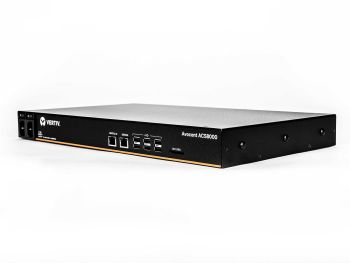
Vertiv ACS8048DAC-404 PERP 8-way
| Lieske Part No. | 1428540 |
|---|---|
| Mfg Part No | ACS8048DAC-404 |
| EAN-Code | 0636430086415 |
| Manufacturer | Vertiv |
| Here only | 5.702,67 EUR
6.786,18 EUR incl. VAT
|
Further information for Vertiv ACS8048DAC-404 PERP 8-way
| Certificates | |
| Certification | FCC Class A, CE Class A (EU), ICES-003 (Canada), VCCI (Japan), RCM (Australia), Customs Union (CU), KCC (Korea), UL (USA), cUL (Canada), EN-60950 (EU), CB, Customs Union (CU) |
| Features | |
| Product colour | Black |
| Rack mounting | |
| Internal modem | |
| Zero Touch Provisioning (ZTP) | |
| Web-based management | |
| Temperature sensor | |
| Management features | |
| Management protocols | CLI, HTTP/ HTTPS, SNMP |
| Memory | |
| Flash memory | 16000 MB |
| RAM capacity | 1024 MB |
| RAM type | DDR3L |
| eMMC capacity | 16 GB |
| Network | |
| Copper ethernet cabling technology | 10BASE-T, 100BASE-T, 1000BASE-T |
| Cable types supported | Cat5, Cat5e, Cat6, Cat6+, Cat6a, Cat6e, Cat7, Fiber |
| Operational conditions | |
| Operating temperature (T-T) | -10 - 60 °C |
| Storage temperature (T-T) | -20 - 70 °C |
| Operating relative humidity (H-H) | 20 - 80% |
| Storage relative humidity (H-H) | 5 - 95% |
| Ports & interfaces | |
| Console port | RJ-45 |
| Serial ports quantity | 48 |
| USB 2.0 ports quantity | 8 |
| Ethernet LAN (RJ-45) ports | 2 |
| SFP module slots quantity | 2 |
| AC outlet types | C13 coupler |
| Power | |
| Power source type | AC |
| AC input voltage | 108 - 240 V |
| AC input frequency | 50 - 60 Hz |
| Power consumption (typical) | 20 W |
| Power consumption (max) | 35 W |
| Input current | 0.1 A |
| Number of power supply units | 2 |
| Processor | |
| Processor family | ARM Cortex-A9 |
| Processor architecture | ARM Cortex-A9 |
| Processor cores | 2 |
| Processor frequency | 667 MHz |
| Security | |
| Security algorithms | 3DES, 128-bit AES, 192-bit AES, 256-bit AES, AES, FIPS 140-2, HTTPS, IPSec, SHA-256, SNMP, SNMPv3, SSH, SSH-2 |
| Authentication method | LOCAL,LDAP,RADIUS,TACACS+ and OneTimePasswords(OTP) |
| IP address filtering | |
| One-time password (OTP) | |
| Software | |
| Operating system installed | Embedded LINUX |
| Technical details | |
| Safety | UL (USA), cUL (Canada), EN-60950 (EU), CB, Customs Union (CU) |
| Weight & dimensions | |
| Dimensions (WxDxH) | 438.2 x 241.3 x 44.5 mm |
| Weight | 3.4 kg |
Applications include secure remote management of servers, network units, and test environments, particularly in environments where direct physical access is not available. The server is suitable for use in data centers where high availability and security are required. Integrated support for rack PDUs from Vertiv™, ServerTech, APC, Raritan, and Eaton, as well as for Vertiv GXT4 UPS systems, extends functionality in the area of energy management. The network and security functions include support for IPv4 and IPv6, authentication via LDAP, RADIUS, TACACS+, and One-Time Passwords (OTP), as well as IP address filtering. Security algorithms include 3DES, AES in various key lengths (128-bit, 192-bit, 256-bit), SHA-256, IPSec, and HTTPS, with FIPS 140-2 certification confirming compliance with strict security standards. Event logging, including last gasp events prior to system failure, supports fault analysis and compliance requirements.
Technology explained simply is demonstrated by the combination of two Gigabit Ethernet ports (10/100/1000BASE-T) and two SFP slots for Gigabit fiber connections, enabling redundant network connectivity. The two AC power supplies, with an input voltage of 108–240 V and frequency of 50–60 Hz, ensure stable power supply, with operation using two redundant power supply units ensuring high availability. Power consumption is 20 W in standard operation and up to 35 W maximum. Operating temperature ranges from -10 °C to 60 °C, with relative humidity during operation between 20 % and 80 % (non-condensing). Dimensions are 438.2 x 241.3 x 44.5 mm, and weight is 3.4 kg. The device is black and designed for rack mounting.
Compatibility and accessories include integration with rack PDUs from various manufacturers as well as with Vertiv GXT4 UPS systems. Support for SFP fiber modules enables the use of fiber optic cables for network connections. The 8 USB 2.0 ports allow connection of external devices, and the integrated port for environmental sensors (RJ45, 1-Wire) enables monitoring of temperature, humidity, or other environmental parameters. The DSView™ management software supports centralized management and monitoring of the console.
Mounting and installation is performed in a standard 19-inch rack, with the device occupying 8 U (height units). Power supply is via C13 connectors, connected to an appropriate power distribution unit. Serial ports are connected to devices via RJ-45 connectors, with the first two ports switchable between RS-232, RS-422, and RS-485. Network connection is made via Cat5 to Cat7 cables or via SFP modules for fiber optic connections. Configuration is performed via the web-based interface or CLI, with Zero Touch Provisioning accelerating setup.
Operational advantages include high availability through redundant power supplies and network connections, secure authentication and encryption, as well as centralized monitoring and logging. Integration of sensors and PDUs extends functionality for comprehensive data center management. Support for IPv6 and compatibility with modern network standards ensure future-proofing of the system. Automatic pinout configuration for various devices reduces configuration effort and error susceptibility. The integrated temperature sensor function enables monitoring of ambient temperature, which is helpful for predicting overheating risks. The devices are designed for use in critical infrastructures where high reliability and security are required.

This is an offer of:
79279 Vörstetten
https://industry-electronics.com
Tel. 07666/88499-0
Fax. 07666/88499-111
Diesen Artikel finden Sie unter:
industry-electronics.com/artikel/1428540

Lieske Elektronik e.K.
Reutener Str. 1079279 Vörstetten
https://industry-electronics.com
Tel. 07666/88499-0
Fax. 07666/88499-111
Diesen Artikel finden Sie unter:
industry-electronics.com/artikel/1428540