
UBIQUITI UACC-OM-SFP10-1570 SFP+ Module 10G CWDM 1570nm
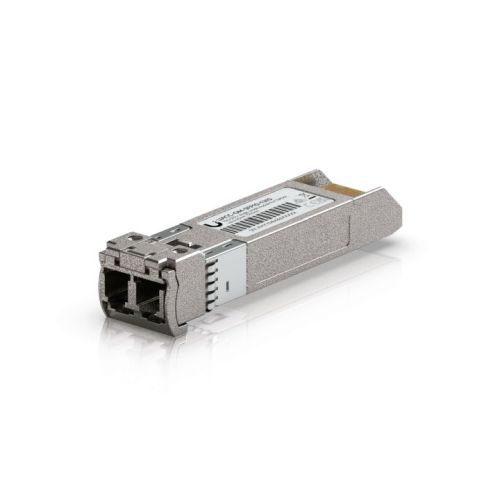
UBIQUITI UACC-OM-SFP10-1570 SFP+ Module 10G CWDM 1570nm
| Lieske Part No. | 214008 |
|---|---|
| Mfg Part No | UACC-OM-SFP10-1570 |
| EAN-Code | |
| Manufacturer | UBIQUITI NETWORKS |
| Here only | 137,78 EUR
163,96 EUR incl. VAT
|
Further information for UBIQUITI UACC-OM-SFP10-1570 SFP+ Module 10G CWDM 1570nm
| General | |
| Data rate | 10 Gbit/s |
| Wavelength | 1570 nm |
| Transmission range | 20 km |
| Fibre type | Single mode |
| Connection | Duplex-LC-UPC |
| Compatibility | SFP+ and SFP interfaces |
| Technology | CWDM |
Applications
This SFP+-module is designed for use in networks with single-mode fibre optic cable, particularly in environments where high transmission performance over long distances is required. Typical application scenarios include connecting network devices such as switches, routers or servers via fibre optic cables in data centres, enterprise networks, or for connecting sites over greater distances. The use of CWDM technology enables the use of multiple wavelengths on a single fibre optic cable, thereby increasing the capacity of existing infrastructure.
Functions and Features in Detail
The module supports data transmission at 10 Gbit/s and is compatible with SFP+-interfaces as well as SFP-interfaces, enabling flexible integration into existing networks. The duplex LC-UPC connector ensures a secure and precise connection to the fibre optic cable. The wavelength is 1570 nm, which lies within the CWDM range and is required for the multiplexing technology. The module operates in pairs with a second module of the same wavelength to enable bidirectional communication over a single fibre optic cable.
Technology Explained Simply
CWDM (Coarse Wavelength Division Multiplexing) is a technology that transmits multiple optical signals of different wavelengths over a single fibre optic cable. This increases the bandwidth of a fibre optic cable without the need to lay additional cables. The UACC-OM-SFP10-1570 module uses the wavelength 1570 nm, which is typical for CWDM systems. Transmission takes place over single-mode fibre optic cable, which is suitable for long distances and high data rates. The maximum range of 20 km is achieved under optimal conditions, with the actual range depending on cable quality and optical performance.
Compatibility and Accessories
The module is compatible with SFP+- and SFP-interfaces, enabling use in a wide range of network devices. It is designed for use in systems that support CWDM technology. The connection is made via a duplex LC-UPC connector, which is standardised for fibre optic cables with LC connectors. It is recommended to use the module in pairs with a second module of the same wavelength to enable bidirectional communication over a single fibre optic cable.
Installation and Mounting
Installation is carried out by inserting the SFP+-module into the corresponding SFP+- or SFP-interface of a network device. Connection to the fibre optic cable is made via the integrated duplex LC-UPC connector. It is important that the module is paired with a partner module of the same wavelength (1570 nm) to ensure correct communication. Installation requires no additional tools, although the fibre optic cable should be clean and properly terminated to avoid signal loss.
Operational Advantages
The module offers a high data rate of 10 Gbit/s and enables the use of existing fibre optic infrastructure for higher bandwidths via CWDM. Compatibility with SFP+- and SFP-interfaces increases flexibility when integrating into existing systems. The use of single-mode fibre optic cable ensures a stable and long-distance connection, with a range of up to 20 km achievable. Pairing with a module of the same wavelength enables efficient use of the fibre optic cable for bidirectional data transmission.

This is an offer of:
79279 Vörstetten
https://industry-electronics.com
Tel. 07666/88499-0
Fax. 07666/88499-111
Diesen Artikel finden Sie unter:
industry-electronics.com/artikel/214008

Lieske Elektronik e.K.
Reutener Str. 1079279 Vörstetten
https://industry-electronics.com
Tel. 07666/88499-0
Fax. 07666/88499-111
Diesen Artikel finden Sie unter:
industry-electronics.com/artikel/214008