
UBIQUITI UACC-DAC-QSFP28-0.5M DAC Cable 100Gbps 0.5m
Networks > Switches > Modules
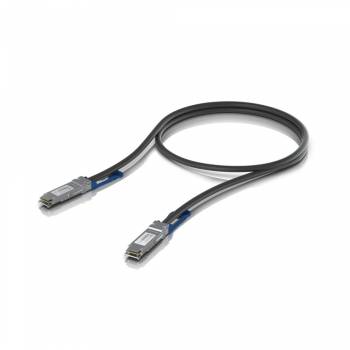
UBIQUITI UACC-DAC-QSFP28-0.5M DAC Cable 100Gbps 0.5m
| Lieske Part No. | 1385708 |
|---|---|
| Mfg Part No | UACC-DAC-QSFP28-0.5M |
| EAN-Code | 0810084690031 |
| Manufacturer | UBIQUITI NETWORKS |
| Here only | 35,28 EUR
41,98 EUR incl. VAT
|
Further information for UBIQUITI UACC-DAC-QSFP28-0.5M DAC Cable 100Gbps 0.5m
| General | |
| Connector type | QSFP28 to QSFP28 |
| Cable length | 0,5 m |
| Wire gauge | 30 AWG |
| Cable jacket | PVC |
| Jacket colour | Black |
| Jacket OD | 7 mm |
| Min. bending radius | 37 mm |
| Supported data rates | 100 / 40 Gbit/s |
| Maximum power consumption | 2,5 W |
| Operating ambient temperature | 0 to 70 °C |
Applications
The cable is intended for use in modern network environments where high data rates over short distances are required. Typical use cases include connecting network switches within a rack, linking servers to switches, or connecting storage and computing nodes within a data center. Compatibility with QSFP28- and QSFP+-interfaces expands its application possibilities, as it can be connected to a wide range of networking equipment.
Features and Specifications in Detail
The cable features a QSFP28 to QSFP28 connector type, enabling a direct, precise connection between two QSFP28 ports. The cable length is 0.5 meters, which is sufficient for most rack and server configurations. The use of 30 AWG wire ensures adequate conductivity and minimizes signal loss. The cable jacket is made of PVC, providing good mechanical stability and resistance to environmental influences. The jacket color is black, and the outer diameter of the jacket is 7 mm. The minimum bending radius of 37 mm protects the cable from mechanical damage during installation and ensures stable signal transmission.
Technology Explained Simply
A direct attach cable (DAC) is a passive copper cable that operates without additional power supply or signal amplification. Data transmission occurs over multiple individual copper conductors operated in parallel. In this model, a maximum data rate of 100 Gbit/s is supported, with 40 Gbit/s also being possible. The maximum power consumption is 2.5 W, which is very low due to the passive design. The operating ambient temperature ranges from 0 to 70 °C, enabling use in standardized server and network environments.
Compatibility and Accessories
The cable is compatible with QSFP28- and QSFP+-interfaces, allowing use with a wide range of networking devices including switches, routers, and servers. It is specifically designed for connecting devices in the high-speed range, where the maximum data rate of 100 Gbit/s supports performance for modern applications such as virtualization, cloud computing, or big data analytics. Use with other accessories, such as patch panels or rack extensions, is possible as long as the interfaces are compatible.
Installation and Mounting
Installation is performed by simply plugging the QSFP28 connectors into the corresponding ports on the devices. It is important to observe the minimum bending radius of 37 mm to avoid mechanical damage. The cable connection is immediately operational once the connectors are correctly inserted, as no additional configuration or power supply is required. The cable connection is designed for use in enclosed racks and server rooms, with the operating ambient temperature ranging from 0 to 70 °C.
Operational Advantages
The cable offers a cost-effective solution for high-speed connections over short distances. The passive design reduces power consumption and maintenance costs, as no additional components such as transceivers or power supplies are required. The high data rate of 100 Gbit/s enables fast and reliable data transmission, which is essential for time-critical applications in enterprise networks. Compatibility with QSFP28- and QSFP+-ports increases flexibility in device selection and simplifies integration into existing infrastructures.

This is an offer of:
79279 Vörstetten
https://industry-electronics.com
Tel. 07666/88499-0
Fax. 07666/88499-111
Diesen Artikel finden Sie unter:
industry-electronics.com/artikel/1385708

Lieske Elektronik e.K.
Reutener Str. 1079279 Vörstetten
https://industry-electronics.com
Tel. 07666/88499-0
Fax. 07666/88499-111
Diesen Artikel finden Sie unter:
industry-electronics.com/artikel/1385708