
Rittal 9690040 SV 9690040 energy storage enclosure
Industrial Material > Enclosures / Chassis > Switchboard-Systems
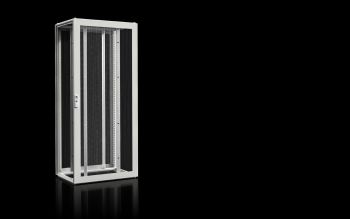
Rittal 9690040 SV 9690040 energy storage enclosure
| Lieske Part No. | 895324 |
|---|---|
| Mfg Part No | 9690040 |
| EAN-Code | 4028177044272 |
| Manufacturer | Rittal |
| Here only | 1.082,47 EUR
1.288,14 EUR incl. VAT
|
Further information for Rittal 9690040 SV 9690040 energy storage enclosure
| General | |
| Model | With flexible internal construction |
| Material | rack frame: sheet steel, 1.5 mm, roof sheet: sheet steel, 1.5 mm, door: sheet steel, 1.5 mm, rear panel: sheet steel, 1.5 mm |
| Surface protection | Cabinet frame: dip primed, door, roof and rear panel: powder coated, textured lacquer |
| Colour | RAL 7035 |
| Scope of delivery | Cabinet frame, door and rear panel, perforated, roof sheet, lock: 3 mm double tongue |
| Degree of protection IP according to EN 60 529 | IP 20 |
| Width | 600 mm |
| Height | 2.000 mm |
| Depth | 600 mm |
| PCF/VE (Cradle-to-Gate) | 208.2 kg CO2 eq (Cat B) |
| Note on PCF class | Category B: PCF value (Cradle-to-Gate) approximately calculated based on product weight and self-declared |
Applications
The enclosure is primarily intended for energy storage systems, particularly for systems mounted on sliding rails. The modular design allows flexible adaptation to different requirements in the field of electrical energy storage, for example in photovoltaic systems or industrial applications. The perforated door and rear panel with a free ventilation area of 85 % ensure efficient heat dissipation, which is important for the thermal stability of installed components. The integrated PU foam seal on the door and roof plate improves sealing properties and supports the IP 20 protection class.
Functions and Equipment in Detail
The enclosure features an enclosure frame made of metric profile frames, consisting of closed and profiled hollow profiles. The perforation follows a 25 mm grid, enabling flexible mounting of assemblies. The frame profiles are fitted with integrated blind rivet nuts M6 to securely fasten fittings. The door is perforated, secured with a bar lock and four-point locking, and can be opened to a maximum angle of 130°. Optionally, the door can be extended to 180°. The hinges are reversible, and the hinges are fitted with non-removable hinge pins. The floor clearance is 17 mm. The roof plate is removable and fitted with a PU foam seal. The rear panel is also perforated and removable, with a positioning aid and a PU foam seal.
Technology Explained Simply
The surface treatment of the enclosure includes a triple protective layer: nanoceramic coating, electrophoretic dip priming, and powder-coated paint in RAL 7035. This treatment protects against corrosion and is resistant to mineral oils, lubricants, machining emulsions and solvents. The flat parts (rear panel and roof plate) are conductively connected to the enclosure frame, enabling automatic equipotential bonding according to DIN 62208. This is important for electrical safety and to avoid voltage differences. The interior build components are made of galvanized sheet steel (cross brace 3 mm, mounting angle 3 mm, profile rail 2 mm), ensuring high mechanical stability.
Compatibility and Accessories
Various accessories are available for extending and adapting the enclosure, including earthing straps in different cross-sections (4 mm², 10 mm², 16 mm², 25 mm²) and lengths (170 mm, 300 mm), plinth trim panels, plinth corner pieces, side panels, baying connectors, baying brackets, baying blocks, and various roof plates (e.g. with cable entry or IP 55). These components allow individual adaptation to specific requirements, such as integrating earthing systems or connecting multiple enclosures.
Mounting and Installation
Mounting is performed via the integrated perforation grid in a 25 mm grid, enabling flexible positioning of assemblies. The enclosure profiles are baying-capable on all sides, allowing scalable arrangements of multiple enclosures. The maximum load capacity of the enclosure frame is 15,000 N, and that of the interior build (consisting of profile rails and cross braces with mounting angles) is 10,000 N. Fastening is done using cage nuts and metric screws up to M8. The integrated blind rivet nuts M6 facilitate the mounting of fittings. The door and roof plate are removable, simplifying installation and maintenance of components.
Operational Advantages
The enclosure offers high mechanical stability and flexible mounting options via the interior build system. The perforated surfaces ensure good ventilation, reducing thermal stress on installed components. The conductive connection of flat parts to the enclosure frame ensures safe equipotential bonding. The powder-coated surface in RAL 7035 provides high corrosion protection and is resistant to industrial environmental conditions. The integrated QR codes on the door, roof, rear panel and nameplate enable unique identification and easy access to product information and documentation.
Scope of Delivery
The enclosure is delivered with the enclosure frame, perforated door, perforated rear panel, roof plate and a 3 mm double-bar lock. The components are designed for flexible interior build and enable modular installation.

This is an offer of:
79279 Vörstetten
https://industry-electronics.com
Tel. 07666/88499-0
Fax. 07666/88499-111
Diesen Artikel finden Sie unter:
industry-electronics.com/artikel/895324

Lieske Elektronik e.K.
Reutener Str. 1079279 Vörstetten
https://industry-electronics.com
Tel. 07666/88499-0
Fax. 07666/88499-111
Diesen Artikel finden Sie unter:
industry-electronics.com/artikel/895324