
Rittal 7979724 surge protection module
Energy > Surge Protection
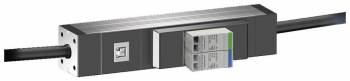
Rittal 7979724 surge protection module
| Lieske Part No. | 1775586 |
|---|---|
| Mfg Part No | 7979724 |
| EAN-Code | 4028177948556 |
| Manufacturer | Rittal |
| Here only | 235,28 EUR
279,98 EUR incl. VAT
|
Further information for Rittal 7979724 surge protection module
| General | |
| Model | Surge protection Type 3 |
| Material | Aluminium extruded profile, anodized |
| Colour | RAL 9005 |
| Scope of delivery | Including mounting hardware |
| Nominal power | 22 kW |
| Electrical connection type | CEE plug/coupler |
| Rated current (max.) | 32 A |
| Policies | Low Voltage Directive 2014/35/EU, EMC Directive 2014/30/EU |
| Standards | IEC 61 643-11, EN 61 643-11 |
| Width | 44 mm |
| Height | 75 mm |
| Length | 250 mm |
| Input cable connection (type/length) | H05VV-F5G2.5, 1 m |
| Connection output cable (type/length) | H05VV-F5G2.5, 1 m |
Applications
This device is universally applicable in industrial and commercial installations where sensitive electronics such as servers, controls, or communication devices must be protected from voltage spikes. It is specifically designed for TN-S networks, which are used in many modern building installations and distribution systems. Mounting on the enclosure frame allows space-saving integration into existing enclosures without requiring additional space for external protection devices.
Functions and Equipment in Detail
The surge protection module offers a rated power of 22 kW and a maximum rated current of 32 A. It is designed for 3-phase installations and features connection paths L/N and N/PE, enabling flexible integration into existing power supply systems. The optical status monitoring directly on the device allows for quick visual inspection of the operating status. The integrated alarm contact enables the transmission of status information, for example to a building management system, to trigger an alarm message in case of a fault or failure of the surge arrester.
Technology Explained Simply
The surge arrester operates according to the principle of surge protection Type 3, which functions as the final stage in the protection chain. It switches quickly to the grounding path during overvoltages to divert the voltage spike and protect connected devices. The use of CEE plugs and connectors at input and output enables a safe and standardized connection. The connection cables consist of cable type H05VV-F5G2.5 with a length of 1 m each, supporting flexible cabling within the enclosure. The housing is made of an anodized aluminum extruded profile in color RAL 9005, ensuring high mechanical stability and corrosion resistance.
Compatibility and Accessories
The module is part of a modular protection system architecture and can be combined with other Rittal surge protection modules. It is intended for use in systems with Type-1 and Type-2 protection devices, which must be installed in building installations or energy distributors to ensure a complete protection chain. The version with CEE connectors enables easy and safe integration into existing installations.
Mounting and Installation
Mounting is done directly on the enclosure frame, with the module equipped with a plug-in system for protection modules, enabling maintenance-friendly and quick installation. The delivery includes mounting hardware, so no additional mounting accessories are required. The compact design with dimensions 44 mm (width) × 75 mm (height) × 250 mm (length) allows space-saving installation.
Advantages in Operation
A key advantage is high availability: in case of failure, the surge arrester can be replaced without interrupting the power supply. The maintenance-friendly design with plug-in system reduces maintenance time and costs. The immediately ready-to-use configuration with pre-fabricated connection cables and CEE connectors significantly reduces installation time. The optical status indicator and alarm contact increase operational safety and enable proactive maintenance.
The device complies with standards IEC 61 643-11 and EN 61 643-11, as well as directives Low Voltage Directive 2014/35/EU and EMC Directive 2014/30/EU, confirming conformity with European safety and EMC requirements.

This is an offer of:
79279 Vörstetten
https://industry-electronics.com
Tel. 07666/88499-0
Fax. 07666/88499-111
Diesen Artikel finden Sie unter:
industry-electronics.com/artikel/1775586

Lieske Elektronik e.K.
Reutener Str. 1079279 Vörstetten
https://industry-electronics.com
Tel. 07666/88499-0
Fax. 07666/88499-111
Diesen Artikel finden Sie unter:
industry-electronics.com/artikel/1775586