
Rittal 7030150 patch cable Cat6
Cables > Data lines > Cat6 Patch Cable
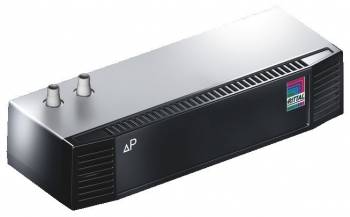
Rittal 7030150 patch cable Cat6
| Lieske Part No. | 1768249 |
|---|---|
| Mfg Part No | 7030150 |
| EAN-Code | 4028177659537 |
| Manufacturer | Rittal |
| Here only | 263,24 EUR
313,26 EUR incl. VAT
|
Further information for Rittal 7030150 patch cable Cat6
| General | |
| Model | Analog differential pressure sensor |
| Applications | Monitoring of cabinets in IT, industry and building technology. Monitoring of cabinets, rooms and containers in IT environment. |
| Function principle | Settings can be made via the CMC III Processing Unit or via the IoT Interface. The CMC III differential pressure sensor measures air pressure at two points in the room and displays the pressure difference between the measurement points. The two points in the room are defined using a thin tube connected to the sensor. Application: cold aisle containment, raised floor |
| Material | Plastic, front: smooth, housing: textured |
| Colour | Front: RAL 9005, housing: RAL 7035 |
| Scope of delivery | Sensor, mounting plate, including fastening material, analogue differential pressure sensor |
| Connection to CAN bus | Direct |
| Interfaces | 2 x RJ45 CAN-bus |
| Number of participants per IoT interface (max.) | 32 |
| Number of participants PU compact (max.) | 4 |
| Number of participants PU (max.) | 32 |
| Number of PDU participants (max.) | 16 |
| Measuring method | Differential pressure measurement |
| Width | 110 mm |
| Height | 30 mm |
| Depth | 40 mm |
| Operating temperature range | 0 °C...55 °C |
| Humidity (non-condensing) | 5...95 % |
| PCF/VE (Cradle-to-Gate) | 1.6 kg CO2 eq (Cat B) |
| Note on PCF class | Category B: PCF value (Cradle-to-Gate) approximately calculated based on product weight and self-declared |
Applications
The sensor is designed for use in IT infrastructures, industrial environments and building technology. It monitors pressure conditions in enclosures, rooms and containers to ensure the efficiency of cooling and ventilation systems. It is particularly suitable for applications such as cold aisle containment, where a constant pressure difference between the cold and hot aisles must be monitored to ensure optimal air circulation. It can also be used in underfloor systems for server cooling to monitor airflow.
Functions and Equipment in Detail
The sensor measures differential pressure in the range of -500 Pa to +500 Pa with a measurement accuracy of ±3 % and a resolution of 1 Pa. Settings for warning and alarm thresholds can be configured via the software of the CMC III Processing Unit and are stored directly in the sensor. The integrated multicolour LED serves as a status indicator and signals the operating state. Automatic detection upon connection to the system enables quick plug-and-play deployment.
Technology Explained Simply
The sensor operates on the principle of differential pressure measurement. It detects air pressure at two points in the space, defined by an air tube, and calculates the difference. This measurement is crucial for identifying pressure losses, airflow disruptions or inefficient cooling in enclosed spaces. The data is transmitted via two RJ45 connectors to the CAN-Bus, allowing the sensor to be directly connected to the Processing Unit or integrated into an existing bus system. The protection rating IP 30 according to EN 60529 protects against mechanical impacts and limited access, but not against dust or water.
Compatibility and Accessories
The sensor is designed for use with CMC III Processing Units and can be directly connected to them. It is compatible with various system configurations: up to 32 participants per IoT Interface, up to 32 participants per PU, up to 4 participants per PU compact, and up to 16 participants per PDU. Accessories include CAN-Bus cables in various lengths (0.5 m to 10.0 m) and connection cables, enabling flexible installation. Alternatively, the sensor DK 7010150 may be considered as a successor or similar model.
Mounting and Installation
The sensor is supplied with a mounting plate and fastening materials, enabling easy installation on enclosure walls or other suitable surfaces. Dimensions are 110 mm (width) × 30 mm (height) × 40 mm (depth). The housing is made of plastic, with the front in RAL 9005 and the housing in RAL 7035. The front is smooth, the housing is textured. Installation takes place at a suitable location within the monitored area, with air tubes routed to the measurement points.
Advantages in Operation
The sensor enables precise and continuous monitoring of pressure conditions in critical environments. The integrated CAN-Bus technology and plug-and-play function reduce installation time and complexity. Storing settings directly in the sensor ensures stable configuration even during system changes. The operating temperature range of 0 °C to 55 °C and relative humidity of 5 % to 95 % (non-condensing) make it suitable for a wide range of operating conditions. The integrated LED indicator supports quick diagnosis of the operating status.
The delivery includes the sensor, a mounting plate and fastening materials. Additionally, according to the manufacturer's data sheet, a 5 m long air tube and a quick start guide are included. The packaging unit is 1 piece.

This is an offer of:
79279 Vörstetten
https://industry-electronics.com
Tel. 07666/88499-0
Fax. 07666/88499-111
Diesen Artikel finden Sie unter:
industry-electronics.com/artikel/1768249

Lieske Elektronik e.K.
Reutener Str. 1079279 Vörstetten
https://industry-electronics.com
Tel. 07666/88499-0
Fax. 07666/88499-111
Diesen Artikel finden Sie unter:
industry-electronics.com/artikel/1768249