
Pilz 772140 Safety Relay 16DI
Industrial Material > Industrial relays and contactors > Safety relay
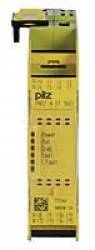
Pilz 772140 Safety Relay 16DI
| Lieske Part No. | 581284 |
|---|---|
| Mfg Part No | 772140 |
| EAN-Code | 4046548069655 |
| Manufacturer | Pilz |
| Here only | 225,57 EUR
268,43 EUR incl. VAT
|
Further information for Pilz 772140 Safety Relay 16DI
| General | |
| Product type | Extension module |
| System | PNOZmulti 2 |
| Number of secure digital inputs | 16 |
| Compatibility | PNOZmulti 2-System |
| Accessories | PNOZ s Set spring loaded terminals, PNOZ mm0.xp conn.left, PNOZ s Set screw terminals |
Expansion module
This module is specifically designed as an expansion for the PNOZmulti 2 system. It increases the number of available safe digital inputs by 16, enabling control of more complex safety functions in machines and plants. Integration is achieved via the modular design of the PNOZmulti 2 system, where the module is directly installed into the main controller or into existing expansion modules. Configuration is performed using the associated software, allowing individual parameterization of the inputs.
Safe digital inputs
The 16 inputs are configured as safe digital inputs, meaning they are designed for processing safety-relevant signals in accordance with applicable standards. They are suitable for connecting double-redundant or single safety switches and support reliable detection of states such as open" or "closed. The inputs are galvanically isolated to prevent interference and potential shifts between different subsystems.
Technology explained simply
The module uses the technology of the PNOZmulti 2 platform, which is based on a modular, configurable safety control system. Safety functions are configured via a software platform, where inputs can be logically linked and connected to safety functions such as emergency stop, door monitoring, or motion monitoring. Communication occurs via the internal bus systems of the PNOZmulti 2 system, ensuring high system integrity. The inputs are designed for use in industrial environments, with electrical parameters such as voltage and current meeting the requirements of safety standards.
Compatibility and accessories
The module is specifically developed for use in the PNOZmulti 2 system and is compatible with associated main modules and expansions. Suitable accessories include, for example, the PNOZ s Set with spring loaded terminals (St=VE with 4 terminals), the PNOZ mm0.xp conn.left (10 pieces), and the PNOZ s Set with screw terminals (2 pieces). These accessories ensure secure and reliable connection of the inputs to external sensors and switches. The terminals are designed for industrial applications and allow for quick and secure installation.
Mounting and installation
Mounting is performed into the module housing of the PNOZmulti 2 system, where the module is inserted into the appropriate socket position. Electrical connection of the inputs is made via the designated terminals, and the use of appropriate terminals (e.g., spring loaded or screw terminals) is recommended to ensure a stable connection. Configuration of the inputs is done via the associated software, where parameters such as input type, switching behavior, and assignment to safety functions are set. Installation does not require special tools, but compliance with electrical standards and safety regulations is mandatory.
Advantages in operation
Using this module allows flexible expansion of the safety control system without modifying the entire installation. The modular design reduces maintenance and installation costs, as individual modules can be replaced or expanded. The safe digital inputs ensure high reliability of safety functions, thereby increasing machine operational safety. Configurability via software enables quick adaptation to changing requirements without requiring physical modifications to the device.

This is an offer of:
79279 Vörstetten
https://industry-electronics.com
Tel. 07666/88499-0
Fax. 07666/88499-111
Diesen Artikel finden Sie unter:
industry-electronics.com/artikel/581284

Lieske Elektronik e.K.
Reutener Str. 1079279 Vörstetten
https://industry-electronics.com
Tel. 07666/88499-0
Fax. 07666/88499-111
Diesen Artikel finden Sie unter:
industry-electronics.com/artikel/581284