
Pepperl+Fuchs NRN15-18GS50-E3-V1 inductive sensor
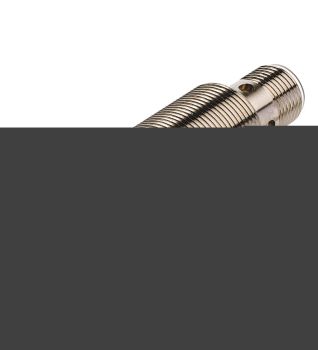
Pepperl+Fuchs NRN15-18GS50-E3-V1 inductive sensor
| Lieske Part No. | 105816 |
|---|---|
| Mfg Part No | 292531 |
| EAN-Code | 4050143049455 |
| Manufacturer | Pepperl+Fuchs |
| Here only | 139,27 EUR
165,73 EUR incl. VAT
|
Further information for Pepperl+Fuchs NRN15-18GS50-E3-V1 inductive sensor
| General | |
| Degree of protection | IP67 |
| Operating voltage | 10 ... 30 V DC |
| Output type | PNP |
| Switching function | Breaker contact (NC) |
| Type of output | 3-wire |
| Thread type | M18 |
| Thread | M12 x 1 |
| Connection type | Device plug |
| Housing material | stainless steel 1.4305 / AISI 303 (V2A) |
| Reduction factor | 1 |
| Voltage type | DC |
| Built-in | Not flat |
| Construction type | Cylinder |
| Product series | Cylindrical |
Applications
The sensor is suitable for industrial applications requiring reliable, contactless detection of metallic workpieces, components, or conveyance media. It can be used, for example, in production lines, on conveyor belts, or in robotic systems to monitor positions, presence, or passage of objects. The magnetically immune design also makes it suitable for environments where electrical or magnetic interference occurs, such as near motors or transformers.
Functions and Equipment in Detail
The sensor operates on the principle of inductive proximity detection and features a switching function as an open contact (NC), meaning the output is closed in the resting state and opens upon detection of an object. The output type is PNP, representing positive logic — the output conducts current toward the positive pole during switching. The output type is 3-wire, requiring a separate supply voltage, signal, and ground connection. The operating voltage ranges from 10 to 30 V DC, allowing flexible adaptation to various control systems. The connection is made via a device connector, ensuring a secure and quick connection.
Technology Explained Simply
The sensor generates an electromagnetic alternating field, which is disturbed by the approach of a metallic object. This disturbance is detected as a switching impulse and converted into an electrical signal. The output logic (PNP) ensures that upon detection, a signal is sent to the control or regulation unit. Protection class IP67 means the device is dust-tight and temporarily waterproof, making it suitable for outdoor use or in humid production environments. The magnetically immune design protects the sensor from false alarms caused by external magnetic fields.
Compatibility and Accessories
To expand application possibilities, various accessories are available. These include the cable gland V1-G-2M-PUR (part number 109434) and V1-W-2M-PUR (part number 109437), which enable flexible and secure cabling. The mounting flange BF 18 is used for secure installation of the sensor on machines or structures. These components are specifically designed for the NRN15-18GS50-E3-V1 series and ensure a stable and maintenance-friendly installation.
Mounting and Installation
The sensor is not flush-mounted, meaning it protrudes slightly above the mounting surface. Mounting is done via the M18 thread, with the M12 x 1 thread at the connection area intended for attachment to the connector. Installation requires secure fastening to exclude vibrations and mechanical stress. Wiring is done via the device connector, with attention required to polarity (PNP) and voltage (10–30 V DC).
Advantages in Operation
The sensor offers high reliability and long service life due to its robust stainless steel construction and IP67 protection class. The magnetically immune design minimizes false alarms, and the 3-wire technology enables clear signal transmission. The compact design and universal mounting capability simplify integration into existing systems. The operating voltage of 10 to 30 V DC allows flexible adaptation to various control systems without requiring additional voltage converters.

This is an offer of:
79279 Vörstetten
https://industry-electronics.com
Tel. 07666/88499-0
Fax. 07666/88499-111
Diesen Artikel finden Sie unter:
industry-electronics.com/artikel/105816

Lieske Elektronik e.K.
Reutener Str. 1079279 Vörstetten
https://industry-electronics.com
Tel. 07666/88499-0
Fax. 07666/88499-111
Diesen Artikel finden Sie unter:
industry-electronics.com/artikel/105816