
Patton SN200/1JS1V/EUI SmartNode 200 1x FXS VoIP
Networks > VoIP > Accessories
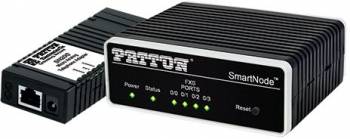
Patton SN200/1JS1V/EUI SmartNode 200 1x FXS VoIP
| Lieske Part No. | 1782171 |
|---|---|
| Mfg Part No | SN200/1JS1V/EUI |
| EAN-Code | 0847840013827 |
| Manufacturer | Patton |
| Here only | 156,86 EUR
186,67 EUR incl. VAT
|
Further information for Patton SN200/1JS1V/EUI SmartNode 200 1x FXS VoIP
| General | |
| Connection type | 1x FXS RJ11 |
| Ethernet port | 1x 10/100BaseTX |
| SIP-TLS | Optional |
| SRTP | Optional |
| Operating voltage | 100–240 VAC |
| SIP support | |
Applications
The SmartNode 200 is used to connect existing analog telephone or fax devices to an IP telephony system. This is particularly useful when a complete transition to IP telephony is not desired or not feasible. The device can be used in office and home applications where a connection between analog endpoints and an IP-PBX, a VoIP provider, or a cloud telephony system is required. Usage typically occurs in local networks equipped with an Ethernet connection.
Functions and Features in Detail
The device features an FXS port (RJ11), designed for connecting an analog telephone or fax machine. The integrated Ethernet port (10/100BaseTX) establishes the connection to the IP network. Communication takes place via the SIP protocol, enabling signal transmission over the network. Optionally, the device supports SIP-TLS and SRTP, enabling encrypted communication and enhancing transmission security. The devices are suitable for use in environments with high security requirements, where communication confidentiality must be ensured.
Technology Explained Simply
The SmartNode 200 functions as a gateway between analog and digital communication systems. When a user connects an analog telephone to the FXS port and establishes a call, the device converts the analog signals into digital SIP messages. These are transmitted over the Ethernet network to an IP telephony system. The connection is established via the SIP protocol, which is used to control VoIP connections. The optional security features SIP-TLS and SRTP ensure that signals are transmitted encrypted, protecting against eavesdropping and manipulation. Power supply is provided by an external power adapter designed for a voltage range of 100 to 240 VAC, enabling worldwide usability.
Compatibility and Accessories
The device is compatible with SIP-based IP telephony systems, including IP-PBX systems, cloud telephony systems, and VoIP providers. Connection is made via a standard Ethernet port (10/100BaseTX), making integration into existing networks straightforward. The use of SIP-TLS and SRTP requires corresponding support on the side of the IP telephony system. The device is designed for use with analog endpoints such as landline telephones or fax machines that feature an RJ11 connection.
Installation and Mounting
Installation involves connecting the analog telephone or fax machine to the FXS port (RJ11) and connecting the Ethernet port (10/100BaseTX) to the network. Power supply is provided by an external power adapter operating at a voltage of 100 to 240 VAC. Configuration is performed via a web interface accessible over the network. Settings include the SIP server address, user ID, password, and configuration of the optional security features SIP-TLS and SRTP. The devices are designed for easy installation in existing networks.
Advantages in Operation
The SmartNode 200 enables cost-effective integration of existing analog endpoints into an IP telephony system. The use of SIP-TLS and SRTP provides additional security, especially in environments with high security requirements. Worldwide usability due to support for 100–240 VAC makes the device suitable for use in various countries. Simple installation and configuration via a web interface facilitate setup and maintenance of the device. Compatibility with various SIP-based systems increases flexibility in choosing an IP telephony provider or IP-PBX system.

This is an offer of:
79279 Vörstetten
https://industry-electronics.com
Tel. 07666/88499-0
Fax. 07666/88499-111
Diesen Artikel finden Sie unter:
industry-electronics.com/artikel/1782171

Lieske Elektronik e.K.
Reutener Str. 1079279 Vörstetten
https://industry-electronics.com
Tel. 07666/88499-0
Fax. 07666/88499-111
Diesen Artikel finden Sie unter:
industry-electronics.com/artikel/1782171