
Mitsubishi L26CPU-P CPU 260k steps
Industrial Material > Automation > PLC Systems
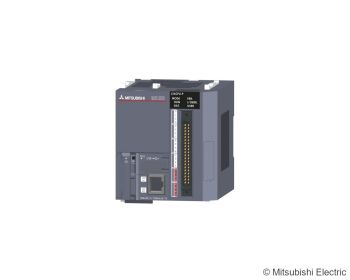
Mitsubishi L26CPU-P CPU 260k steps
| Lieske Part No. | 512435 |
|---|---|
| Mfg Part No | 269669 |
| EAN-Code | |
| Manufacturer | Mitsubishi |
| Here only | 4.391,84 EUR
5.226,29 EUR incl. VAT
|
Further information for Mitsubishi L26CPU-P CPU 260k steps
| General | |
| PLC system | L-series |
| CPU type | L26CPU-P |
| Inputs | 16 |
| Outputs | 8 |
| Max. inputs | 4096 |
| Max. outputs | 8192 |
| Program memory | 260k steps |
| Logic | positive |
PLC System
The L26CPU-P is part of the Mitsubishi L-Series, a range of PLC modules designed for medium to large automation tasks. These PLC systems are capable of processing complex control logics and offer high integration capability with other Mitsubishi modules as well as external devices. The CPU functions as the core component, coordinating communication between individual modules and peripherals.
Functions and Features in Detail
The module features 16 digital inputs and 8 digital outputs, which can be used to control sensors, switches, relays, and drives. The maximum number of inputs and outputs achievable via expansion modules is 4096 inputs and 8192 outputs, making the CPU suitable for extensive installations. The program memory size is 260,000 steps, sufficient to implement complex control sequences. The CPU supports communication via Ethernet, enabling integration into modern industrial communication networks.
Technology Explained Simply
The CPU processes control logic in the form of ladder diagrams or other programming languages commonly used in PLC programming. Positive logic means that a signal level of 2,5 cm ( 1 inch ) is represented by a positive voltage (e.g., 24 V), while "0 is defined by the absence of voltage. This is a common convention in industrial electronics and ensures clear signal interpretation. The Ethernet interface enables data transmission to other devices, such as visualization stations or higher-level control systems.
Compatibility and Accessories
The L26CPU-P is compatible with other modules in the Mitsubishi L-Series, particularly with expansion modules for inputs and outputs. Communication is achieved via the integrated Ethernet interface, allowing the module to be integrated into existing networks. For programming and configuration, specialized software provided by Mitsubishi is typically used.
Mounting and Installation
The CPU is installed in a PLC housing that is part of a modular system. Mounting is typically done by inserting the module into a corresponding rail holder or into a special housing designed for the L-Series. Wiring of inputs and outputs is done via standardized terminal clamps intended for connection to field devices.
Advantages in Operation
The L26CPU-P offers high flexibility due to the large number of available inputs and outputs as well as the large program memory size. The Ethernet interface enables fast and reliable communication, simplifying maintenance and diagnostics of installations. Positive logic ensures unambiguous signal processing, increasing the reliability of the control system.

This is an offer of:
79279 Vörstetten
https://industry-electronics.com
Tel. 07666/88499-0
Fax. 07666/88499-111
Diesen Artikel finden Sie unter:
industry-electronics.com/artikel/512435

Lieske Elektronik e.K.
Reutener Str. 1079279 Vörstetten
https://industry-electronics.com
Tel. 07666/88499-0
Fax. 07666/88499-111
Diesen Artikel finden Sie unter:
industry-electronics.com/artikel/512435