
Klauke HD13185 press insert 185 mm²
Tools > Pliers > Dies
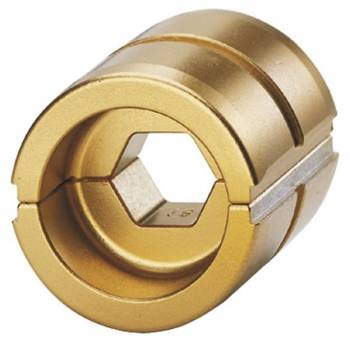
Klauke HD13185 press insert 185 mm²
| Lieske Part No. | 110444 |
|---|---|
| Mfg Part No | HD13185 |
| EAN-Code | 4012078031479 |
| Manufacturer | Klauke |
| Here only | 170,05 EUR
202,36 EUR incl. VAT
|
Further information for Klauke HD13185 press insert 185 mm²
| General | |
| Series | 13 |
| Cable cross-section | 185 mm² |
| Suitable for | crimp cable lugs according to DIN 46235, crimp connectors according to DIN 46267, part 1 |
Applications
The crimping die is designed for use with crimp cable lugs according to DIN 46235 and crimp connectors according to DIN 46267, part 1. These standards define the geometric and mechanical requirements for cable lugs and connectors used for secure connections of cables and lines in electrical installations. The application is primarily used for cable cross-sections of 185 mm², which is typical for high-performance systems, industrial machinery, or larger distribution systems. Crimping is performed using a suitable crimping tool, where the die precisely adapts the shape and pressure point to the geometry of the component being crimped.
Functions and Equipment in Detail
The HD13185 crimping die is designed for use with hexagonal crimp cable lugs and connectors, ensuring optimal fit and even pressure distribution. The die's shape ensures that crimping occurs without cracks or deformations, thereby increasing the electrical conductivity and mechanical strength of the connection.
Technology Explained Simply
The die operates on the principle of mechanical crimping, where the tube of the cable lug or connector is compressed under controlled pressure to create a secure connection between the cable and the lug. The die's shape (hexagonal) matches the typical geometry of the components being crimped, ensuring even pressure distribution. Crimping occurs under high pressure, causing the metallic surfaces to be in close contact, achieving high electrical conductivity and mechanical stability. The use of copper (Cu) as the material for the components being crimped is common, as copper offers high conductivity and mechanical strength.
Compatibility and Accessories
The crimping die is specifically designed for crimp cable lugs according to DIN 46235 and crimp connectors according to DIN 46267, part 1. These standards define the dimensions and technical requirements for the components being crimped. The die is used with crimping tools compatible with series 13.
Installation and Mounting
Installation is performed by inserting the crimping die into the appropriate crimping tool, with the tool set to the desired pressure. The cable lug or connector is placed onto the cable and inserted into the die. The crimping tool is then activated, causing the die to deform the lug or connector and create a secure connection. The exact operation of the tool follows the manufacturer's instructions for the tool, with crimping force and number of crimping operations varying depending on the tool model.
Operational Advantages
The die provides precise and reproducible crimping, enhancing the quality of the electrical connection. The use of standard components (DIN 46235, DIN 46267, part 1) ensures interoperability with other system components. The hexagonal shape ensures even pressure distribution, extending the connection's lifespan and reducing the risk of loosening or oxidation. Crimping is performed quickly and efficiently, reducing installation time and improving work quality.

This is an offer of:
79279 Vörstetten
https://industry-electronics.com
Tel. 07666/88499-0
Fax. 07666/88499-111
Diesen Artikel finden Sie unter:
industry-electronics.com/artikel/110444

Lieske Elektronik e.K.
Reutener Str. 1079279 Vörstetten
https://industry-electronics.com
Tel. 07666/88499-0
Fax. 07666/88499-111
Diesen Artikel finden Sie unter:
industry-electronics.com/artikel/110444