
Kioxia KCM9DRUL61T4 SSD CM9-R U.3 NVMe SED 61.44 TB
Computer-Components > Hard Drives > SSD PCIe
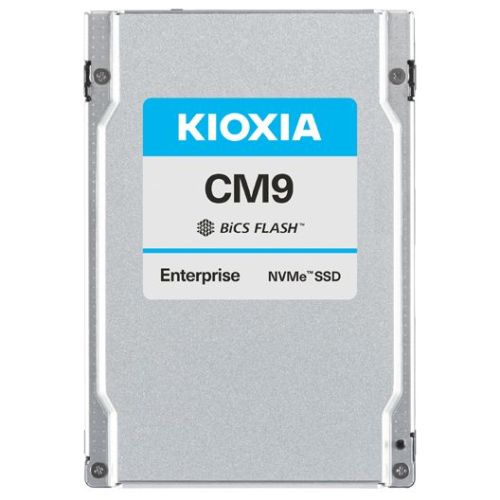
Kioxia KCM9DRUL61T4 SSD CM9-R U.3 NVMe SED 61.44 TB
| Lieske Part No. | 2519363 |
|---|---|
| Mfg Part No | KCM9DRUL61T4 |
| EAN-Code | |
| Manufacturer | Kioxia |
| Here only | 31.455,50 EUR
37.432,05 EUR incl. VAT
|
Further information for Kioxia KCM9DRUL61T4 SSD CM9-R U.3 NVMe SED 61.44 TB
| General | |
| Capacity | 61.44 TB |
| Interface | PCIe Gen5 x4 - |
| Form factor | U.3 - |
| Workload | 1 DWPD |
| Self-Encrypting Drive | Yes - |
| Sequential read speed | 13.500 MB/s |
| Sequential write speed | 10.000 MB/s |
| 4K IOPS read | 1200.000 IOPS |
| 4K IOPS write | 100.000 IOPS |
| Write endurance | 112.128 TBW |
Applications
This SSD is designed for enterprise use cases, particularly for database servers, virtualization platforms, cloud infrastructures, and high-performance computing. Its high capacity and fast access speeds make it suitable for applications that need to process large volumes of data in a short time, such as big data analytics or machine learning. The U.3 form factor integration allows flexible installation in rack servers and other systems supporting this standard.
Features and Specifications in Detail
The SSD achieves sequential read speeds of up to 13,500 MB/s and write speeds of up to 10,000 MB/s. These values are relevant for applications requiring rapid transfer or storage of large files. For random access (4K IOPS), the SSD reaches up to 1200.000 IOPS for reading and 100,000 IOPS for writing, which is beneficial for workloads involving many small, random accesses, such as database operations or virtual machines. The integrated self-encryption (SED) provides a high level of protection, as data is encrypted at the hardware level without requiring additional software solutions.
Technology Explained Simply
The use of PCIe Gen5 x4 enables very high bandwidth, necessary for the high speeds. The NVMe standard optimizes communication between storage and CPU, reducing latency. The U.3 form factor is a standard for server SSDs, supporting both PCIe and SATA connections, with PCIe being used in this case. The memory cells are designed for high endurance, emphasized by the specified workload of 1 DWPD (Drive Writes Per Day). This means the SSD can be fully written to once per day without prematurely affecting its lifespan.
Compatibility and Accessories
The SSD is designed for systems supporting the U.3 form factor, typically server and rack systems in enterprise environments. Compatibility with PCIe Gen5 x4 and NVMe is essential to fully utilize the performance features.
Installation and Mounting
Installation is performed in U.3-compatible server or rack systems. Physical mounting is done using standard fastening elements for U.3 modules. Electrical and logical integration occurs via the PCIe connection. No additional drivers or software are required, as NVMe is natively supported by modern operating systems.
Operational Advantages
The high speed and capacity enable efficient processing of large data volumes. Self-encryption provides a high security standard without additional effort. The 5-year manufacturer warranty, with a write endurance of 112,128 TBW (Terabytes Written) and a workload of 1 DWPD over 5 years, demonstrates the high reliability and longevity of the device. Thus, the SSD is suitable for continuous operation in critical infrastructures.
Protection Rating
The SSD is intended for use in enclosed server environments, not for outdoor or humid conditions.
Manufacturer Warranty
The warranty period is 5 years and includes a write endurance of 112,128 TBW at a workload of 1 DWPD throughout the entire warranty period. This is a measure of the SSD's endurance and lifespan under typical server conditions.
Form Factor
The U.3 form factor is a standard for server SSDs, supporting both PCIe and SATA connections. In this case, the PCIe connection is used to achieve high speeds.
Interface
The SSD uses the PCIe Gen5 x4 standard, enabling high bandwidth. The NVMe standard ensures efficient communication between storage and processor.
Capacity
The storage capacity is 61.44 TB, sufficient for large data volumes in server environments.
Workload
The specified workload of 1 DWPD (Drive Writes Per Day) over 5 years means the SSD can be fully written to once daily without prematurely affecting its lifespan.
Self-Encrypting Drive (SED)
The SSD is implemented as an SED, meaning data is automatically encrypted. This enhances data security, especially in environments with high security requirements.
Performance Values
Sequential read speeds reach up to 13,500 MB/s, and write speeds up to 10,000 MB/s. For random access (4K IOPS), the SSD achieves up to 1200.000 IOPS for reading and 100,000 IOPS for writing.
Manufacturer and Model
The manufacturer is Kioxia, and the model is CM9-R U.3 with manufacturer number KCM9DRUL61T4. The SSD has been specifically developed for use in enterprise systems.
Application Scenarios
The SSD is suitable for applications such as database servers, virtualization, cloud infrastructures, big data analytics, and high-performance computing. The combination of high capacity, speed, and security makes it an appropriate solution for critical IT infrastructures.

This is an offer of:
79279 Vörstetten
https://industry-electronics.com
Tel. 07666/88499-0
Fax. 07666/88499-111
Diesen Artikel finden Sie unter:
industry-electronics.com/artikel/2519363

Lieske Elektronik e.K.
Reutener Str. 1079279 Vörstetten
https://industry-electronics.com
Tel. 07666/88499-0
Fax. 07666/88499-111
Diesen Artikel finden Sie unter:
industry-electronics.com/artikel/2519363