
Kioxia KCD9DPUG1T92 SSD 1.92TB U.2 NVMe SED
Computer-Components > Hard Drives > SSD PCIe
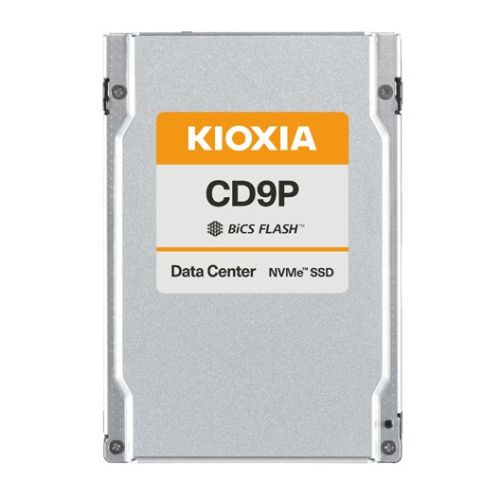
Kioxia KCD9DPUG1T92 SSD 1.92TB U.2 NVMe SED
| Lieske Part No. | 2519354 |
|---|---|
| Mfg Part No | KCD9DPUG1T92 |
| EAN-Code | |
| Manufacturer | Kioxia |
| Here only | 1.670,55 EUR
1.987,95 EUR incl. VAT
|
Further information for Kioxia KCD9DPUG1T92 SSD 1.92TB U.2 NVMe SED
| General | |
| Capacity | 1.92 TB |
| Interface | PCIe 5.0 x4 |
| Form factor | U.2 |
| Technology | NVMe |
| Reading speed | 14.500 MB/s |
| Write speed | 3.600 MB/s |
| 4K IOPS read | 2.000.000 IOPS |
| 4K IOPS write | 160.000 IOPS |
| Workload | 1 DWPD |
| TBW | 3.504 TBW |
| Function | Self-encrypting drive (SED) |
Applications
The SSD is intended for use in enterprise environments, data centers, and server applications where high IOPS values and stable performance over extended periods are required. The specification of 1 DWPD (Drive Writes Per Day) over five years makes it suitable for workloads with moderate to high write volumes. The high lifespan and integrated encryption support applications such as virtualization, cloud computing, databases, and backup systems.
Functions and Features in Detail
The SSD achieves sequential read speeds of up to 14,500 MB/s and sequential write speeds of up to 3,600 MB/s. These values enable fast data processing and transfer, especially for large file operations. For random read access (4K IOPS), a performance of up to 2,000,000 IOPS is achieved, while for random write access, up to 160,000 IOPS are available. These IOPS values are critical for performance in many small, parallel accesses, typical for database or virtualization applications. The integrated SED function enables hardware-based data encryption, which operates without additional software solutions and thus enhances the security of stored information.
Technology Explained Simply
The use of the PCIe Gen5 x4 interface means that the SSD operates over four data lanes, each with a maximum bandwidth of 12.8 Gbit/s, enabling a total theoretical maximum bandwidth of 51.2 Gbit/s. NVMe technology optimizes communication between storage and processor by minimizing latency and increasing the parallelism of data access. The U.2 form factor geometry is standardized and allows for easy installation in server and rack systems. The specification of 1 DWPD over five years means that the SSD can be fully written to once per day without prematurely affecting its lifespan. The specified TBW (Terabytes Written) of 3,504 TBW corresponds to the total amount of data that can be written over the warranty period.
Compatibility and Accessories
The SSD is designed for systems that support the U.2 form factor and have a PCIe Gen5 x4 slot. Compatibility with NVMe standard systems is given. Use requires physical installation in a suitable server or rack system with the corresponding connection.
Installation and Mounting
Installation is performed by mechanical fixation in a U.2-compatible system, with the electrical connection made via the PCIe interface. The SSD requires no additional drivers or software for basic functionality, as NVMe standard support is standard in modern operating systems and server platforms. The SED function typically requires specific configuration via the system management tool or BIOS/UEFI settings to activate and manage encryption.
Operational Advantages
The Kioxia SSD offers high performance combined with reliability and security. The combination of high IOPS values, fast access times, and integrated encryption makes it a suitable solution for demanding enterprise applications. The five-year manufacturer warranty underscores the quality and longevity of the product. Use in server and storage solutions enables efficient data processing and protection, with the U.2 form factor standardization facilitating integration into existing infrastructures.

This is an offer of:
79279 Vörstetten
https://industry-electronics.com
Tel. 07666/88499-0
Fax. 07666/88499-111
Diesen Artikel finden Sie unter:
industry-electronics.com/artikel/2519354

Lieske Elektronik e.K.
Reutener Str. 1079279 Vörstetten
https://industry-electronics.com
Tel. 07666/88499-0
Fax. 07666/88499-111
Diesen Artikel finden Sie unter:
industry-electronics.com/artikel/2519354