
JUNG 2224WH KNX Weather Station Home
Installation > Home Automation > EIB material
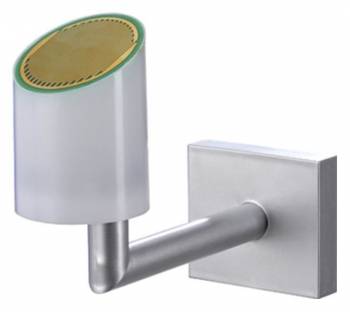
JUNG 2224WH KNX Weather Station Home
| Lieske Part No. | 209147 |
|---|---|
| Mfg Part No | 2224WH |
| EAN-Code | 4011377026636 |
| Manufacturer | JUNG |
| Here only | 549,94 EUR
654,43 EUR incl. VAT
|
Further information for JUNG 2224WH KNX Weather Station Home
| General | |
| Application | Automatic, weather-dependent shading control |
| Measured quantities | Wind speed, precipitation, twilight, temperature, brightness (3 direction-dependent) |
| Bus coupling | Integrated |
| Limit value processing | In the weather station |
| Heating | built-in, down to -20 °C |
| Heating power supply | external 24 V AC/DC |
| Power supply rain sensor | external 24 V AC/DC |
| Daisy chaining | possible |
| Logic gate | available |
| Blocking elements | available |
| Mounting method | vertical, external mounting on pole or wall |
| Application range | Home area, roof and facade area |
| Accessories | WSSV10 power supply 24 VAC for weather station and analog input |
| Self-monitoring | |
Applications include intelligent control of blinds, awnings, or sun protection systems based on current weather conditions. The weather station monitors critical functions and reports faults via alarm objects on the bus, enhancing functional reliability. The built-in heater protects the sensors from frost and condensation down to a temperature of -20 °C. Additionally, the heater ensures rapid drying of the precipitation sensor surface after rain and defrosting in snow and ice conditions, ensuring the reliability of measurement values.
Functions and equipment in detail include integrated data acquisition and evaluation, with the weather station processing data directly without requiring an external control unit. The unit is powered via the KNX bus, while the heater and precipitation sensor require an external 24 V AC/DC power supply. Without this external supply, precipitation detection is not possible. The weather station is designed to be low-maintenance and features a compact housing that integrates well into the architecture of residential buildings.
Technology explained simply shows that the weather station not only collects data but also processes it locally. Thresholds for wind, rain, brightness, or temperature are processed within the station, enabling direct control of shading systems based on these values. The integrated self-monitoring ensures that faults or malfunctions in the system trigger appropriate alerts via the bus. Cascading multiple weather stations is possible, with logic gates available for linking thresholds and monitoring functions. Lockout elements allow local deactivation of individual functions.
Compatibility and accessories include the use of the power supply WSSV10 for the heater and precipitation sensor. The weather station is designed for use in KNX systems and can communicate with other KNX devices. Installation is vertical outdoors, with the unit designed for mounting on poles or walls.
Mounting and installation require a secure, vertical installation outdoors, ideally at a location not obstructed by buildings or vegetation, to ensure measurement accuracy. Installation takes place at a suitable location meeting the requirements for weather data acquisition, such as on a roof or facade.
Operational advantages include high reliability due to self-monitoring, local data processing enabling rapid response to weather changes, and a low-maintenance design. The integrated heater ensures stable operation even at low temperatures, increasing operational safety throughout the year. The combination of compact design and integrated bus connection makes the weather station an efficient solution for building automation in residential applications.

This is an offer of:
79279 Vörstetten
https://industry-electronics.com
Tel. 07666/88499-0
Fax. 07666/88499-111
Diesen Artikel finden Sie unter:
industry-electronics.com/artikel/209147

Lieske Elektronik e.K.
Reutener Str. 1079279 Vörstetten
https://industry-electronics.com
Tel. 07666/88499-0
Fax. 07666/88499-111
Diesen Artikel finden Sie unter:
industry-electronics.com/artikel/209147