
Gira 291600 Call Module Emergency Set System 55
Security Technology > Paging systems / nurse call
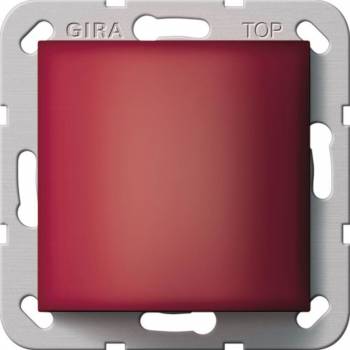
Gira 291600 Call Module Emergency Set System 55
| Lieske Part No. | 343004 |
|---|---|
| Mfg Part No | 291600 |
| EAN-Code | 4010337071365 |
| Manufacturer | Gira |
| Here only | 175,20 EUR
208,49 EUR incl. VAT
|
Further information for Gira 291600 Call Module Emergency Set System 55
| General | |
| Assembly arrangement | Basic element |
| Operation | Other |
| Construction | Other |
| Suitable for | Emergency call |
| Colour | Other |
| Material | Other |
| Material quality | Other |
Applications
The call module is part of an emergency call set and is used wherever personal alarm notification is required. It is intended for use in systems based on the Gira System 55. Typical applications include rooms where individuals may require assistance, such as patient rooms, nursing facilities, or buildings with special safety requirements. The signal lamp and buzzer ensure that the emergency call is perceived both visually and acoustically, reducing the response time for caregivers or security personnel.
Functions and Equipment in Detail
The module includes the complete electronic control responsible for triggering the emergency call. This includes the signal lamp, which lights up when the emergency call is activated, and the buzzer, which emits an acoustic signal. During an emergency call, a potential-free contact is provided, which can be used to control additional devices or systems, for example, to activate a central station or alarm system. The signal type—whether continuous light and continuous tone or flashing light and emergency tone—can be set via a jumper. This setting allows adaptation to specific requirements, such as achieving greater attention or aligning the signaling with existing systems.
Technology Explained Simply
The technology of the call module is based on integrated electronics that can be configured via a jumper. This jumper allows selection between two signal modes: either continuous steady light and continuous tone, or flashing light and a specific emergency tone. The mode selection is made by physically connecting the corresponding contacts on the module, enabling simple and tool-free configuration. The potential-free contact, activated during an emergency call, is an electrical switch that operates without its own power supply and can therefore be integrated into various external systems without requiring additional power.
Compatibility and Accessories
The call module is specifically developed for the emergency call set System 55 and is used in conjunction with compatible components. A suitable accessory is the emergency call set pure white System 55 (article number 291403), which, together with the call module, forms a complete emergency call system. Compatibility is limited to System 55 and is not intended for other systems.
Mounting and Installation
Mounting takes place within the emergency call set, with the module being installed into the housing. Installation does not require special tools, as configuration is done via a jumper. Electrical connections are made using the existing terminals in the emergency call set. Installation is typically performed by skilled personnel familiar with system technology.
Advantages in Operation
The call module provides reliable and clear signaling in emergencies. The ability to choose between steady light/continuous tone and flashing light/emergency tone allows adaptation to different environments and requirements. The potential-free contact enables integration into existing alarm systems or central stations, extending functionality. The program-neutral design ensures the module can be integrated into various system environments without requiring special software adjustments. Simple configuration via a jumper reduces installation effort and allows quick adaptation to specific requirements.

This is an offer of:
79279 Vörstetten
https://industry-electronics.com
Tel. 07666/88499-0
Fax. 07666/88499-111
Diesen Artikel finden Sie unter:
industry-electronics.com/artikel/343004

Lieske Elektronik e.K.
Reutener Str. 1079279 Vörstetten
https://industry-electronics.com
Tel. 07666/88499-0
Fax. 07666/88499-111
Diesen Artikel finden Sie unter:
industry-electronics.com/artikel/343004