
Elsner 71236 weather station Windancer KNX-GPS
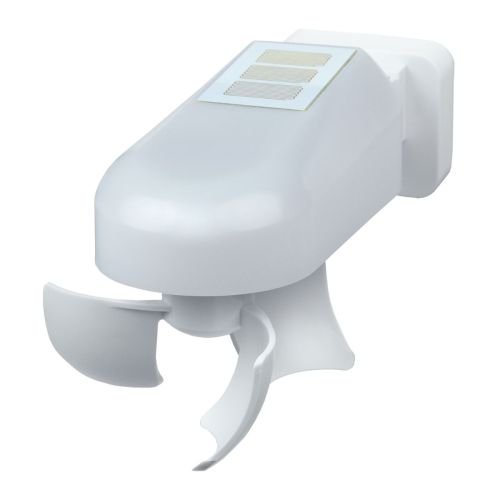
Elsner 71236 weather station Windancer KNX-GPS
| Lieske Part No. | 1300855 |
|---|---|
| Mfg Part No | 71236 |
| EAN-Code | 4051996712367 |
| Manufacturer | Elsner |
| Here only | 558,28 EUR
664,35 EUR incl. VAT
|
Further information for Elsner 71236 weather station Windancer KNX-GPS
| General | |
| Housing | Plastic |
| Colour | white/translucent |
| Mounting | Surface mounted (plaster) |
| Degree of protection | IP44 |
| Dimensions (W × H × D) | 113mm × 101mm × 225mm |
| Weight total | ≈ 260g |
| Ambient temperature | 25...+50°C |
| Storage temperature | 30...+70°C |
| KNX bus | |
| Medium | TP1-256 |
| Configuration mode | S-Mode |
| Maximum group addresses | 254 |
| Maximum assignments | 254 |
| Communication objects | 254 (with GPS) / 201 (without GPS) |
| Electricity consumption | ≤ 20mA |
| Connection KNX plug-in terminal conductor diameter | Ø 0.8mm s |
| Connection KNX plug-in terminal stripping length | 5mm |
| Time until data reception after bus voltage recovery | ≈ 5 s |
| Power supply | |
| Auxiliary voltage | 24...30 V DC SELV |
| Auxiliary current [at] | ≤ 65mA [24 V DC] |
| Sensors | |
| Temperature measurement range | 25...+50°C |
| Wind measurement range [at] | 2…30m/s [25 °C] |
| Brightness measurement range | 0 Lux … 150 000 Lux |
Applications
The weather station is intended for use in buildings with KNX systems, particularly in buildings with intelligent sun shading, automated ventilation, lighting control, or other applications that respond to environmental conditions. The integrated shading control enables control of up to eight facades, with the position of the sun (azimuth and elevation) calculated via the GPS receiver. The functions are especially suitable for office buildings, residential and administrative buildings with high requirements for energy efficiency and comfort.
Functions and Equipment in Detail
The device measures wind speed using a stable cup anemometer, which can detect up to 200 km/h under laboratory conditions. Precipitation measurement is performed via a heated sensor surface that recognizes only drops and flakes as precipitation, not fog or dew. This ensures precise and reliable detection. Temperature measurement is carried out in the range of 25 to +50 °C. Brightness measurement is performed via three separate sensors (east, south, west), with the currently highest value being output. Separate threshold values can be set for nighttime. The weather station features switching outputs for all measured values, with thresholds configurable via parameters or communication objects.
Technology Explained Simply
The weather station is designed for operation in the KNX system and uses the TP1-256 bus medium. The configuration mode is S-Mode, enabling easy integration into existing KNX installations. The maximum number of group addresses and assignments is 254 each. Communication objects are specified as 254 (for model with GPS) or 201 (without GPS). Power consumption is up to 20 mA. The auxiliary voltage is in the range of 24 to 30 V DC SELV, with the auxiliary current at 24 V DC being up to 65 mA. The connection terminal for the KNX bus is designed for conductors with a diameter of Ø 0.8 mm, with a stripping length of 5 mm. After the bus voltage is restored, it takes approximately 5 seconds for data to be received.
Compatibility and Accessories
The weather station is designed for use in the KNX system and can be connected to other KNX devices. The integrated shading control enables control of sun shading systems, with the position of the sun calculated via the GPS receiver. The weekly and calendar time clock uses the time and date from the GPS signal. The switching outputs can be used as communication objects. Switching times are set via parameters. The weather station features 6 AND and 6 OR logic gates, each with 4 inputs, where inputs can be switching events as well as 16 logic inputs in the form of communication objects. The output of each gate can be configured as either 1 bit or 2 x 8 bits.
Mounting and Installation
Mounting is surface-mounted; the housing is made of plastic and is white/translucent. Dimensions are 113 mm (width) × 101 mm (height) × 225 mm (depth), with a total weight of approximately 260 g. The protection rating is IP44, providing protection against dust and splashing water. The ambient temperature range is 25 to +50 °C, and the storage temperature range is 30 to +70 °C. The delivery includes the weather station, 2 stainless steel pan-head screws (WN56, 4x50 mm, cross recess), 2 S 6 anchors, 2 DIN 125 washers V2A (A4,3, outer diameter 9 mm), a KNX terminal and plug-in terminal (white/yellow), as well as a datasheet with installation instructions (German, English, French, Italian, Spanish) and a manual (German, English, French, Italian, Spanish) available for download. A product file is also available for download.
Advantages in Operation
The weather station provides comprehensive capture of environmental conditions and enables intelligent, reactive control of building systems. The GPS function ensures accurate time and location information, used for sun position calculation and the time clock. The logic gates enable complex linking of sensor data and switching operations. The heated precipitation measurement prevents false alarms from fog or dew. The integrated shading control reduces solar radiation load and contributes to energy efficiency. The devices are designed for outdoor use and offer high reliability under the specified environmental conditions.

This is an offer of:
79279 Vörstetten
https://industry-electronics.com
Tel. 07666/88499-0
Fax. 07666/88499-111
Diesen Artikel finden Sie unter:
industry-electronics.com/artikel/1300855

Lieske Elektronik e.K.
Reutener Str. 1079279 Vörstetten
https://industry-electronics.com
Tel. 07666/88499-0
Fax. 07666/88499-111
Diesen Artikel finden Sie unter:
industry-electronics.com/artikel/1300855