
Elsner 70851 KNX T-L-Pr-UP Touch CH pure white
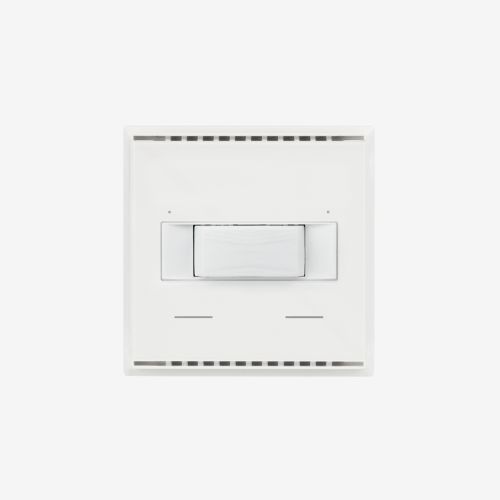
Elsner 70851 KNX T-L-Pr-UP Touch CH pure white
| Lieske Part No. | 705315 |
|---|---|
| Mfg Part No | 70851 |
| EAN-Code | 4051996708513 |
| Manufacturer | Elsner |
| Here only | 236,30 EUR
281,20 EUR incl. VAT
|
Further information for Elsner 70851 KNX T-L-Pr-UP Touch CH pure white
| General | |
| Housing | real glass, plastic, metal |
| Housing colour (similar) | RAL 9010 (white), RAL 9005 (black) |
| Degree of protection | IP20 |
| Dimensions (W × H) | 60mm × 60mm |
| Installation depth | ≥ 10mm |
| Weight total | ≈ 50g |
| Ambient temperature | 5…+45°C |
| Ambient air humidity (rH) (non-condensing) | 0...95% |
| Storage temperature | 25...+70°C |
| Over voltage category | III |
| Pollution degree | 2 |
| KNX bus | |
| Medium | TP1-256 |
| Configuration mode | S-Mode |
| Maximum group addresses | 205 |
| Maximum assignments | 205 |
| Communication objects | 86 |
| Nominal voltage | 30V DC SELV |
| Electricity consumption | ≤ 10mA |
| Connection KNX plug-in terminal conductor diameter | Ø 0.8 mm s |
| Connection KNX plug-in terminal stripping length | 5mm |
| Time delay after bus voltage recovery until data reception | ≈ 6s |
| Sensors | |
| Detection method presence passive infrared technique | PIR |
| Presence detection angle horizontal | ≈ 150° |
| Presence detection angle vertical | ≈ 35° |
| Presence detection range | ≈ 5 m |
| Brightness measurement range | 0 Lux … 20 000 Lux |
| Temperature measurement range | 5…+60°C |
Applications
The sensor is designed for indoor use, particularly in offices, conference rooms, or living rooms, where automated lighting and heating control is required. The presence detection recognizes even slight movements, such as sitting activity, enabling precise occupancy detection. Brightness measurement allows automatic adjustment of lighting according to ambient light conditions, thus saving energy. Temperature measurement supports room climate control, with the sensor also able to receive external temperature values and combine them with its own readings to calculate a mixed value. This is especially useful in larger rooms where multiple sensors are combined for precise climate control.
Functions and Equipment in Detail
The device features two integrated touch buttons, which can be configured as bus buttons. These can be used as switches, toggle switches, dimmers, value transmitters, or for scene calls. The logic functions include two AND and two OR gates, each with four inputs. Inputs can be switching events as well as eight logic inputs in the form of communication objects. The output of each gate can be configured as either 1 bit or 2 x 8 bits, enabling flexible control. The brightness threshold is adjustable, allowing lighting to be switched off automatically once a certain light level is reached.
Technology Explained Simply
Presence detection is achieved via a passive infrared (PIR) method, detecting heat radiation from people. The detection angle is approximately 150° horizontally and 35° vertically, with a range of up to 5 meters. Brightness measurement covers a range from 0 to 20,000 Lux, sufficient for most indoor conditions. Temperature measurement operates within a range of 5 to +60°C. Communication via the KNX bus system is via a terminal block, supporting conductors with a diameter of Ø 0.8 mm and a stripping length of 5 mm. Configuration is done using the KNX software ETS 5, with up to 205 group addresses and assignments, as well as 86 communication objects available. After bus voltage is restored, it takes approximately 6 seconds before data can be received.
Compatibility and Accessories
The sensor is designed for use in KNX systems and requires ETS 5 for configuration. Integration into existing KNX installations is possible, with communication via the TP1-256 medium. The product file, manual, and installation instructions are available for download.
Mounting and Installation
Mounting is done in a standard switch opening with dimensions 60 mm × 60 mm. The mounting depth must be at least 10 mm. The housing is made of real glass, plastic, and metal and is available in the colors RAL 9010 (pure white) and RAL 9005 (black). The protection rating IP20 safeguards against contact with moving parts and ingress of solid foreign objects, but not against water. The ambient temperature should be between 5 and +45°C, with humidity up to 95 % (non-condensing). Storage temperature is 25 to +70°C. The overvoltage category III and pollution degree 2 meet requirements for indoor installations.
Operational Advantages
The sensor enables intelligent, energy-saving control of lighting and heating in indoor environments. The combination of presence, brightness, and temperature sensors in a single device reduces the number of required installation components. The integrated logic gates and touch buttons allow flexible and application-specific configuration. The adjustable brightness threshold and the ability to integrate external temperature values increase the accuracy of room climate control. Configuration via ETS 5 is standardized and allows easy integration into existing KNX systems. The low current consumption of ≤ 10 mA contributes to energy efficiency. The maximum of 205 group addresses and assignments, as well as 86 communication objects, provides sufficient flexibility for complex applications.

This is an offer of:
79279 Vörstetten
https://industry-electronics.com
Tel. 07666/88499-0
Fax. 07666/88499-111
Diesen Artikel finden Sie unter:
industry-electronics.com/artikel/705315

Lieske Elektronik e.K.
Reutener Str. 1079279 Vörstetten
https://industry-electronics.com
Tel. 07666/88499-0
Fax. 07666/88499-111
Diesen Artikel finden Sie unter:
industry-electronics.com/artikel/705315