
Elsner 30147 weather station with GPS receiver
Installation > Home Automation > EIB material
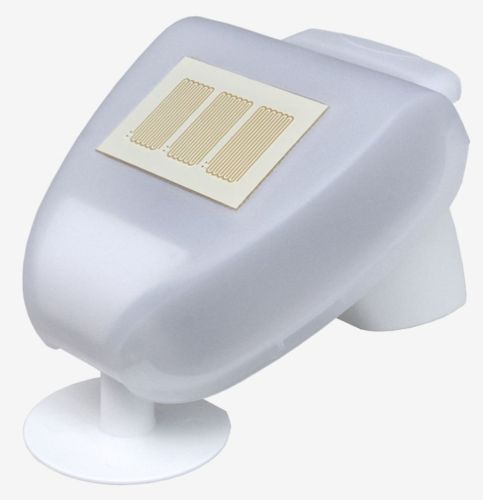
Elsner 30147 weather station with GPS receiver
| Lieske Part No. | 916190 |
|---|---|
| Mfg Part No | 30147 |
| EAN-Code | 4051996301479 |
| Manufacturer | Elsner |
| Here only | 550,84 EUR
655,50 EUR incl. VAT
|
Further information for Elsner 30147 weather station with GPS receiver
| General | |
| Degree of protection | IP44 |
| Operating voltage | 24 V |
| Electricity consumption | ≤ 90 mA |
| Temperature measurement range | -30...+50 °C |
| Wind measurement range | 0…35 m/s |
| Brightness measurement range | 0...99000 Lux |
| GPS frequency range | 1559...1610 MHz |
| RS485 bus load | 1/8 Unit Load |
| Supply voltage | 24 V SELV ±10% |
| Connection type | Screwed terminal |
| Conductor cross section | 0,5...1,0 mm² |
| Strip length | 6 mm |
| Colour | white/translucent |
| Mounting method | Surface or mast mounting |
| Mast diameter | Ø 35...55 mm |
| Weight total | ≈ 160g |
| Ambient temperature | 30...+50°C |
| Storage temperature | 30...+70°C |
| Protocol | RTU |
| Modbus function | Function 04h (Read Input Register) |
| GPS function | UTC, position, sun position |
| Rain sensor | heated, 1.2 W |
| Brightness sensors | 3x (East, South, West) |
| Wind measurement | Electronic |
| Housing | plastic |
| Mounting | Surface or mast mounting |
| Dimensions (W × H × D) | 96mm × 100mm × 128mm |
| Power supply | |
| Voltage (SELV power supply according to EN61558) | 24V SELV ±10% |
| Electricity consumption | ≤ 90mA |
| Connection screw terminal conductor cross-section rigid/flexible conductor stripping length | 0,5...1,0 mm², 6mm |
| RS485 | |
| Protocol | RTU |
| RS485 bus load | 1/8 Unit Load according to RS485 standard |
| Sensors | |
| Temperature measurement range | 30...+50°C |
| Wind measurement range | 0…35m/s |
| Brightness measurement range | 0 Lux … 99000 Lux |
Applications
The weather station is intended for outdoor installations, for example on roofs, masts, or exterior walls. It is frequently used in systems that respond to weather conditions, such as automatic sun protection systems, ventilation controls, solar system regulation, or irrigation systems. The integrated GPS function enables precise location determination and time synchronization, which is relevant for applications requiring geographical assignment or synchronized processes.
Functions and Equipment in Detail
The station measures ambient temperature in the range of -30 to +50 °C. Wind speed is electronically detected, enabling noiseless and reliable measurement even under extreme weather conditions such as hail, snow, or sub-zero temperatures. Brightness measurement is performed using three separate sensors, each capturing illumination from east, south, and west, enabling precise twilight detection and spatially differentiated light analysis. The precipitation sensor is heated (1.2 W) to prevent false readings due to dew or fog; it dries quickly after precipitation ends.
Technology Explained Simply
The weather station operates as a Modbus server with an RS485 interface and RTU protocol. Modbus clients such as PCs, PLC systems, or microcontrollers can query the measurement values using function 04h (Read Input Register). The RS485 bus load is 1/8 Unit Load according to the RS485 standard, enabling integration into existing bus systems. Power supply is via a SELV power supply (24 V ±10 %), ensuring safe, low-impedance power delivery. Power consumption is up to 90 mA. The GPS function operates in the frequency range of 1559 to 1610 MHz and provides location and time information.
Compatibility and Accessories
The weather station is compatible with Modbus client systems that support the RS485 interface and RTU protocol. Measurement values can be read by control devices, PC software, or PLC systems. The GPS function enables use in applications requiring geographical positioning or precise time synchronization.
Mounting and Installation
The weather station can be mounted on the surface or on a mast. For mast mounting, a diameter of 35 to 55 mm is required. The enclosure is made of plastic and is white/translucent. The IP44 protection rating protects against splashing water and dust, which is sufficient for outdoor use. Dimensions are 96 mm (width) × 100 mm (height) × 128 mm (depth), and the total weight is approximately 160 g. The terminal blocks are designed for solid and stranded conductors with a cross-section of 0.5 to 1.0 mm²; the stripping length is 6 mm.
Operational Advantages
Electronic wind measurement enables reliable detection even under difficult weather conditions. The heated precipitation measurement prevents false readings due to condensation. The three brightness sensors enable spatially differentiated light detection, which is beneficial for intelligent lighting and sun protection systems. The GPS function provides precise location and time data, useful for system synchronization or geographical assignment of measurement values. Modbus compatibility ensures easy integration into existing control and monitoring systems.
Protection rating, operating voltage, Modbus, GPS, brightness sensor, wind measurement are the key technical features that determine the functionality of the weather station. The ambient temperature range of -30 to +50 °C and the storage temperature of -30 to +70 °C define the operational limits. The supply voltage of 24 V SELV ±10 % is suitable for safe outdoor applications. The RS485 interface with RTU protocol enables standard communication with Modbus clients. The GPS function provides globally valid time and position information. Brightness measurement via three sensors enables precise detection of solar radiation from different directions. Electronic wind measurement ensures reliable detection even under extreme weather conditions.

This is an offer of:
79279 Vörstetten
https://industry-electronics.com
Tel. 07666/88499-0
Fax. 07666/88499-111
Diesen Artikel finden Sie unter:
industry-electronics.com/artikel/916190

Lieske Elektronik e.K.
Reutener Str. 1079279 Vörstetten
https://industry-electronics.com
Tel. 07666/88499-0
Fax. 07666/88499-111
Diesen Artikel finden Sie unter:
industry-electronics.com/artikel/916190