
DEHN 952035 DGP C S FM surge arrester Type2 gap C S
Energy > Surge Protection
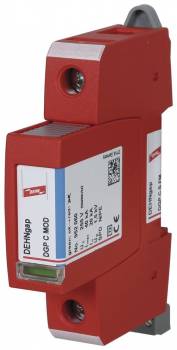
DEHN 952035 DGP C S FM surge arrester Type2 gap C S
| Lieske Part No. | 117038 |
|---|---|
| Mfg Part No | 952035 |
| EAN-Code | 4013364108547 |
| Manufacturer | DEHN |
| Here only | 143,83 EUR
171,16 EUR incl. VAT
|
Further information for DEHN 952035 DGP C S FM surge arrester Type2 gap C S
| General | |
| Norm | EN 61643-11 |
| Degree of protection | N-PE |
| System | TT system |
| Circuit | 3+1, 1+1 |
| Use in lightning protection zone concept | Interfaces 0B, -1 and higher |
| Product type | Surge arrester |
| Manufacturer | DEHN |
| Model | DGP C S FM |
| Product series | DEHNgap C S |
| Connection | Between neutral conductor N and protective earth conductor PE |
| Function | Diverting overvoltages |
| Purpose | protection of low-voltage consumer installations |
Applications
This arrester is specifically designed for TT systems, where the protective earth conductor PE is directly connected to the earthing system, while the neutral conductor N is connected via a separate earthing point in the distribution box. In such systems, installing an N-PE surge arrester is particularly important to minimize the risk of overvoltages between N and PE, which can arise from inductive or capacitive coupling. It is typically mounted in distribution boxes or at the entry interface of consumer systems to protect sensitive electrical equipment inside.
Functions and Equipment in Detail
The arrester consists of a base unit and a plug-in protection module, enabling modular and flexible installation. The protection module is designed to divert overvoltages between N and PE and activates during overvoltage events to reduce the voltage to a safe level. The construction ensures reliable operation under normal conditions and during disturbances. Its use within the lightning protection zone concept at interfaces 0B to -1 and higher enables a structured and standard-compliant protection concept that safeguards the entire installation from transient voltage spikes.
Technology Explained Simply
The arrester operates on the principle of overvoltage diversion: when a voltage exceeding the permissible operating range occurs, the protection module activates within nanoseconds and diverts the excess energy to the protective earth conductor PE. This prevents the overvoltage from reaching the connected consumer installations. The standard EN 61643-11 defines requirements for Type-2 surge protection devices, which are installed close to the equipment to be protected and are designed to divert energy from lightning and network disturbances. Thus, the arrester is suitable for use near sensitive electrical equipment.
Compatibility and Accessories
The arrester is designed for use in TT systems and can be installed in 3+1 or 1+1 configurations. It is part of the DEHNgap C S series, designed for modular installations in distribution boxes. Precise installation is carried out in a suitable distribution box, with electrical connections made according to the relevant standards and installation instructions.
Mounting and Installation
Installation takes place in a suitable distribution box, with the arrester connected between the neutral conductor (N) and the protective earth conductor (PE). Installation must comply with the relevant standards and the installation instructions. Connections are made via the designated terminal clamps, designed for the required cross-sections.
Operational Advantages
The arrester provides reliable protection against transient overvoltages caused by lightning strikes or network disturbances. Its modular design allows for flexible installation and maintenance. Compliance with EN 61643-11 ensures high safety and reliability. Its use within the lightning protection zone concept at interfaces 0B to -1 and higher enables a structured and standard-compliant protection concept that safeguards the entire installation from transient voltage spikes. Installation in TT systems is particularly important to minimize the risk of overvoltages between N and PE.

This is an offer of:
79279 Vörstetten
https://industry-electronics.com
Tel. 07666/88499-0
Fax. 07666/88499-111
Diesen Artikel finden Sie unter:
industry-electronics.com/artikel/117038

Lieske Elektronik e.K.
Reutener Str. 1079279 Vörstetten
https://industry-electronics.com
Tel. 07666/88499-0
Fax. 07666/88499-111
Diesen Artikel finden Sie unter:
industry-electronics.com/artikel/117038