
DEHN 785356 APJ OD YE 58 protective jacket yellow
Tools > Safety & Workwear Equipment > Workwear
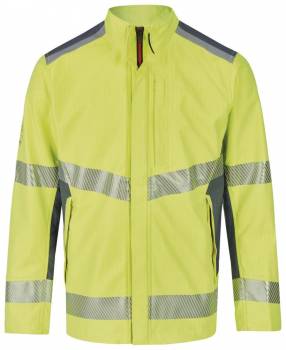
DEHN 785356 APJ OD YE 58 protective jacket yellow
| Lieske Part No. | 2061141 |
|---|---|
| Mfg Part No | 785356 |
| EAN-Code | 4013364452138 |
| Manufacturer | DEHN |
| Here only | 504,92 EUR
600,85 EUR incl. VAT
|
Further information for DEHN 785356 APJ OD YE 58 protective jacket yellow
| General | |
| Degree of protection | Arc fault tested |
| Certification | PSA Regulation (EU) 2016/425 |
| Test method | Box-Test |
| Standards | IEC 61482-1-2, EN ISO 11612, EN 1149-5, EN 13034 (PB 6), EN ISO 20471 |
| Material | Modacrylic (40%), viscose (59%), static inhibitors (1%), PU membrane: meta-armid knitting (100%) |
| Surface properties | dirt- and water-repellent |
| Size | 58 |
| Collar | Button collar |
| Pockets | Functional |
| Personalisation | possible |
| Arc fault protection class (box test 7 kA / 0.5 s – single-pole) | APC 2 |
| Arc energy (Warc or WLBP) | 320 kJ |
| Arc rating – ATPV (open arc) | 16 cal / cm² *) |
| Arc rating – ELIM (open arc) | 13 cal / cm² |
| PPE category (NFPA 70E) | PPE 2 |
| Weight per unit area | 300 g/m² |
| Material (sewing thread) | Kevlar (100%) |
| Standard | IEC 61482-2, EN ISO 11612, EN 1149-5, EN ISO 20471, EN 13034, EN ISO 13688, EN ISO 11611 |
| Primary colour | fluorescent yellow |
| Secondary colour | grey |
| Zipper | red |
| Size (international) | 58 (XL/2XL) |
Arc fault protection
The protective jacket was tested in the Box Test according to IEC 61482-1-2, a standard defining resistance to thermal and mechanical stresses during arc faults. This test ensures that the jacket provides sufficient protection under realistic conditions. Certification according to IEC 61482-1-2 is essential for use in high-voltage environments where the risk of arc flash explosions exists.
Safety standards and protective functions
The jacket also meets the requirements of EN ISO 11612, which regulates protection against heat, flame, and thermal hazards, as well as EN 1149-5, which prevents static discharge. The EN 13034 (PB 6) standard ensures protection against liquid chemicals, making the jacket suitable for environments with potential chemical exposure. Certification according to EN ISO 20471 ensures high visibility, especially in areas with low lighting or poor visibility conditions. This combination of standards provides comprehensive protection in various work environments.
Material and wearing comfort
The single-layer fabric ensures good breathability and reduces thermal stress on the wearer. The dirt- and water-repellent coating prevents liquids from penetrating the material, enhancing hygiene and the jacket’s longevity. The stand-up collar construction provides additional protection for the neck area, while the functional pockets enable carrying of tools and small items. The jacket is designed for outdoor use, with the color scheme (here: outdoor yellow) enhancing visibility.
Applications
The jacket is intended for electrical maintenance and repair work outdoors, particularly in high-voltage installations where the risk of arc faults exists. It is suitable for technicians, electricians, and other specialists working in hazardous areas. The combination of arc fault protection, chemical protection, and high visibility makes it appropriate equipment for various outdoor applications.
Operational advantages
The combination of multiple standard certifications and the single-layer fabric ensures a high protection standard while maintaining good wearing comfort. The dirt- and water-repellent surface reduces maintenance effort and extends the jacket’s service life. Personalization options allow clear identification of the wearer, which is beneficial in team environments or for external service providers. The jacket is suitable for use in various industries, particularly in energy supply, industry, and technical services outdoors.

This is an offer of:
79279 Vörstetten
https://industry-electronics.com
Tel. 07666/88499-0
Fax. 07666/88499-111
Diesen Artikel finden Sie unter:
industry-electronics.com/artikel/2061141

Lieske Elektronik e.K.
Reutener Str. 1079279 Vörstetten
https://industry-electronics.com
Tel. 07666/88499-0
Fax. 07666/88499-111
Diesen Artikel finden Sie unter:
industry-electronics.com/artikel/2061141