
DEHN 766041 RST 36 1500 rescue rod 1500 mm
Installation > Grounding Systems > Grounding material
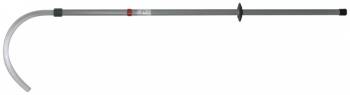
DEHN 766041 RST 36 1500 rescue rod 1500 mm
| Lieske Part No. | 412993 |
|---|---|
| Mfg Part No | 766041 |
| EAN-Code | 4013364113053 |
| Manufacturer | DEHN |
| Here only | 530,00 EUR
630,70 EUR incl. VAT
|
Further information for DEHN 766041 RST 36 1500 rescue rod 1500 mm
| General | |
| Manufacturer | DEHN |
| Norm | DIN VDE 0681-1 |
| Operating voltage | 36 kV |
| Material hook | full plastic |
| Hook property | bridge-proof |
| Function | Saving rod |
| Nominal voltage (UN) | 1 ... 36 kV |
| Max. weight of the electrified victim | 100 kg |
| Total length (lG) | 1695 mm |
| Insertion depth (IO) | 620 mm |
Applications
The rescue pole is used in electrical engineering and safety technology, particularly in industrial and high-voltage environments, where persons may be injured or trapped in hazardous areas of electrical installations. It is suitable for emergency services, electricians, energy supply companies, and other fields where handling electrical hazard zones is required. The pole enables rescuers to extract persons from near live conductors or energized installations without the rescuer coming into contact with the voltage.
Functions and Equipment in Detail
The pole is designed as an insulating pole, providing electrical insulation and thus minimizing the risk of electric shock for the user. The rescue hook made of solid plastic is specifically designed for use in electrical hazard zones and prevents unintended electrical bridging. The bridging-safe design means the hook cannot act as an electrical conductor, increasing the safety of the rescuer. The length of 1500 mm provides sufficient reach to access persons from a distance, without the rescuer entering the hazardous area.
Technology Explained Simply
The insulating pole operates according to the requirements of standard DIN VDE 0681-1, which defines specific requirements for electrical insulation, mechanical strength, and safety of insulating poles. The pole is designed for a maximum operating voltage of 36 kV, making it suitable for use in high-voltage environments. The material selection of solid plastic for the hook ensures high electrical insulation and mechanical stability. The construction is designed so that no electrical conductivity exists between the hook and the pole body, eliminating the risk of an electrical connection.
Compatibility and Accessories
The rescue pole is designed as a standalone device and requires no additional components for use. It is delivered without further accessories and is immediately ready for operation. The DIN VDE 0681-1 standard ensures compatibility with other insulating devices used in electrical engineering, particularly regarding electrical insulation and mechanical safety.
Mounting and Installation
The rescue pole requires no mounting or installation. It is designed as a handheld device and is used directly from the packaging. Handling involves simply grasping the pole and using the hook, with insulation ensured along the entire length of the pole. No tools or additional mounting procedures are required.
Advantages in Operation
The pole provides a safe and reliable way to extract persons from electrical hazard zones without the rescuer coming into contact with voltage. The bridging-safe design of the hook prevents unintended electrical connections. The 1500 mm length provides sufficient reach, and compliance with DIN VDE 0681-1 ensures adherence to required safety standards. The pole is robust and designed for use in professional environments.

This is an offer of:
79279 Vörstetten
https://industry-electronics.com
Tel. 07666/88499-0
Fax. 07666/88499-111
Diesen Artikel finden Sie unter:
industry-electronics.com/artikel/412993

Lieske Elektronik e.K.
Reutener Str. 1079279 Vörstetten
https://industry-electronics.com
Tel. 07666/88499-0
Fax. 07666/88499-111
Diesen Artikel finden Sie unter:
industry-electronics.com/artikel/412993