
DEHN 766040 RST 36 1000 rescue pole 1000 mm
Tools > Safety & Workwear Equipment > Workwear
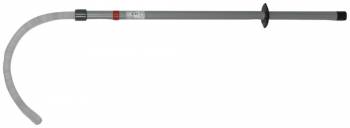
DEHN 766040 RST 36 1000 rescue pole 1000 mm
| Lieske Part No. | 259261 |
|---|---|
| Mfg Part No | 766040 |
| EAN-Code | 4013364113046 |
| Manufacturer | DEHN |
| Here only | 503,40 EUR
599,05 EUR incl. VAT
|
Further information for DEHN 766040 RST 36 1000 rescue pole 1000 mm
| General | |
| Manufacturer | DEHN |
| Norm | DIN VDE 0681-1 |
| Function | Saving rod |
| Material hook | full plastic |
| Hook property | bridge-proof |
| Operating voltage | 36 kV |
| Nominal voltage (UN) | 1 ... 36 kV |
| Max. weight of the electrified victim | 100 kg |
| Total length (lG) | 1235 mm |
| Insertion depth (IO) | 410 mm |
Applications
The rescue pole is primarily intended for use in electrical engineering and in emergencies involving electrical installations. It is used to rescue persons located near live conductors or equipment without direct contact with these components. The pole is designed for voltage ranges up to 36 kV, making it suitable for a wide range of applications in industry, energy supply, and high-voltage plant operations. The length of 1000 mm provides sufficient reach to assist persons from a safe distance without entering the hazardous zone.
Functions and Equipment in Detail
The rescue hook is made of solid plastic, ensuring high insulation performance and mechanical stability. The bridging-safe design prevents the hook from forming an electrical bridge upon contact with conductive parts, thereby increasing the safety of rescue personnel. The pole itself is designed as an insulating pole to interrupt current flow and provide electrical protection. The construction complies with the requirements of standard DIN VDE 0681-1, which applies to insulating poles in electrical engineering.
Technology Explained Simply
The insulating pole operates based on electrical insulation, with the entire pole body made of a non-conductive material that prevents the transmission of electrical energy. The rescue hook made of solid plastic is designed so that it does not establish an electrical connection even when touching metallic or conductive surfaces. The standard DIN VDE 0681-1 specifies the requirements for electrical insulation, mechanical strength, and testing procedures for such poles. The pole is designed for a maximum operating voltage of 36 kV, meaning it can be safely used in installations with up to 36 kV voltage.
Compatibility and Accessories
The rescue pole is designed as a standalone device and is delivered without additional components. The pole is intended for use with the designated rescue hook and does not require additional tools.
Mounting and Installation
The rescue pole requires no mounting or installation. It is designed as a handheld device and can be used directly. No additional mounting or fastening elements are required. Handling is done by direct gripping and use of the hook.
Operational Advantages
The pole provides a safe and reliable rescue operation in electrically hazardous areas. The bridging-safe design of the hook minimizes the risk of electrical contact. Compliance with the DIN VDE 0681-1 standard ensures the product’s quality and safety. The length of 1000 mm provides sufficient reach to assist persons from a safe distance without entering the hazardous zone. The pole is easy to handle and requires no additional mounting or installation.

This is an offer of:
79279 Vörstetten
https://industry-electronics.com
Tel. 07666/88499-0
Fax. 07666/88499-111
Diesen Artikel finden Sie unter:
industry-electronics.com/artikel/259261

Lieske Elektronik e.K.
Reutener Str. 1079279 Vörstetten
https://industry-electronics.com
Tel. 07666/88499-0
Fax. 07666/88499-111
Diesen Artikel finden Sie unter:
industry-electronics.com/artikel/259261