
DEHN 377200 Z-type connection plate Al for Rd 8-10 mm
Installation > Grounding Systems > Grounding material
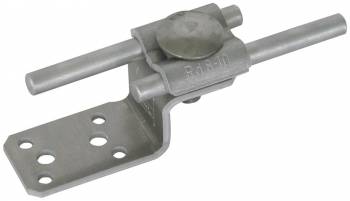
DEHN 377200 Z-type connection plate Al for Rd 8-10 mm
| Lieske Part No. | 332137 |
|---|---|
| Mfg Part No | 377200 |
| EAN-Code | 4013364136465 |
| Manufacturer | DEHN |
| Here only | 5,22 EUR
6,21 EUR incl. VAT
|
Further information for DEHN 377200 Z-type connection plate Al for Rd 8-10 mm
| General | |
| Lug material | Al |
| Fixing | [4x] Ø5.2 / [2x] Ø6.5 mm |
| Material of double clamp | Al |
| Clamping range Rd | 8-10 mm |
| Standard | EN 62561-1 |
Applications
The connection bracket is intended for use in electrical and electronic installations, particularly in areas where reliable earthing is required, such as industrial plants, buildings with lightning protection systems, or IT infrastructures. It is frequently used to connect metal enclosures to earthing conductors or equipotential bonding systems. The standard DIN EN 62305-3, especially Annex Bbl. 1, provides guidance on mounting: for material thicknesses from 0.5 mm, four rivets Ø5 mm and two rivets Ø6 mm are specified; for material thicknesses from 2 mm, two sheet metal self-tapping screws Ø6.3 mm made of NIRO are recommended.
Functions and Equipment in Detail
The bracket features a double lug made of aluminium, enabling a secure and durable connection to the earthing conductor. The clamping area is designed for conductors with a diameter of 8 to 10 mm, allowing connection to standard earthing conductors. The screw for securing the double lug is an e M10 x 30 mm screw made of NIRO, which is corrosion-resistant and suitable for use in earthing systems. The connection can be made both longitudinally and transversely, enabling flexible mounting on various components.
Technology Explained Simply
The lightning current carrying capacity of the connection bracket is defined according to DIN EN 62561-1, with the exact classification specified in the test certificate. This means the component is suitable for use in lightning protection systems and meets the required electrical and mechanical specifications. The material thickness of 3 mm ensures sufficient mechanical stability to withstand mechanical stresses and thermal strains during current flow. The use of aluminium as the material for the bracket and the double lug ensures good electrical conductivity while being lightweight and corrosion-resistant.
Compatibility and Accessories
The connection bracket is compatible with earthing conductors in the diameter range of 8 to 10 mm. Mounting is done using blind rivets or drill screws, with the exact requirements for fastening materials specified in DIN EN 62305-3. The e M10 x 30 mm screw made of NIRO is already integrated and enables a secure connection to the double lug. The bracket is designed for use in systems according to DIN EN 62561-1, ensuring standardization and interoperability with other earthing components.
Mounting and Installation
Mounting is performed by fastening the bracket to the metallic surface using blind rivets or drill screws at the designated holes (Ø5.2 mm and Ø6.5 mm). The double lug is then connected to the earthing conductor using the e M10 x 30 mm screw. The connection direction can be either longitudinal or transverse, depending on installation requirements. The fastening materials must be selected according to the application guidelines in DIN EN 62305-3 to ensure the required mechanical and electrical connection.
Advantages in Operation
The connection bracket provides a reliable and durable connection between metallic components and the earthing system. The use of aluminium and NIRO materials ensures corrosion resistance and long service life. The flexible mounting (longitudinal/transverse) and compatibility with standard earthing conductors (Rd 8–10 mm) simplify installation. Compliance with the standard DIN EN 62561-1 ensures integration into standardized earthing systems and suitability for use in lightning protection installations.

This is an offer of:
79279 Vörstetten
https://industry-electronics.com
Tel. 07666/88499-0
Fax. 07666/88499-111
Diesen Artikel finden Sie unter:
industry-electronics.com/artikel/332137

Lieske Elektronik e.K.
Reutener Str. 1079279 Vörstetten
https://industry-electronics.com
Tel. 07666/88499-0
Fax. 07666/88499-111
Diesen Artikel finden Sie unter:
industry-electronics.com/artikel/332137