
Chauvin Arnoux XV41-BNC pH probe with BNC connector
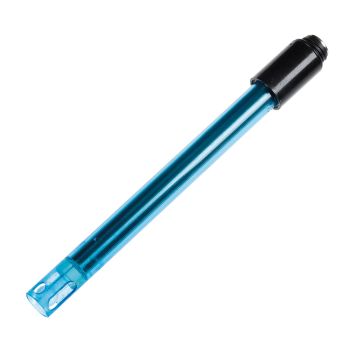
Chauvin Arnoux XV41-BNC pH probe with BNC connector
| Lieske Part No. | 1182015 |
|---|---|
| Mfg Part No | XV41-BNC |
| EAN-Code | 3663653007351 |
| Manufacturer | Chauvin Arnoux |
| Here only | 196,80 EUR
234,19 EUR incl. VAT
|
Further information for Chauvin Arnoux XV41-BNC pH probe with BNC connector
| General | |
| Min. volume | 0,5 mL |
Applications
The electrode is suitable for general pH measurements in liquid media, particularly in laboratory environments and in the field. Due to its robust construction, it is also suitable for applications involving mechanical stress. The recommended application includes general measurements requiring accurate determination of the pH value in the range of 0 to 12. The electrode is not intended for use with semi-solid or solid media, as the spherical tip is not designed for such materials.
Functions and Equipment in Detail
The XV41-BNC features a universal glass, enabling accurate measurement up to a pH value of 12. The glass membrane reacts sensitively to H⁺ ions in the sample and generates a voltage proportional to the hydrogen ion activity. The PVC body protects the sensitive glass membrane and enhances the mechanical stability of the electrode. The electrode is equipped with a BNC connector, ensuring a secure and reliable connection to the measuring device. The cable length is 1 meter, providing sufficient reach for use in laboratory and field applications.
Technology Explained Simply
pH measurement is carried out via the potential difference between the measuring electrode (XV41-BNC) and a reference electrode. The measuring electrode generates a voltage dependent on the concentration of hydrogen ions in the sample. The reference electrode provides a constant reference potential. The measuring device detects the difference between these potentials in millivolts (mV) and then converts it into a pH value. The XV41-BNC serves as the indicator electrode, reacting to ion concentration. The combination of both electrodes enables precise and reproducible measurement.
Compatibility and Accessories
The XV41-BNC can be used in combination with reference electrodes of type BR41, BR42, XR41, or XR42. These reference electrodes feature an Ag/AgCl reference system and a refillable KCl electrolyte (1 mol/L). The electrode is not intended for use with ORP measuring electrodes or other measurement systems. Compatibility is limited to the specified reference electrodes, as the measurement circuit only functions with a suitable reference electrode. The electrode is not suitable for use in semi-solid or solid media.
Installation and Mounting
The XV41-BNC is mounted by directly connecting it to the measuring device via the BNC connector. The electrode is immersed into the liquid to be measured, ensuring the spherical tip remains fully submerged in the sample. The 1-meter cable length allows flexible positioning of the measuring device. No additional mounting aids or tools are required. The connection to the measuring device is made directly via the BNC connector, ensuring a secure and interference-free transmission.
Operational Advantages
The XV41-BNC offers high mechanical robustness due to its PVC body, minimizing breakage risks in case of impacts. The spherical tip enables precise measurement in liquid samples. The use of a universal glass allows accurate measurement up to pH 12. The BNC connector ensures a reliable and secure connection to the measuring device. The electrode is suitable for laboratory and field applications and provides high reliability in pH measurement. The combination with a reference electrode enables precise and reproducible measurement, with the service life of the measuring electrode being independent of that of the reference electrode.

This is an offer of:
79279 Vörstetten
https://industry-electronics.com
Tel. 07666/88499-0
Fax. 07666/88499-111
Diesen Artikel finden Sie unter:
industry-electronics.com/artikel/1182015

Lieske Elektronik e.K.
Reutener Str. 1079279 Vörstetten
https://industry-electronics.com
Tel. 07666/88499-0
Fax. 07666/88499-111
Diesen Artikel finden Sie unter:
industry-electronics.com/artikel/1182015