
Axis 03325-001 LICS Software Audio Manager Pro Device 1 Device 5Y E-License
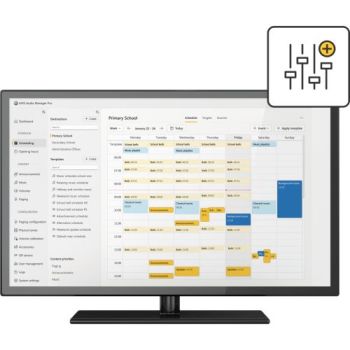
Axis 03325-001 LICS Software Audio Manager Pro Device 1 Device 5Y E-License
| Lieske Part No. | 226052 |
|---|---|
| Mfg Part No | 03325-001 |
| EAN-Code | |
| Manufacturer | Axis |
| Here only | 27,55 EUR
32,78 EUR incl. VAT
|
Further information for Axis 03325-001 LICS Software Audio Manager Pro Device 1 Device 5Y E-License
| General | |
| Maximum number of zones | 100 piece |
| Installation | on physical hardware or virtual machine - |
| Access | Remote access via web interface - |
| Functions | Zone management, real-time configuration, scheduling, system status monitoring, audio and visual content - |
| License duration | 5 years |
| License type | E-License - |
Applications
AXIS Audio Manager Pro is designed for managing complex IP audio systems used in large facilities with multiple communication zones. These include, for example, high-rise buildings, hospitals, schools, airports, or shopping centers, where planned, live, or event-triggered announcements, door chimes, or background music must be coordinated. The software also supports visual elements such as strobe lights and text displays, which can be synchronized with audio content. This makes it particularly suitable for alarm and security systems, where visual and audio signals are combined.
Functions and Features in Detail
The software provides central control over all connected audio devices. Configuration is performed in real time, allowing changes to be made without interrupting ongoing operations. The advanced scheduling enables precise coordination of audio and visual content, so announcements, music, or door chimes can be activated at specific times or on specific days. Content and schedules can be configured for individual zones, multiple zones, or for all zones simultaneously. System status monitoring allows continuous oversight of devices to detect malfunctions or failures early.
Technology Explained Simply
The software is based on an IP-based network, connecting audio devices via the existing network infrastructure. Communication occurs through standardized protocols, enabling integration into existing IT infrastructures. The software can be run on physical hardware or on virtual machines, offering flexibility in setup. Real-time configuration ensures changes take effect immediately without requiring the system to be shut down or restarted. Zone management enables structured organization of speakers, keeping control manageable even in very large installations.
Compatibility and Accessories
The software is designed for managing IP audio devices compatible with the Axis ecosystem. Suitable accessories that can be used in conjunction with the software include, for example, the D4100-VE MK II strobe light with siren. This unit can be controlled via the software to trigger visual alarms in combination with audio signals. The combination of audio and visual signals increases alarm visibility, especially in noisy environments or for individuals with hearing impairments.
Installation and Mounting
The software is installed on a suitable server, either physical or as a virtual machine. Installation is straightforward and does not require special hardware requirements beyond standard server system specifications. Configuration is performed via a web-based user interface accessible through a standard browser. Zone and device setup is done through the software interface, with devices being detected and integrated over the network.
Operational Advantages
Central control via a single interface reduces system management effort and minimizes error sources. Real-time configuration allows quick adaptation to changing requirements without interrupting operations. The advanced scheduling and the ability to configure content for multiple zones simultaneously increase efficiency in planning and executing communication measures. System status monitoring ensures high availability and reliability of the system.

This is an offer of:
79279 Vörstetten
https://industry-electronics.com
Tel. 07666/88499-0
Fax. 07666/88499-111
Diesen Artikel finden Sie unter:
industry-electronics.com/artikel/226052

Lieske Elektronik e.K.
Reutener Str. 1079279 Vörstetten
https://industry-electronics.com
Tel. 07666/88499-0
Fax. 07666/88499-111
Diesen Artikel finden Sie unter:
industry-electronics.com/artikel/226052