
APC NBES0308 Leak Sensor 20 ft
Networks > Accessories > Modules / extensions
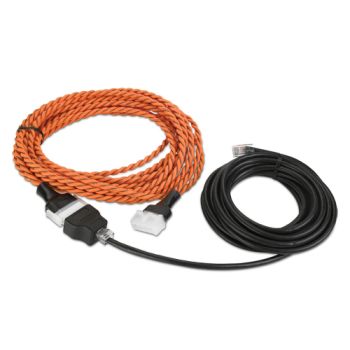
APC NBES0308 Leak Sensor 20 ft
| Lieske Part No. | 665183 |
|---|---|
| Mfg Part No | NBES0308 |
| EAN-Code | 0731304262817 |
| Manufacturer | APC |
| Here only | 332,49 EUR
395,66 EUR incl. VAT
|
Further information for APC NBES0308 Leak Sensor 20 ft
| Features | |
| Non-operating altitude | 0 - 15000 m |
| Operational conditions | |
| Operating temperature (T-T) | 0 - 45 °C |
| Packaging data | |
| Package width | 234 mm |
| Package height | 71 mm |
| Power | |
| Connectivity technology | Wired |
| Weight & dimensions | |
| Weight | 440 g |
Applications
The sensor is primarily intended for use in data centres and network rooms where the risk of liquid leaks exists due to air conditioning units, piping, or other sources. The 20-foot length (approximately 6.1 metres) of the sensor allows comprehensive coverage of areas, particularly along floor plates, under server rows, or in areas with increased risk of water accumulation. Early detection of liquids helps avoid costly damage to IT equipment and infrastructure.
Features and Equipment in Detail
The sensor operates as a LeakRope sensor, connected via cable to a compatible NetBotz device. The transmission technology is wired, ensuring stable and reliable signal transmission. The sensor technology detects the presence of liquid along the entire cable length and transmits this status to the higher-level monitoring system. The delivery includes cable ties, used to secure the sensor to suitable surfaces such as floor plates, shelves, or cable ducts. These fastening accessories simplify installation and ensure secure placement of the sensor.
Technology Explained Simply
The sensor detects liquids using a special sensor technology based on the electrical conductivity of liquids. When liquid contacts the sensor, the electrical resistance changes, which is transmitted as a signal to the NetBotz system. The operating temperature ranges from 0 to 45 °C, enabling use in typical indoor conditions of server rooms. The storage height is 0 to 15000 m, allowing storage at various geographical altitudes without affecting functionality. The device weighs 440 g and is light enough to be mounted without additional support structures.
Compatibility and Accessories
The sensor is compatible with selected NetBotz devices, particularly the NetBotz 700 series. The connection is made via a wired interface that fits into the corresponding sensor inputs of NetBotz appliances. Additionally, the sensor can be combined with a Leak Rope Extension Sensor Accessory to extend the total monitoring length up to 100 feet (approximately 30.5 metres). This allows flexible adaptation to larger rooms or longer monitoring paths. However, using extension sensors requires appropriate support from the NetBotz system in use.
Installation and Mounting
Installation involves securing the sensor to suitable surfaces in the room using the included cable ties. The sensor should be positioned along potential leak sources, such as under server rows, along cable ducts, or near air conditioning units. Connection to the NetBotz device is made via the wired interface, with cabling routed securely and accessibly to allow easy maintenance and diagnostics. Mounting does not require special tools, although careful planning of sensor placement is recommended to ensure optimal coverage.
Operational Advantages
Using the sensor enables early detection of liquid leaks before damage occurs to IT equipment. The wired transmission technology ensures reliable signal transmission, and integration into the NetBotz system allows central monitoring and alerting. The flexible placement enabled by cable ties and the option to extend monitoring length make the sensor a scalable solution for different room sizes and requirements. The operating temperature range of 0 to 45 °C covers typical environmental conditions in server rooms, allowing the sensor to be used without restrictions in most cases.

This is an offer of:
79279 Vörstetten
https://industry-electronics.com
Tel. 07666/88499-0
Fax. 07666/88499-111
Diesen Artikel finden Sie unter:
industry-electronics.com/artikel/665183

Lieske Elektronik e.K.
Reutener Str. 1079279 Vörstetten
https://industry-electronics.com
Tel. 07666/88499-0
Fax. 07666/88499-111
Diesen Artikel finden Sie unter:
industry-electronics.com/artikel/665183