
AMD 100-100001237BOX CPU Ryzen 5 8600G AI
Computer-Components > Processors > Socket AM5
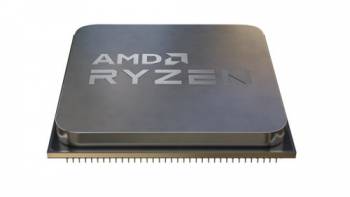
AMD 100-100001237BOX CPU Ryzen 5 8600G AI
| Lieske Part No. | 1211940 |
|---|---|
| Mfg Part No | 100-100001237BOX |
| EAN-Code | 0730143316163 |
| Manufacturer | AMD |
| Here only | 217,81 EUR
259,19 EUR incl. VAT
|
Further information for AMD 100-100001237BOX CPU Ryzen 5 8600G AI
| General | |
| Processor family | AMD Ryzen 5 |
| Socket | AM5 |
| Cores | 6 |
| Threads | 12 |
| Base frequency | 4,3 GHz |
| Turbo frequency | 5,0 GHz |
| L3 cache | 22 MB |
| TDP | 65 W |
| Memory type | DDR5-SDRAM |
| Memory clock rates | 3600, 5200 MHz |
| Graphics unit | AMD Radeon 760M |
| Graphics base frequency | 2800 MHz |
| Lithography | 4 nm |
| PCIe version | 4.0 |
| PCIe lanes | x16 |
| Market segment | Desktop |
| Compatible operating systems | Windows 11/10 x64, RHEL x86 64-bit, Ubuntu x86 64-bit |
| Scope of delivery | Processor, Wraith Stealth Cooler |
Applications
The processor is designed for use in desktop computers and is suitable for general office applications, multimedia processing, web browsing, as well as light to moderate gaming. The integrated Radeon 760M graphics unit supports modern applications and enables content display in HD and 4K resolution, although performance for more demanding games is limited. Support for operating systems such as Windows 11/10 x64, RHEL x86 64-bit, and Ubuntu x86 64-bit makes it suitable for various use cases in both business and private environments.
Features and Specifications in Detail
The AMD Ryzen 5 8600G features a base frequency of 4.3 GHz and reaches a turbo frequency of up to 5.0 GHz when needed. These clock speeds enable efficient task processing, with the turbo function activated when sufficient cooling and power supply are available. The processor includes a 22 MB L3 cache, which reduces data access times and improves overall performance. The integrated AMD Radeon 760M graphics unit operates at a base frequency of 2800 MHz and supports modern graphics standards.
Technology Explained Simply
The processor is based on 4-nm lithography, enabling higher transistor density and thus more efficient power usage. The TDP (Thermal Design Power) is 65 watts, indicating moderate heat generation and allowing the use of a standard cooler. Support for DDR5-SDRAM with clock speeds up to 5200 MHz ensures fast memory access, which is particularly beneficial for multitasking and applications with high memory requirements. The PCIe 4.0 interface with x16 lanes enables connection to fast storage and graphics components.
Compatibility and Accessories
The processor is designed for motherboards with the AM5 socket and requires a compatible motherboard platform. Support for DDR5-SDRAM with clock speeds up to 5200 MHz is crucial for selecting the appropriate memory. The integrated AMD Radeon 760M graphics unit allows usage without an additional graphics card, enabling systems with reduced hardware complexity. Compatibility with operating systems such as Windows 11/10 x64, RHEL x86 64-bit, and Ubuntu x86 64-bit ensures broad applicability.
Installation and Mounting
The processor is delivered in box packaging, requiring installation on a motherboard with AM5 socket. Mounting involves inserting the processor into the socket and securing it with the retention lever. Installation does not require additional tools, although correct alignment of the processor and secure attachment of the cooling system are necessary to ensure stable operating temperatures.
Advantages in Operation
The AMD Ryzen 5 8600G offers balanced performance for desktop use, with the integrated graphics reducing the need for a separate graphics card. The 4-nm technology and 65-watt TDP ensure efficient power consumption, lowering operating temperatures and power usage compared to older generations. Support for DDR5-SDRAM with high clock speeds improves system responsiveness, especially in applications with high memory demands. Compatibility with various operating systems expands usage possibilities in different environments.

This is an offer of:
79279 Vörstetten
https://industry-electronics.com
Tel. 07666/88499-0
Fax. 07666/88499-111
Diesen Artikel finden Sie unter:
industry-electronics.com/artikel/1211940

Lieske Elektronik e.K.
Reutener Str. 1079279 Vörstetten
https://industry-electronics.com
Tel. 07666/88499-0
Fax. 07666/88499-111
Diesen Artikel finden Sie unter:
industry-electronics.com/artikel/1211940