
ABB Automation ACS580-01-246A-4 frequency converter 132kW
Industrial Material > Automation > Frequency converter, soft starter
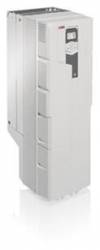
ABB Automation ACS580-01-246A-4 frequency converter 132kW
| Lieske Part No. | 1334961 |
|---|---|
| Mfg Part No | 3AUA0000080507 |
| EAN-Code | 6438177305637 |
| Manufacturer | ABB |
| Here only | 14.213,90 EUR
16.914,54 EUR incl. VAT
|
Further information for ABB Automation ACS580-01-246A-4 frequency converter 132kW
| General | |
| Mains voltage | 480 |
| Mains frequency | 50/60 Hz |
| Number of phases input | Other |
| Number of phases output | 3 |
| Max. output frequency | 598 |
| Max. output voltage | 480 |
| Nominal output current I2N | 246 |
| Max. output at quadratic load at rated output voltage | 132 |
| Max. output at linear load at rated output voltage | 132 |
| Relative symmetric net frequency tolerance | 5 |
| Relative symmetric net voltage tolerance | 10 |
| Number of analogue outputs | 2 |
| Number of analogue inputs | 2 |
| Number of digital outputs | 3 |
| Number of digital inputs | 6 |
| Number of HW-interfaces industrial Ethernet | 0 |
| Number of interfaces PROFINET | 0 |
| Number of HW-interfaces RS-232 | 0 |
| Number of HW-interfaces RS-422 | 0 |
| Number of HW-interfaces RS-485 | 1 |
| Number of HW-interfaces serial TTY | 0 |
| Number of HW-interfaces USB | 1 |
| Number of HW-interfaces parallel | 2 |
| Number of HW-interfaces other | 2 |
| Type of converter | U converter |
| Degree of protection (IP) | IP21 |
| Degree of protection (NEMA) | 1 |
| Height | 965 |
| Width | 300 |
| Depth | 393 |
| Power consumption | 3131 |
| With control unit | |
| Application in industrial area permitted | |
| Application in domestic- and commercial area permitted | |
| Supporting protocol for TCP/IP | |
| Supporting protocol for PROFIBUS | |
| Supporting protocol for CAN | |
| Supporting protocol for INTERBUS | |
| Supporting protocol for ASI | |
| Supporting protocol for KNX | |
| Supporting protocol for MODBUS | |
| Supporting protocol for Data-Highway | |
| Supporting protocol for DeviceNet | |
| Supporting protocol for SUCONET | |
| Supporting protocol for LON | |
| Supporting protocol for PROFINET IO | |
| Supporting protocol for PROFINET CBA | |
| Supporting protocol for SERCOS | |
| Supporting protocol for Foundation Fieldbus | |
| Supporting protocol for EtherNet/IP | |
| Supporting protocol for AS-Interface Safety at Work | |
| Supporting protocol for DeviceNet Safety | |
| Supporting protocol for INTERBUS-Safety | |
| Supporting protocol for PROFIsafe | |
| Supporting protocol for SafetyBUS p | |
| Supporting protocol for BACnet | |
| Supporting protocol for other bus systems | |
| With optical interface | |
| With PC connection | |
| Integrated breaking resistance | |
| 4-quadrant operation possible | |
Applications
The frequency converter is suitable for a wide range of industrial applications, particularly in systems requiring variable speed control. It is frequently used in pump and fan systems to optimize energy consumption and ensure quiet, efficient operation. It is also used in conveyor systems and mixers, where precise torque control is required. The integrated functions allow for easy commissioning without additional hardware.
Functions and Equipment in Detail
The inverter features two analog inputs and two analog outputs, as well as six digital inputs and three digital outputs. These interfaces enable flexible connection to sensors, controls and other devices. An integrated control element supports local control and adjustment. The power consumption is 3131 W. The inverter supports multiple industrial communication protocols, including TCP/IP, PROFIBUS, CAN, MODBUS, DeviceNet, PROFINET IO, EtherNet/IP and others. The number of RS-485 serial interfaces is one, with an additional USB interface and two parallel interfaces. A PC interface is also integrated, enabling commissioning and diagnostics via external devices.
Technology Explained Simply
As a U-inverter, the device converts the alternating voltage from the mains supply into a variable voltage and frequency adapted to the drive motor. Control is achieved via the integrated interfaces and protocols, allowing flexible integration into existing automation systems. The maximum output frequency of 598 Hz enables high-speed control, while the maximum output voltage of 480 V meets motor supply requirements. The relative symmetrical mains voltage tolerance of 10 % and the mains frequency tolerance of 5 % ensure stable operation even with slight fluctuations in the power supply network.
Compatibility and Accessories
Compatible accessories include adapters for various bus systems such as CANOpen (FCAN-01), Powerlink (FEPL-02), DeviceNet (FDNA-01), Profibus DP (FPBA-01) and EtherCAT (FECA-01). Additional options include a control panel door mounting kit (DPMP-02), a panel bus adapter (CDPI-01), or an option card with RO + 1x DO (CMOD-01). These components extend the functionality of the inverter and allow individual adaptation to specific requirements. A potentiometer (e.g. 3SU1200-2PS10-1AA0 or M22-R10K) can be used for analog speed adjustment.
Mounting and Installation
The frequency converter is designed for wall mounting and is installed indoors. Dimensions are 965 mm (height), 300 mm (width) and 393 mm (depth). Installation is carried out via the designated mounting surfaces, with electrical connections made to the corresponding terminals. Commissioning is simplified by the integrated functions and control element, with communication via the supported protocols.
Operational Advantages
The ACS580-01-246A-4 offers high operational reliability due to integrated protection functions and support for many industrial communication protocols. The simple commissioning and standard equipment with necessary functions reduce planning and installation time. The power consumption of 3131 W and the maximum delivered power of 132 kW enable efficient use in medium to large drive systems. Support for EtherNet/IP and PROFINET IO facilitates integration into modern automation architectures.
The mentioned protocols and protection ratings are crucial for selection and integration into existing systems.

This is an offer of:
79279 Vörstetten
https://industry-electronics.com
Tel. 07666/88499-0
Fax. 07666/88499-111
Diesen Artikel finden Sie unter:
industry-electronics.com/artikel/1334961

Lieske Elektronik e.K.
Reutener Str. 1079279 Vörstetten
https://industry-electronics.com
Tel. 07666/88499-0
Fax. 07666/88499-111
Diesen Artikel finden Sie unter:
industry-electronics.com/artikel/1334961