
ABB Automation 2TLA020039R0800 Dalton tongue A safety relay
Industrial Material > Industrial relays and contactors > Safety relay
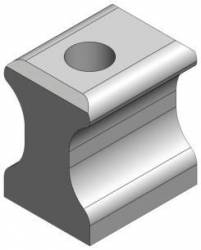
ABB Automation 2TLA020039R0800 Dalton tongue A safety relay
| Lieske Part No. | 1337289 |
|---|---|
| Mfg Part No | 2TLA020039R0800 |
| EAN-Code | 7350024459470 |
| Manufacturer | ABB |
| Here only | 30,21 EUR
35,95 EUR incl. VAT
|
Further information for ABB Automation 2TLA020039R0800 Dalton tongue A safety relay
| General | |
| Holding force | 2000 N |
| Direction of start | frontal |
| Accessories | mounting kits |
| Product type | Process mounting |
| Manufacturer | ABB |
Applications
The Dalton interlock type A is intended for use in machines and plants where a mechanical locking mechanism with high reliability is required. Typical application fields include, for example, machine tools, presses, conveyor systems, or other production plants, where the safety of operation and maintenance is paramount. The interlock ensures that moving parts can only be operated when securely locked.
Functions and Equipment in Detail
The interlock features a locking force of 2000 N, ensuring stable and secure locking even under load. The design allows for the mounting of EDEN safety sensors, available in different coding levels (high or low). These sensors enable electronic state monitoring of the interlock and can be integrated into safety control systems to allow machine operation only when the locking is correctly closed. The interlock is used together with a closing tongue, which features a frontal approach direction, enabling a clear and secure locking.
Technology Explained Simply
The interlock operates mechanically and is activated by the closing tongue. The locking force of 2000 N ensures that the lock cannot be accidentally opened under mechanical load. The integration of EDEN sensors enables electronic state monitoring, which can be used in safety control systems. The sensors can be used in different coding levels (high or low), allowing flexible adaptation to various safety requirements. The frontal approach direction of the closing tongue ensures a clear and secure locking, which remains stable even under high operational loads.
Compatibility and Accessories
The Dalton interlock type A is used in combination with a closing tongue and optionally with EDEN sensors (in high or low coding level). The EDEN sensors enable electronic state monitoring and are suitable for integration into safety control systems. Various mounting kits are available for installation, enabling flexible and easy mounting on different machines. The interlock is part of a system designed for the secure locking of machine components.
Mounting and Installation
Mounting is done using the provided mounting kits, which enable flexible and easy installation on various machines. The closing tongue is positioned in the frontal approach direction to ensure a clear locking. Integration of EDEN sensors is optional, depending on safety requirements. The interlock is designed for use in industrial environments and requires no special tools for installation.
Operational Advantages
The interlock provides a mechanical locking with high reliability and a locking force of 2000 N, which remains stable even under load. The option to integrate EDEN sensors enables electronic state monitoring, which can be used in safety control systems. The frontal approach direction of the closing tongue ensures a clear and secure locking. The mounting kits enable flexible and easy installation on various machines, simplifying maintenance and replacement. The interlock is designed for use in industrial plants and ensures secure protection of moving components.
Safety Relays
The interlock is part of a safety system that can be used in combination with safety relays. The electronic state monitoring via EDEN sensors enables integration into safety control systems that respond to locking states. The interlock itself is a mechanical component ensuring physical locking, while the EDEN sensors handle electronic monitoring. This combination system increases machine safety and enables reliable protection.
Accessories
Various mounting kits are available for installation, enabling flexible and easy mounting on different machines. EDEN sensors are optionally available and can be used in high or low coding levels. The closing tongue is part of the interlock unit and is used together with the interlock. The mounting kits are designed for installation on various machines and simplify mounting.
Compatibility
The interlock is compatible with closing tongues featuring a frontal approach direction and with EDEN sensors in high or low coding levels. The mounting kits enable installation on various machines. The interlock is part of a system designed for the secure locking of machine components. Integration into safety control systems is achieved via EDEN sensors, which enable electronic state monitoring.
Safety
The interlock ensures secure locking of machine components, with the mechanical locking force of 2000 N enabling stable locking even under load. Electronic state monitoring via EDEN sensors enhances safety by monitoring the locking state and integrating into safety control systems. The frontal approach direction of the closing tongue ensures a clear and secure locking, which remains stable even under high operational loads.
Application
The interlock is used in machines and plants where secure locking is required. Typical application fields include machine tools, presses, conveyor systems, or other production plants, where the safety of operation and maintenance is paramount. The interlock ensures that moving parts can only be operated when securely locked.
System Integration
The interlock is part of a system consisting of the interlock, the closing tongue, and optional EDEN sensors. The EDEN sensors enable electronic state monitoring and are suitable for integration into safety control systems. The mounting kits enable flexible and easy installation on various machines. The interlock is designed for use in industrial environments and ensures secure protection of moving components.

This is an offer of:
79279 Vörstetten
https://industry-electronics.com
Tel. 07666/88499-0
Fax. 07666/88499-111
Diesen Artikel finden Sie unter:
industry-electronics.com/artikel/1337289

Lieske Elektronik e.K.
Reutener Str. 1079279 Vörstetten
https://industry-electronics.com
Tel. 07666/88499-0
Fax. 07666/88499-111
Diesen Artikel finden Sie unter:
industry-electronics.com/artikel/1337289