
ABB Automation 1SVR750669R9400 CM-IVN.S PLC system
Industrial Material > Automation > PLC Systems
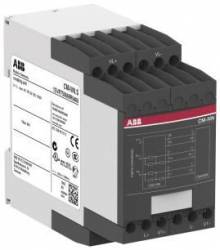
ABB Automation 1SVR750669R9400 CM-IVN.S PLC system
| Lieske Part No. | 276423 |
|---|---|
| Mfg Part No | 1SVR750669R9400 |
| EAN-Code | 4016779852630 |
| Manufacturer | ABB |
| Here only | 439,85 EUR
523,42 EUR incl. VAT
|
Further information for ABB Automation 1SVR750669R9400 CM-IVN.S PLC system
| General | |
| Type of electric connection | Screw connection |
| Width | 45 |
| Height | 85.6 |
| Depth | 104.8 |
| Operating voltage at AC 50 Hz | 230 |
| Operating voltage at AC 60 Hz | 230 |
| Rated operation frequency | 400 |
| Voltage measurement range | 1000 |
| Voltage type (operating voltage) | AC |
| With detachable clamps | |
| Indication of insulation value | |
| Error registration possible | |
| External power supply required | |
Applications
The CM-IVN.S module is used in IT systems where the operating voltage reaches up to 1000 V AC. It is specifically designed for applications where the standard version of the CM-IWN.1 is insufficient to cover the required voltage range. The module is used in industrial environments where high electrical voltages and reliable insulation monitoring are necessary. The ABB device family covers both AC and DC systems, with the CM-IVN.S specifically designed for AC systems.
Functions and Equipment in Detail
The CM-IVN.S extends the voltage measurement range of the CM-IWN.1 up to 1000 V AC. The operating voltage is 230 V AC at a frequency of 50 Hz or 60 Hz, enabling integration into standard power supply systems. The device family detects developing insulation faults and stores fault information to enable subsequent analysis. Display of the insulation value is not provided, as the module functions as an add-on component and does not have an independent display. Electrical connections are made via screw terminals, with removable terminals not available.
Technology Explained Simply
The module operates as a pre-stage device, connected between the main device CM-IWN.1 and the IT system to be monitored. It enables measurement of voltages exceeding the standard range of the CM-IWN.1 without requiring modification of the main device. The rated operating frequency is 400 Hz, allowing use in installations with higher frequencies. The operating voltage of 230 V AC at 50 Hz or 60 Hz is standard in industrial and commercial installations, so no external power supply is required. The construction is designed for industrial environments, with exact dimensions (width 45 mm, height 85.6 mm, depth 104.8 mm) enabling installation in standard control panels.
Compatibility and Accessories
The CM-IVN.S is specifically developed for use with the insulation monitoring device CM-IWN.1. It extends its functionality by increasing the voltage measurement range up to 1000 V AC. The combination enables monitoring of IT systems with higher voltages without requiring a completely new device. The ABB device family includes a total of four devices covering most standard applications. Additionally, there is a special version for solar applications with increased leakage capacitance, however, the CM-IVN.S is not designed for solar installations.
Mounting and Installation
Mounting is performed in standard control panels, with the module dimensions (45 mm width, 85.6 mm height, 104.8 mm depth) ensuring compatibility with common control panels. Electrical connections are made via screw terminals, providing a secure and reliable connection. No additional tools or components are required to install the module. Integration into existing systems is achieved by direct connection between the CM-IWN.1 and the CM-IVN.S, with electrical parameters such as voltage and frequency matching the system requirements.
Advantages in Operation
Using the CM-IVN.S enables flexible adaptation of insulation monitoring to different voltage ranges without requiring a completely new device. Fault storage allows for subsequent analysis of insulation faults, making maintenance and servicing more efficient. Integration into existing systems requires no additional power supply, simplifying installation. The reliability of insulation monitoring is ensured by continuous measurement and early warning of deviations, preventing operational interruptions.

This is an offer of:
79279 Vörstetten
https://industry-electronics.com
Tel. 07666/88499-0
Fax. 07666/88499-111
Diesen Artikel finden Sie unter:
industry-electronics.com/artikel/276423

Lieske Elektronik e.K.
Reutener Str. 1079279 Vörstetten
https://industry-electronics.com
Tel. 07666/88499-0
Fax. 07666/88499-111
Diesen Artikel finden Sie unter:
industry-electronics.com/artikel/276423