
Zebra LI4278-SR20007WR Handheld Scanner Bluetooth black
Office Equipment > Barcode Scanners > Handheld scanner radio
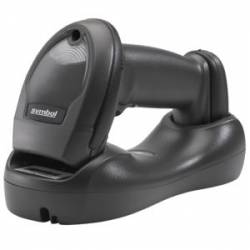
Zebra LI4278-SR20007WR Handheld Scanner Bluetooth black
| Lieske Part No. | 905897 |
|---|---|
| Mfg Part No | LI4278-SR20007WR |
| EAN-Code | 5711045624551 |
| Manufacturer | Zebra |
| Here only | 193,42 EUR
230,17 EUR incl. VAT
|
Further information for Zebra LI4278-SR20007WR Handheld Scanner Bluetooth black
| Logistics data | |
| Harmonized System (HS) code | 84716070 |
| Operational conditions | |
| Operating temperature (T-T) | 0 - 50 °C |
| Storage temperature (T-T) | -40 - 70 °C |
| Operating relative humidity (H-H) | 5 - 85% |
| Other features | |
| Operating time | 4320 min |
| Maximum operating distance | 100 m |
| Performance | |
| Product colour | Black |
| Certification | FCC, ICES, IEC, RoHS, EN, UL |
| Ports & interfaces | |
| Standard interfaces | USB, RS-232, RS-485 |
| Bluetooth version | 2.1+EDR |
| Bluetooth | |
| Scanning | |
| Read rate (max) | 547 reads/s |
| Light levels (direct sunlight) | 0 - 108000 lx |
| Wavelength | 617 nm |
| Pitch reading angle | -65 - 65° |
| Decoding standards | UPC/EAN, UPC-A, UPC-E, UPC-E1, EAN-8/JAN 8, EAN-13/JAN 13, Bookland EAN, Bookland ISBN, UCC Coupon, ISBT 128, Code 39, Code 93, Matrix 2/5, Interleavd 2/5, Discrete 2/5, Codabar, MSI Chinese 2/5, GS1 |
| Weight & dimensions | |
| Width | 70 mm |
| Depth | 186 mm |
| Height | 98 mm |
| Weight | 224 g |
Applications
The scanner is designed for daily, continuous use in commercial and industrial environments. It is particularly suitable for checkout areas, warehouses, shipping departments, and other workstations where high mobility and wireless connectivity are required. Its robust construction allows it to survive drops from a height of 1.8 m, making it suitable for rugged use. The operating temperature ranges from 0 °C to 50 °C, and the storage temperature ranges from -40 °C to 70 °C, enabling use in climatically demanding environments.
Functions and Equipment in Detail
The Zebra LI4278 features an integrated Bluetooth function (version 2.1+EDR), enabling wireless connection to the host system. The maximum operating range is 100 meters, allowing flexible use in large spaces or across multiple levels. Bluetooth technology offers improved encryption and higher wireless performance, enhancing the security and reliability of data transmission. The operating time is 4320 minutes, equivalent to use over multiple shifts, supported by an advanced power-saving function.
Technology Explained Simply
The scanner uses a linear imager principle, where a light-sensitive sensor scans a line of the barcode. The high reading speed of 547 scans per second enables smooth, almost imperceptible scanning, even during fast movements. Support for direct sunlight (up to 108,000 lux) makes it suitable for outdoor areas or brightly lit indoor spaces. Decoding is supported for a wide range of 1D barcode formats, including UPC/EAN, Code 39, Code 93, Interleaved 2/5, Codabar, MSI, and GS1 standard codes. The integrated Bluetooth technology enables wireless communication, with version 2.1+EDR (Enhanced Data Rate) providing higher data transfer rates and better energy efficiency.
Compatibility and Accessories
The Zebra LI4278 is compatible with existing docking stations, particularly with charging stations for models LS4278 and DS6878. This enables a cost-efficient upgrade plan, as existing infrastructure can be reused. Available accessories include, among others, a US AC power plug with grounding, a black wall mount, a USB connection cable, an SMB lanyard (wrist strap), and a replacement battery. As an alternative, the model DS2278 is offered, also with Bluetooth, 2D scanning, and USB interface.
Installation and Mounting
Installation is performed via the integrated Bluetooth function, where the device is paired with the host system. The connection can be established through the Bluetooth control of the host system. The docking station serves for charging and data transmission, with the device automatically detected and synchronized. Mounting on a wall bracket is possible to keep the scanner available outdoors or at a workstation.
Operational Advantages
The Zebra LI4278 offers high reliability through a single printed circuit board, reducing interconnections and lowering failure risk. The long operating time of 4320 minutes and wireless functionality increase employee efficiency and mobility. Compatibility with existing docking stations reduces investment costs during an upgrade. The robust construction and ability to survive drops from 1.8 m height make it suitable for demanding work environments. The device color is black, providing a professional appearance.
Certifications and Standards
The device meets certifications FCC, ICES, IEC, RoHS, EN, and UL, confirming safety, electromagnetic compatibility, and environmental compatibility (RoHS). The operating environment is designed for relative humidity from 5 to 85 %, enabling broad usability in various climatic conditions.

This is an offer of:
79279 Vörstetten
https://industry-electronics.com
Tel. 07666/88499-0
Fax. 07666/88499-111
Diesen Artikel finden Sie unter:
industry-electronics.com/artikel/905897

Lieske Elektronik e.K.
Reutener Str. 1079279 Vörstetten
https://industry-electronics.com
Tel. 07666/88499-0
Fax. 07666/88499-111
Diesen Artikel finden Sie unter:
industry-electronics.com/artikel/905897