
Yeastar P550 IP phone
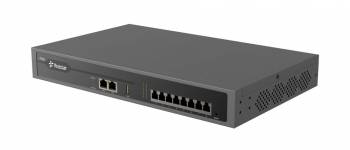
Yeastar P550 IP phone
| Lieske Part No. | 1705388 |
|---|---|
| Mfg Part No | P550 |
| EAN-Code | |
| Manufacturer | Yeastar |
| Here only | 758,24 EUR
902,31 EUR incl. VAT
|
Further information for Yeastar P550 IP phone
| General | |
| Manufacturer | Yeastar |
| Model | P550 |
| Communications protocol | SIP |
| Functions | Unified Communications, video communication, call center functions, operator panel, presence, IM, call distribution, queue management, voicemail, conferences |
| Target group | Small and medium-sized enterprises (SMEs) |
| Integration | IP phones, CRM systems, collaboration tools |
| Accessory compatibility | accessory modules (FXO, FXS, BRI), IP phones (e.g. TFE i56A, i51W, X3U), Conference C520, X210i, SNOM D120 |
| User interface | Web interface, Linkus UC clients (mobile, desktop, browser) |
| Administration | central web administration, role-based permissions |
Applications
The Yeastar P550 is suitable for companies requiring a central communications platform for internal and external communication. It is particularly suitable for SMEs that wish to use call center functions, video conferencing, mobile access, and centralized call management. The integration of third-party tools such as CRM systems or IP telephones enables seamless connection with existing IT infrastructures. The solution also supports collaboration across various end devices, including mobile phones, desktop computers, and web browsers.
Functions and Equipment in Detail
The system offers a range of functions that enhance communication efficiency. The Linkus UC clients enable access to calls, conferences, voicemail, presence information, company contacts, and collaboration through a unified interface. The integrated video functions support 1:1 web video calls and video conferences, supplemented by screen sharing and team chat during the session. For companies with service departments, the system offers extended call center functions such as call distribution, queue panel, wallboard, SLA monitoring, and call reports. The presence function displays employee availability, while the IM function with file sharing provides additional communication options.
Technology Explained Simply
The PBX system operates based on SIP (Session Initiation Protocol), a standard for controlling VoIP connections. The integration of IP telephones, mobile devices, and desktop clients is done via the SIP protocol, creating a flexible and scalable communications infrastructure. Functions such as call distribution, queue management, and operator panel utilize real-time employee availability to process calls efficiently. The operator panel enables reception staff to distribute incoming calls via drag & drop to specific extensions, ring groups, or queues. Role-based permissions ensure controlled use of the functions.
Compatibility and Accessories
The Yeastar P550 can be extended with various accessory components to meet specific requirements. These include accessory modules such as 2 FXO ports, 2 FXS ports, 2 BRI ports, as well as a module with one FXS and one FXO port. For use with IP telephones, various models are available, including the TFE SIP indoor station i56A, the TFE i51W with 10,9 cm ( 4,3 inch ) display and PoE, and the X3U with Gigabit and USB port. Additional components such as the Conference C520, the X210i as a visualization console, or the SNOM D120 can also be integrated into the system. The P-Series also supports integration with third-party tools such as CRM systems and collaboration platforms.
Installation and Mounting
The installation of the Yeastar P550 is typically carried out in a server room or technical room of the company. The system is connected to end devices via a network, with IP telephony handled over the LAN network. Configuration is done via a web interface accessible through a browser. The setup of functions such as call distribution, queues, or operator panel is performed through system administration. The integration of IP telephones and other end devices is done via SIP registration, where the devices communicate with the PBX system over the network connection.
Advantages in Operation
The system offers high flexibility and scalability, making it suitable for growing companies. Centralized management via a web interface reduces administrative effort. The integration of video and IM functions into the telephone system enables comprehensive communication that goes beyond pure telephony. Support for mobile devices and web clients ensures employees are reachable even outside the office. Call center functions improve the efficiency of service departments, while the operator panel optimizes call handling in the reception area. The integration of third-party tools enables a consolidated communications platform that supports collaboration within the company.

This is an offer of:
79279 Vörstetten
https://industry-electronics.com
Tel. 07666/88499-0
Fax. 07666/88499-111
Diesen Artikel finden Sie unter:
industry-electronics.com/artikel/1705388

Lieske Elektronik e.K.
Reutener Str. 1079279 Vörstetten
https://industry-electronics.com
Tel. 07666/88499-0
Fax. 07666/88499-111
Diesen Artikel finden Sie unter:
industry-electronics.com/artikel/1705388