
WAGO 216-224 wire end sleeve 1,5 mm² galvanically zinc-plated
Installation > Terminals > Sleeves, blank - isolated
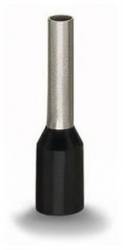
WAGO 216-224 wire end sleeve 1,5 mm² galvanically zinc-plated
| Lieske Part No. | 1940285 |
|---|---|
| Mfg Part No | 216-224 |
| EAN-Code | 4017332277488 |
| Manufacturer | WAGO |
| Here only | 45,60 EUR
54,26 EUR incl. VAT
|
Further information for WAGO 216-224 wire end sleeve 1,5 mm² galvanically zinc-plated
| General | |
| Conductor cross section | 1,5 mm² |
| AWG designation | 16 |
| Surface coating | Galvanic tinned |
| Colour | Black |
| Collar | Plastic collar |
Applications
The wire end ferrule 216-224 is designed for use in electrical installations, particularly in building and industrial control systems. It is used to connect wires to terminals, switches, socket outlets, or other electrical components. Due to the galvanic tinning, it is also suitable for environments requiring enhanced corrosion resistance. The ferrule is typically used in indoor installations, where the mechanical stability is supported by the plastic collar.
Functions and Equipment in Detail
The ferrule is specifically designed for a conductor cross-section of 1.5 mm², equivalent to AWG 16. The galvanic tinning provides a uniform, thin tin coating that prevents oxidation of the copper surface, thus maintaining stable electrical conductivity over time. The integrated plastic collar acts as a mechanical stabilizer and facilitates inserting the wire into the terminal. The black color is standard for electrical components in installation technology and supports visual orientation in the enclosure.
Technology Explained Simply
The wire end ferrule consists of a cylindrical metal body that is hollow inside to accommodate the wire. The galvanic tinning is achieved by electrolytic deposition of tin onto the copper surface, resulting in a thin, uniform layer. This layer prevents copper tarnishing and ensures a reliable electrical connection. The plastic collar is attached at the end of the ferrule and prevents the wire from slipping when inserted into a terminal. The black color is a visual characteristic that does not affect functional properties but contributes to standardization in electrical installation.
The wire end ferrule 216-224 is designed for connecting bare conductors with a cross-section of 1.5 mm² (AWG 16). The galvanic tinning ensures high corrosion resistance and electrical conductivity. The plastic collar improves handling and mechanical stability. The black color is standard for electrical components in installation technology.
Compatibility and Accessories
The wire end ferrule is compatible with terminals and switches that support a conductor cross-section of 1.5 mm². It is used in conjunction with electrical installations where a secure and durable connection is required.
Mounting and Installation
Mounting is done by inserting the bare conductor into the wire end ferrule, with the plastic collar aiding positioning. The ferrule is then placed into the corresponding terminal or switch and tightened securely. The galvanic tinning ensures the connection remains stable even under prolonged load. Installation takes place in standard electrical enclosures or distributors.
Operational Advantages
The galvanic tinning of the wire end ferrule provides high corrosion resistance, extending the service life of the connection. The plastic collar facilitates handling and prevents the wire from slipping during insertion. The black color supports visual orientation in the enclosure. The wire end ferrule is suitable for indoor installations and provides a reliable electrical connection for wires with a cross-section of 1.5 mm².

This is an offer of:
79279 Vörstetten
https://industry-electronics.com
Tel. 07666/88499-0
Fax. 07666/88499-111
Diesen Artikel finden Sie unter:
industry-electronics.com/artikel/1940285

Lieske Elektronik e.K.
Reutener Str. 1079279 Vörstetten
https://industry-electronics.com
Tel. 07666/88499-0
Fax. 07666/88499-111
Diesen Artikel finden Sie unter:
industry-electronics.com/artikel/1940285