
WAGO 210-133 Tin-plated Busbar 1000 mm
Industrial Material > Connection technology > Terminals
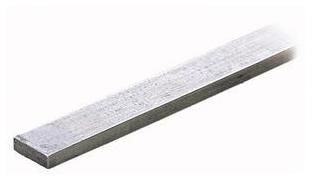
WAGO 210-133 Tin-plated Busbar 1000 mm
| Lieske Part No. | 114402 |
|---|---|
| Mfg Part No | 210-133 |
| EAN-Code | 4045454229443 |
| Manufacturer | WAGO |
| Here only | 12,42 EUR
14,78 EUR incl. VAT
|
Further information for WAGO 210-133 Tin-plated Busbar 1000 mm
| General | |
| Surface coating | Tinned |
Applications
The busbar 210-133 is suitable for use in enclosures, distribution boxes, and other electrical installations where central power distribution across multiple connections is required. It is frequently used in industrial electrical engineering, during control system assembly, or in building automation. The tinning of the surface ensures good corrosion resistance and improves electrical conductivity, enhancing the reliability of the connection.
Functions and Equipment in Detail
The busbar is made of copper, a material with excellent electrical and thermal conductivity properties. The tinning protects the surface from oxidation and enables a clean, durable contact connection. The dimensions of 10 mm width and 3 mm height are standardized and compatible with common terminal blocks and connection blocks. The length of 1000 mm allows for flexible arrangement in enclosures and distributions.
Technology Explained Simply
The tinned surface of the busbar prevents the formation of oxide or corrosion layers that could impair electrical conductivity. This is particularly important in environments with high humidity or aggressive atmospheres. The copper alloy ensures high electrical conductivity, enabling efficient energy transmission. The length of 1000 mm allows adaptation to different enclosure sizes and arrangements, with the busbar typically secured using screws or special mounting brackets.
Compatibility and Accessories
The busbar 210-133 is compatible with a wide range of WAGO connection elements, particularly terminal blocks and connection blocks. Suitable accessories include, for example, connection blocks 812-100, 812-101, 812-102, 812-103, 812-104, 812-111, 812-112, and 812-113, designed for different cross-sections. Shielding connection terminals such as 791-111, 791-117, 791-107, and 791-124, as well as shielding terminal clamps such as 790-108, 790-124, 790-140, 790-208, 790-216, and 790-398, are also suitable for secure connections. The busbar can also be combined with connection terminals such as 209-105 or 210-281.
Mounting and Installation
Installation is typically done by securing the busbar to an enclosure wall or mounting profile using screws or brackets. The busbar is positioned as required and connected to the appropriate connection elements (e.g., connection blocks, terminals). The tinning facilitates connection and ensures a secure electrical contact. Installation must comply with applicable electrical engineering standards and regulations.
Advantages in Operation
The tinned copper busbar offers high electrical conductivity and long service life due to corrosion protection. The standardized dimensions allow easy integration into existing systems. The length of 1000 mm provides flexibility in planning and installation within enclosures. Use in combination with WAGO connection elements ensures safe and reliable power distribution.

This is an offer of:
79279 Vörstetten
https://industry-electronics.com
Tel. 07666/88499-0
Fax. 07666/88499-111
Diesen Artikel finden Sie unter:
industry-electronics.com/artikel/114402

Lieske Elektronik e.K.
Reutener Str. 1079279 Vörstetten
https://industry-electronics.com
Tel. 07666/88499-0
Fax. 07666/88499-111
Diesen Artikel finden Sie unter:
industry-electronics.com/artikel/114402