
Transcend TS120GMTS420S M.2 SSD 120GB
Computer-Components > Hard Drives > SSD M.2
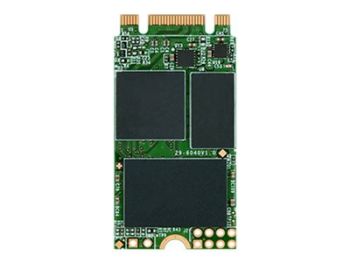
Transcend TS120GMTS420S M.2 SSD 120GB
| Lieske Part No. | 1211512 |
|---|---|
| Mfg Part No | TS120GMTS420S |
| EAN-Code | 0760557839910 |
| Manufacturer | Transcend |
| Here only | 39,94 EUR
47,53 EUR incl. VAT
|
Further information for Transcend TS120GMTS420S M.2 SSD 120GB
| General | |
| Capacity | 120 GB |
| Form factor | M.2 2242 B+M Key |
| Interface | SATA 6Gb/s |
| NAND flash memory type | Multi-Level-Cell (MLC) |
| Reading performance | 560 MB/s |
| Write performance | 500 MB/s |
| Technology | 3D NAND |
| Functions | Native Command Queuing (NCQ), TRIM support, DDR3 DRAM cache, DevSleep mode, Intelligent SLC caching, Low-Density Parity Check, S.M.A.R.T. |
Applications
The SSD is suitable for use in desktop PCs, laptops, and other systems that have an M.2 slot with SATA support. Due to its compact design and high data throughput, it is particularly well-suited for applications requiring fast system boot times and quick loading of programs and files. Typical use cases include office environments, private users, and units with limited space.
Features and Specifications in Detail
The device includes Native Command Queuing (NCQ), a technology that enhances data transfer efficiency by enabling simultaneous processing of multiple commands. TRIM support ensures that deleted files are efficiently released from the storage area, maintaining stable write speeds over time. A DDR3 DRAM cache improves access times and supports performance during intensive data transfer. The DevSleep mode reduces power consumption during standby operation, which is particularly beneficial for mobile devices.
Technology Explained Simply
The 3D NAND technology enables higher storage density by stacking memory cells in multiple layers, leading to more efficient use of chip space. The Intelligent SLC Caching function uses a portion of the storage as temporary SLC mode (Single-Level-Cell) to accelerate read and write operations under heavy loads. Low-Density Parity Check (LDPC) is an error correction method that enhances data integrity by detecting and correcting errors in the storage. The S.M.A.R.T. function (Self-Monitoring, Analysis and Reporting Technology) monitors the SSD’s condition and provides early warnings of potential failures.
Compatibility and Accessories
The SSD is designed for systems that support an M.2 slot with SATA-6Gb/s interface. The B+M Key configuration ensures compatibility with devices supporting either the B or M key.
Installation and Mounting
Installation is performed by inserting the M.2 module into the corresponding slot on the motherboard. Connection is made via the SATA interface, requiring no additional cables or adapters. The SSD is secured directly in the M.2 slot, typically using a screw or retention clip. No additional drivers are required, as the SATA interface is natively supported by operating systems.
Operational Advantages
The integrated features such as TRIM, NCQ, and LDPC ensure stable performance throughout the device’s lifespan. Energy efficiency provided by the DevSleep mode reduces power consumption during idle states.

This is an offer of:
79279 Vörstetten
https://industry-electronics.com
Tel. 07666/88499-0
Fax. 07666/88499-111
Diesen Artikel finden Sie unter:
industry-electronics.com/artikel/1211512

Lieske Elektronik e.K.
Reutener Str. 1079279 Vörstetten
https://industry-electronics.com
Tel. 07666/88499-0
Fax. 07666/88499-111
Diesen Artikel finden Sie unter:
industry-electronics.com/artikel/1211512