
Siemens 6XV1820-5BN40 fiber optic cable 4x BFOC connector
Industrial Material > Automation > Industrial bus systems
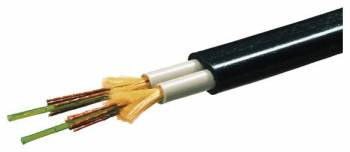
Siemens 6XV1820-5BN40 fiber optic cable 4x BFOC connector
| Lieske Part No. | 125017 |
|---|---|
| Mfg Part No | 6XV18205BN40 |
| EAN-Code | 4019169400916 |
| Manufacturer | Siemens |
| Here only | 341,25 EUR
406,09 EUR incl. VAT
|
Further information for Siemens 6XV1820-5BN40 fiber optic cable 4x BFOC connector
| General | |
| Core diameter | 62,5 µm |
| Sheath diameter | 125 µm |
| Fibre standard | OM1 |
| Material | Glass |
| Plug connection | BFOC |
| Number of connectors | 4 |
| Property | divisible |
| Application area | SIMATIC NET |
Applications
The cable is primarily intended for use in industrial networks, especially in systems based on the SIMATIC NET platform. It is used to connect control devices, such as S7-300 or S7-400 systems, with other components in the network. The multimode technology (MM) is suitable for short to medium transmission distances, typically up to 550 metres at 100 Mbit/s, although the actual range depends on the network technology and signal quality used. The use of fibre optic enables high data rates and is immune to electromagnetic interference, which is advantageous in industrial environments.
Functions and Equipment in Detail
The cable is pre-assembled, meaning it is already fitted with the necessary connectors and can be put into operation immediately without additional assembly work. The four BFOC connectors allow flexible connection to various devices, with two connectors provided at each end of the cable. The term splitable indicates that the cable can be cut and re-terminated as needed to end at multiple points in the network. This is particularly useful in complex installations where multiple devices need to be connected via a single cable.
Technology Explained Simply
The fibre is made of glass and has a core/cladding combination of 62.5/125 µm, which corresponds to the OM1 standard. This standard is designed for multimode transmissions and allows high data rates over short to medium distances. The term standard cable refers to its general use in industrial networks, particularly within the SIMATIC NET environment. The flexibility of the cable facilitates installation, especially in tight or curved cable runs. The use of fibre optic ensures high signal integrity and low attenuation, resulting in stable and reliable data transmission.
Compatibility and Accessories
The cable is designed for use in SIMATIC NET systems and is compatible with devices that support BFOC connectors. As accessories, BFOC connector sets (part number 6GK1901-0DA20-0AA0) and MM FO LC Duplex connectors (part number 6GK1901-0RB10-2AB0) are available, which can be used as needed for extending or repairing connections. These accessories allow flexible adaptation of the network structure, especially when expanding existing installations or repairing damaged connections.
Installation and Mounting
Installation is carried out by simply inserting the BFOC connectors into the corresponding ports on the devices. The bayonet-style locking mechanism ensures a secure and quick connection. During cable routing, sufficient bending radius must be maintained to avoid damaging the fibre. The splitable design allows the cable to terminate at multiple points in the network, enabling a flexible network structure.
Operational Advantages
The use of fibre optic provides high bandwidth and low attenuation, resulting in stable data transmission. Immunity to electromagnetic interference makes the cable particularly suitable for industrial environments with high electromagnetic noise. The pre-assembled design reduces installation time and minimises error sources during installation. The splitable construction enables flexible network design, facilitating adaptation to different operational requirements.

This is an offer of:
79279 Vörstetten
https://industry-electronics.com
Tel. 07666/88499-0
Fax. 07666/88499-111
Diesen Artikel finden Sie unter:
industry-electronics.com/artikel/125017

Lieske Elektronik e.K.
Reutener Str. 1079279 Vörstetten
https://industry-electronics.com
Tel. 07666/88499-0
Fax. 07666/88499-111
Diesen Artikel finden Sie unter:
industry-electronics.com/artikel/125017