
Siemens 6XV1820-5BH10 fiber optic cable 4x BFOC connector
Industrial Material > Automation > Industrial bus systems
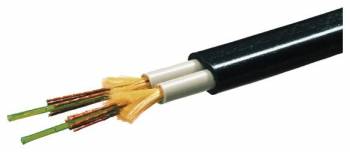
Siemens 6XV1820-5BH10 fiber optic cable 4x BFOC connector
| Lieske Part No. | 124087 |
|---|---|
| Mfg Part No | 6XV18205BH10 |
| EAN-Code | 4019169400831 |
| Manufacturer | Siemens |
| Here only | 147,00 EUR
174,93 EUR incl. VAT
|
Further information for Siemens 6XV1820-5BH10 fiber optic cable 4x BFOC connector
| General | |
| Core diameter | 62,5 µm |
| Sheath diameter | 125 µm |
| Fibre type | OM1 |
| Connector type | BFOC |
| Number of connectors | 4 |
| Cable type | Standard cable |
| Material | Glass |
| Flexibility | Flexible |
| Divisible | |
| Pre-wired | |
Applications
The cable is designed for use in industrial networks, particularly in systems based on SIMATIC NET technology. It is used for data transmission between controllers, sensors, actuators, and other network devices where high bandwidth and low susceptibility to interference are required. Due to the multimode technology, it is suitable for short to medium transmission distances, typically up to several hundred metres, depending on data rate and signal quality requirements. Use in industrial environments requires a robust and reliable connection, which the cable provides through its fibre optic construction and pre-assembled design.
Functions and Equipment in Detail
The cable is designed as a standard cable and features a flexible fibre optic structure, enabling easy handling and installation. The use of BFOC connectors (ST connectors) ensures a secure and mechanically stable connection, designed for industrial use. The pre-assembled design with already mounted connectors reduces installation time and minimises error sources during installation. The description divisible indicates that the cable can be cut into sections and re-extended, although this is not part of the delivery and may require special tools.
Technology Explained Simply
Fibre optic technology is based on light transmission through optical fibres. In multimode fibres (MM), light is transmitted through multiple modes (paths) within the fibre, allowing higher light power, although resulting in a shorter range compared to single-mode fibres. The specific 62.5/125 µm configuration is a standard for industrial applications, especially in older or mid-range systems. The designation OM1 refers to the optical mode class, which defines the performance characteristics of the fibre. The pre-assembled design with BFOC connectors allows direct integration into existing systems without requiring additional fibre splicing work.
Compatibility and Accessories
The cable is designed for use with SIMATIC NET systems from Siemens. Compatible accessories available in the product range include, for example, the BFOC connector set 6GK1901-0DA20-0AA0 and MM FO LC Duplex connectors 6GK1901-0RB10-2AB0. These components can be used to extend or adapt network connections, although exact compatibility must be checked according to connector type and system configuration. The use of BFOC connectors requires connections equipped with the same connector type.
Installation and Mounting
Installation is performed by directly inserting the BFOC connectors into the corresponding sockets on the devices. The pre-assembled design reduces installation time and minimises the need for fibre splicing work. The description divisible suggests that the cable can be cut into shorter segments if required, although this is not a standard feature of the delivery and may require special tools and expertise. The flexible structure facilitates routing in tight or curved conduits.
Operational Advantages
The use of fibre optic cables offers advantages in industrial environments such as high data rates, low susceptibility to electromagnetic interference, and high reliability. The pre-assembled design with already mounted connectors reduces installation time and minimises error sources. Multimode technology is sufficient for most industrial applications, especially in systems operating over short to medium distances. The flexible structure facilitates routing and integration into existing installations.

This is an offer of:
79279 Vörstetten
https://industry-electronics.com
Tel. 07666/88499-0
Fax. 07666/88499-111
Diesen Artikel finden Sie unter:
industry-electronics.com/artikel/124087

Lieske Elektronik e.K.
Reutener Str. 1079279 Vörstetten
https://industry-electronics.com
Tel. 07666/88499-0
Fax. 07666/88499-111
Diesen Artikel finden Sie unter:
industry-electronics.com/artikel/124087