
Siemens 6SL3203-0BE26-5HA0 EMI filter 65A
Industrial Material > Engines and accessories
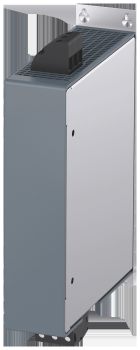
Siemens 6SL3203-0BE26-5HA0 EMI filter 65A
| Lieske Part No. | 833099 |
|---|---|
| Mfg Part No | 6SL32030BE265HA0 |
| EAN-Code | 4025515681823 |
| Manufacturer | Siemens |
| Here only | 514,66 EUR
612,45 EUR incl. VAT
|
Further information for Siemens 6SL3203-0BE26-5HA0 EMI filter 65A
| General | |
| Product type | EMC filter |
| Compatibility | SINAMICS S210 |
| Frame Size | FSA - FSC |
| Operating voltage | 3AC 400 V |
| Nominal current | 65 A |
| EMC category | C2, C3 |
| Cable length C2 | 25 m |
| Cable length C3 | 50 m |
| Total cable length with intermediate circuit coupling C2 | 100 m |
| Total cable length with intermediate circuit coupling C3 | 250 m |
| Intermediate circuit coupling | |
Applications
The EMC filter is used in industrial drive systems where high electromagnetic compatibility is required. It is particularly suitable for installations where multiple drives are connected via long cables, as it reduces interference on supply networks. Filtering takes place at the input of the inverter to dampen disturbances generated by switching operations within the inverter. This is crucial to protect the functionality of other electronic devices in the same network.
Functions and equipment in detail
The device enables compliance with EMC category C2 for cable lengths up to 25 meters and category C3 for cable lengths up to 50 meters according to IEC 61800-3. When used with a DC link coupling, the total cable length can be extended to up to 100 meters for category C2 and up to 250 meters for category C3. The DC link coupling serves galvanic isolation and reduces interference transmission through the cabling network. The filtering technology is tailored to the specific requirements of the SINAMICS S210 series to ensure optimal disturbance suppression while maintaining operational safety.
Technology explained simply
The EMC filter operates by integrating inductive and capacitive components that filter interference voltages in the frequency range of electromagnetic compatibility (EMC). Filtering occurs in the AC network before the energy reaches the inverter. This prevents high-frequency disturbances, generated by fast switching operations in the inverter, from being fed back into the supply network. Filtering typically occurs in the frequency range above 150 kHz, which is essential for compliance with IEC standards. The filter technology is designed to provide the necessary performance for operation at 65 A and 400 V without impairing the efficiency of the drive system.
Compatibility and accessories
The filter is specifically developed for servo inverters of the SINAMICS S210 series and is offered as an accessory for these devices. It is intended for frame sizes FSA to FSC, ensuring mechanical and electrical compatibility with the corresponding inverter models. Using the filter is necessary to meet EMC requirements in installations with longer drive cables. Combining it with a DC link coupling extends the possible cable length, increasing flexibility in system planning.
Mounting and installation
Installation takes place at the input of the servo inverter, with electrical connections made according to the operating voltage of 3AC 400 V and rated current of 65 A. Mounting is typically done in the enclosure or near the inverter to keep the cable length between filter and inverter as short as possible. Connection to the DC link coupling requires an additional electrical connection, which must also be carried out according to technical specifications.
Advantages in operation
Using the EMC filter improves electromagnetic compatibility throughout the entire drive system. This reduces the risk of interference with other electronic devices in the same network and increases system reliability. Compliance with EMC standards IEC 61800-3 is particularly required in industrial environments with a high density of electronic equipment. Filtering also enables flexible system planning, as longer cables can be used without additional measures for interference reduction. Combining with DC link coupling further enhances this flexibility.

This is an offer of:
79279 Vörstetten
https://industry-electronics.com
Tel. 07666/88499-0
Fax. 07666/88499-111
Diesen Artikel finden Sie unter:
industry-electronics.com/artikel/833099

Lieske Elektronik e.K.
Reutener Str. 1079279 Vörstetten
https://industry-electronics.com
Tel. 07666/88499-0
Fax. 07666/88499-111
Diesen Artikel finden Sie unter:
industry-electronics.com/artikel/833099