
Siemens 6ES73901AJ300AA0 profile rail L=830 mm
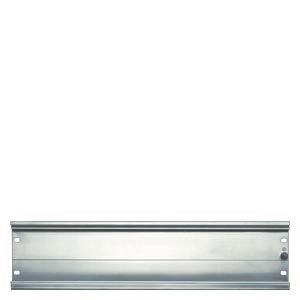
Siemens 6ES73901AJ300AA0 profile rail L=830 mm
| Lieske Part No. | 477083 |
|---|---|
| Mfg Part No | 6ES73901AJ300AA0 |
| EAN-Code | 4025515061908 |
| Manufacturer | Siemens |
| Here only | 81,25 EUR
96,69 EUR incl. VAT
|
Further information for Siemens 6ES73901AJ300AA0 profile rail L=830 mm
| General | |
| Product type | Profile rail |
| Manufacturer | Siemens |
| Compatibility | SIMATIC S7-300 |
Applications
The profile rail is used in industrial automation environments where SIMATIC S7-300 systems are employed to control machines, plants, or production lines. It is part of the standard mounting infrastructure in enclosures and serves as the foundation for modular expansion of the control system. The rail is designed for use in industrial environments requiring high mechanical stability and electrical reliability. It is suitable for applications in the manufacturing industry, packaging industry, process engineering, and other areas where PLC systems are used.
Functions and Equipment in Detail
The rail is made of metallic materials ensuring high mechanical strength and corrosion resistance. It features a standardised profile geometry precisely matched to the mounting holes of SIMATIC S7-300 modules. Mounting is achieved by screwing it to the side flanges of the enclosure. The rail enables parallel arrangement of modules, ensuring clear visibility and easy maintenance. The length of 830 mm corresponds to a standard format used in many enclosure configurations.
Technology Explained Simply
The profile rail is a passive mounting element that does not perform any electrical function. Its main purpose is the mechanical stabilisation and positioning of control components. The rail is installed in the enclosure and serves as a carrier for the modules. Electrical connections between modules are made via the internal bus lines of the control system, not through the rail. The rail itself is not conductive for current or data, serving exclusively for mechanical fixation. Mounting is done by screws to the side flanges of the enclosure, with the rail aligned horizontally.
Compatibility and Accessories
The rail is specifically developed for the SIMATIC S7-300 control series and is compatible with all modules in this family. It can be combined with various CPU modules, I/O modules, communication modules, and other expansion modules. The rail can be individually cut to length to optimise space requirements in the enclosure. Suitable accessories include, for example, grounding terminals, which are necessary for safe earthing of the entire control unit.
Mounting and Installation
Mounting of the profile rail in the enclosure is done by securing it to the side flanges using screws. The rail is aligned horizontally and inserted into the designated holes. Mounting is simple and requires no special tools, except a screwdriver or appropriate wrench. After mounting the rail, individual modules are inserted one by one onto the rail and secured with the designated screws. The order of modules is freely selectable, although electrical wiring and control functionality should be considered.
Advantages in Operation
Using the profile rail ensures stable and secure mounting of control components. The modular structure allows flexible expansion of the control system without requiring a complete overhaul of the installation. The clear arrangement of modules improves visibility and simplifies maintenance and fault diagnosis. The ability to cut the rail to individual lengths enables optimal use of available space in the enclosure. The rail is robust and designed for industrial use, ensuring long service life and high reliability. Compatibility with the entire S7-300 family offers flexibility in selecting modules and expansions.

This is an offer of:
79279 Vörstetten
https://industry-electronics.com
Tel. 07666/88499-0
Fax. 07666/88499-111
Diesen Artikel finden Sie unter:
industry-electronics.com/artikel/477083

Lieske Elektronik e.K.
Reutener Str. 1079279 Vörstetten
https://industry-electronics.com
Tel. 07666/88499-0
Fax. 07666/88499-111
Diesen Artikel finden Sie unter:
industry-electronics.com/artikel/477083