
Siemens 6ES7321-1BL00-0AA0 digital input 32 inputs 24 V DC
Industrial Material > Automation > PLC Systems
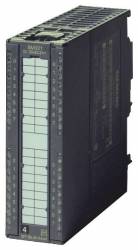
Siemens 6ES7321-1BL00-0AA0 digital input 32 inputs 24 V DC
| Lieske Part No. | 2094870 |
|---|---|
| Mfg Part No | 6ES73211BL000AA0 |
| EAN-Code | 4025515060772 |
| Manufacturer | Siemens |
| Here only | 546,53 EUR
650,37 EUR incl. VAT
|
Further information for Siemens 6ES7321-1BL00-0AA0 digital input 32 inputs 24 V DC
| General | |
| Module type | Digital input module |
| Manufacturer | Siemens |
| Model designation | SM 321 |
| Number of inputs | 32 |
| Operating voltage | 24 V DC |
| Degree of protection | IP20 |
| Connection type | 40-way |
| Separation | potential-free |
| System compatibility | SIMATIC ET 200M |
| Wiring technology | Fast Connect |
Applications
This module is intended for use in industrial control systems, particularly in plants that capture digital signals from sensors, switches, or other process components. It can be operated either centrally on an S7-300 controller or decentralized on a PROFINET- or PROFIBUS-based ET 200M interface module. The modular design allows for flexible adaptation to different requirements, with up to 12 IO modules installable per station. Use in standardized and safety-oriented applications is possible, and the module design simplifies logistics and spare parts management.
Functions and Equipment in Detail
The module provides 32 digital inputs, each operated at 24 V DC. The galvanically isolated design protects the control electronics from disturbances and voltage spikes originating in the process area. The interface is via a 40-pin plug connector integrated into the ET 200M system. Wiring is done using the wire-stripping-free quick connection technology Fast Connect, enabling fast and error-free installation. This technology reduces installation time and minimizes the risk of wiring errors.
Technology Explained Simply
The galvanic isolation ensures that electrical signals between the process and the control system are electrically separated. This prevents disturbances caused by differing potentials or electrical overvoltages. The 24 V DC supply voltage is a standard in industrial electronics, ensuring reliable and safe signal transmission. The 32 inputs allow simultaneous capture of multiple digital signals, for example from end switches, pushbuttons, or sensors. The 40-pin interface is a standard in the SIMATIC system and ensures compatibility with other modules and controllers.
Compatibility and Accessories
The module is designed for use in the SIMATIC ET 200M system, which can be operated with both PROFINET- and PROFIBUS-based interface modules. It is compatible with other S7-300 modules and can be used in combination with signal, function, and communication modules. Accessories include various connection cables and interface modules, such as shielded and unshielded connection cables, as well as interface modules for potential supply and T-channels. These components support flexible integration into existing installations.
Mounting and Installation
Mounting is done in an enclosure with protection rating IP20. The module is installed into the ET 200M system, with wiring done via the Fast Connect technology. The wire-stripping-free connection reduces installation time and improves connection reliability. Installation requires no additional tools, as the quick connectors are simply inserted into the terminals. The modular design enables easy replacement and maintenance.
Advantages in Operation
The module offers high reliability due to its galvanically isolated design and robust construction. The 32 inputs allow dense signal processing, reducing the number of required modules. The use of Fast Connect technology speeds up installation and reduces error susceptibility. Compatibility with the ET 200M system and other S7-300 modules ensures a flexible and scalable system architecture. The modular design simplifies maintenance and spare parts procurement, as all modules are standardized.

This is an offer of:
79279 Vörstetten
https://industry-electronics.com
Tel. 07666/88499-0
Fax. 07666/88499-111
Diesen Artikel finden Sie unter:
industry-electronics.com/artikel/2094870

Lieske Elektronik e.K.
Reutener Str. 1079279 Vörstetten
https://industry-electronics.com
Tel. 07666/88499-0
Fax. 07666/88499-111
Diesen Artikel finden Sie unter:
industry-electronics.com/artikel/2094870