
Siemens 6ES71936BP000BA0 ET 200SP Base Unit
Industrial Material > Automation > PLC Systems
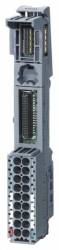
Siemens 6ES71936BP000BA0 ET 200SP Base Unit
| Lieske Part No. | 2095366 |
|---|---|
| Mfg Part No | 6ES71936BP000BA0 |
| EAN-Code | 4025515080848 |
| Manufacturer | Siemens |
| Here only | 19,11 EUR
22,74 EUR incl. VAT
|
Further information for Siemens 6ES71936BP000BA0 ET 200SP Base Unit
| General | |
| BU type | A0 |
| Terminal technology | Push-in terminals |
| AUX terminals | None |
| Bridge direction | to the left |
Applications
The Base-Unit is used in industrial automation systems, particularly in environments where a compact, decentralized control is required. Typical application scenarios include machine controls, installations with limited space, or applications where modular expandability is a priority. The system is designed for use in enclosures mounted close to machines or plants to minimize cabling lengths and increase response speed.
Functions and Equipment in Detail
The Base-Unit features Push-In terminals that enable tool-free wiring. This technology reduces installation time and minimizes wiring errors. The terminals are bridged to the left, indicating a specific wiring arrangement. The Base-Unit is supplied without AUX terminals, simplifying configuration for certain applications. The housing type is defined as BU type A0, indicating a specific mechanical and electrical design. Dimensions are 15 mm width and 117 mm height, emphasizing the compact footprint.
Technology Explained Simply
The Push-In technology allows conductors to be inserted into the terminals without tools, speeding up installation. The terminals are designed to securely hold the conductors and ensure a reliable electrical connection. Bridging to the left means the electrical connection between adjacent terminals occurs to the left, which must be considered during wiring planning. The Base-Unit serves as the mechanical and electrical base for mounting additional modules, which are inserted through the front panel. Module connection is achieved via a standardized connector, ensuring a secure and stable connection.
Compatibility and Accessories
The Base-Unit is part of the SIMATIC ET 200SP system and compatible with all modules of this system. Suitable accessories include color-coded labels in various versions (e.g. CC01 to CC05) as well as blanking plates for empty slots. These accessories serve labeling and protection of unoccupied module positions. Color-coded labels allow visual differentiation of modules, simplifying maintenance and diagnostics. Modules are available in various functional levels (ST, HF/HS, BA) and for different applications (e.g. SIL 3 / PLe), enabling flexible adaptation to specific requirements.
Mounting and Installation
Mounting is performed in an enclosure, where the Base-Unit is inserted into the designated mounting opening. Wiring is done via the Push-In terminals, with conductors directly inserted into the terminals. The leftward bridging must be considered during wiring planning to ensure correct electrical connections. Modules are directly plugged onto the Base-Unit, with the connector ensuring a secure mechanical and electrical connection. Installation is tool-free, reducing mounting time.
Operational Advantages
ET 200SP systems offer high availability through hot-swapping, allowing modules and terminal boxes to be replaced during operation. This increases productivity by minimizing downtime. The channel-specific diagnostic function enables precise fault localization, speeding up maintenance and troubleshooting. The modular architecture and extensive range of signal modules allow cost-efficient and scalable configuration adaptable to specific requirements. The systems are designed for industrial environments and support various communication standards such as PROFINET and PROFIBUS.

This is an offer of:
79279 Vörstetten
https://industry-electronics.com
Tel. 07666/88499-0
Fax. 07666/88499-111
Diesen Artikel finden Sie unter:
industry-electronics.com/artikel/2095366

Lieske Elektronik e.K.
Reutener Str. 1079279 Vörstetten
https://industry-electronics.com
Tel. 07666/88499-0
Fax. 07666/88499-111
Diesen Artikel finden Sie unter:
industry-electronics.com/artikel/2095366