
Siemens 5SM60112 RCD Block 1+N
Installation > Modular devices / equipment installation > RCD
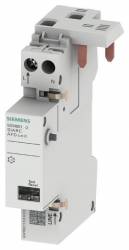
Siemens 5SM60112 RCD Block 1+N
| Lieske Part No. | 370323 |
|---|---|
| Mfg Part No | 5SM60112 |
| EAN-Code | 4001869525785 |
| Manufacturer | Siemens |
| Here only | 163,80 EUR
194,92 EUR incl. VAT
|
Further information for Siemens 5SM60112 RCD Block 1+N
| General | |
| Degree of protection | Fire protection switch block |
| Nominal voltage | 230 V |
| Nominal current | 1-16 A |
| Number of poles | 1+N |
| Mounting format | 1-TE |
| Compatibility | LS 5SL60, 5SY60, FI/LS 5SV1 |
Applications
The arc fault switch block is intended for use in electrical installations where there is an increased fire hazard due to arc faults. This includes residential and commercial buildings, as well as industrial facilities where electrical wiring and connections are subject to high wear. Use in combination with circuit breakers or RCD/CB switches enables comprehensive protection that goes beyond conventional residual current detection. The block design reduces inventory, as a single block can be combined with various switches.
Functions and Equipment in Detail
The 5SM6011-2 detects arc faults using special sensors that respond to the optical and electrical characteristics of an arc. Upon detection of a dangerous arc, the device disconnects within milliseconds to prevent fire ignition. The switching function is carried out in conjunction with a circuit breaker or RCD/CB switch, where the arc fault switch block itself does not perform switching, but triggers the disconnection. The operating voltage is 230 V, and the switch is designed for rated currents from 1 to 16 A. The 1+N configuration means the switch is designed for one phase and the neutral conductor.
Technology Explained Simply
The technology of the arc fault switch block is based on detecting arc phenomena caused by electrical faults. These arcs are often the cause of fires, as they generate high temperatures and melt insulating materials. The 5SM6011-2 detects these arcs using special sensors and triggers disconnection. The switching is performed via the connected circuit breaker or RCD/CB switch, which interrupts the circuit. The block design allows for easy installation in existing distribution boards, as it is integrated in a 1-TE format. Compatibility with various switch types reduces the number of required components in inventory.
Compatibility and Accessories
The arc fault switch block 5SM6011-2 is specifically designed for use with circuit breakers of types 5SL60 and 5SY60, as well as RCD/CB switches of type 5SV1. It can only be operated in combination with one of these switches. As accessories, various pin busbars are available for connecting to other devices in the distribution board. These include, for example, the pin busbar 5ST3776-0 (10 mm², 1p/N, 1000 mm) or the 5ST3770-7 (16 mm², 1P+N, 1000 mm, shock protection). These busbars enable safe and structured wiring in the distribution box.
Mounting and Installation
Mounting is done in a 1-TE format, allowing the switch to be integrated into existing distribution boxes without additional space requirements. It is directly connected to the circuit breaker or RCD/CB switch, with the electrical connection made via the designated terminal clamps. Installation requires no special tools, and connections are made according to applicable standards for electrical distributions. Use in combination with a switch is mandatory, as the arc fault switch block does not have an independent switching function.
Advantages in Operation
Using the 5SM6011-2 increases safety in electrical installations, as it closes a protection gap compared to conventional protection systems. Early detection of arc faults prevents fires, which often result from invisible electrical faults. Combining it with various switches reduces inventory and simplifies planning of distributions. The compact design and easy installation facilitate integration into existing systems. The operating voltage of 230 V and rated current range of 1 to 16 A make the device suitable for many applications.

This is an offer of:
79279 Vörstetten
https://industry-electronics.com
Tel. 07666/88499-0
Fax. 07666/88499-111
Diesen Artikel finden Sie unter:
industry-electronics.com/artikel/370323

Lieske Elektronik e.K.
Reutener Str. 1079279 Vörstetten
https://industry-electronics.com
Tel. 07666/88499-0
Fax. 07666/88499-111
Diesen Artikel finden Sie unter:
industry-electronics.com/artikel/370323