
Siemens 3RV2926-0Q tolerance compensation for door coupling drive S00-S3
Industrial Material > Control devices / Pilot devices > Breakers and disconnectors
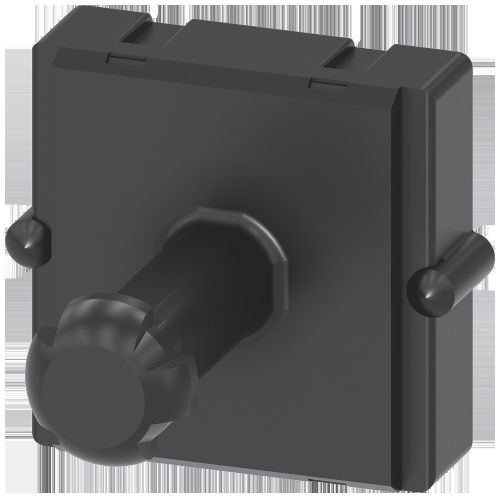
Siemens 3RV2926-0Q tolerance compensation for door coupling drive S00-S3
| Lieske Part No. | 833134 |
|---|---|
| Mfg Part No | 3RV29260Q |
| EAN-Code | 4047621080239 |
| Manufacturer | Siemens |
| Here only | 47,61 EUR
56,66 EUR incl. VAT
|
Further information for Siemens 3RV2926-0Q tolerance compensation for door coupling drive S00-S3
| General | |
| Manufacturer | Siemens |
| Product type | tolerance compensation |
| Compatibility | door coupling rotary drive, size S00 to S3 |
| System | SIRIUS system building block |
Applications
The tolerance compensation is designed for use in industrial drive systems, particularly in combination with door coupling rotary drives of sizes S00 to S3. These sizes cover a wide range of performance requirements, from smaller to medium-sized drives used in various production environments. The component is typically used in installations where a mechanical connection between the drive and the load (e.g., a door) is required, and where high accuracy and reliability of motion are necessary. Integration into the SIRIUS system enables standardized mounting and maintenance, simplifying servicing.
Functions and Equipment in Detail
The tolerance compensation allows adjustment for mechanical tolerances that may occur during the mounting of rotary drives and their connected components. These tolerances can result from different mounting conditions, thermal expansions, or mechanical deviations of the parts. By integrating the tolerance compensation, optimal alignment between the drive and coupling is ensured, extending the service life of the components and reducing the risk of damage due to uneven loading. The component is specifically designed for sizes S00 to S3, ensuring direct compatibility with the corresponding rotary drives.
Technology Explained Simply
The tolerance compensation operates mechanically and integrates into the coupling connection between the rotary drive and the driven component. It allows for small, controlled shifts or rotations to compensate for deviations in shaft position or angle. This function is particularly important when mounting cannot be done exactly parallel or centered, which is common in practice. The design provides the necessary freedom of movement without compromising mechanical stability or the transmission of rotational motion. Its use within the SIRIUS modular system ensures a standardized interface, enabling easy mounting and interchangeability.
Compatibility and Accessories
The tolerance compensation 3RV2926-0Q is specifically developed for rotary drives of sizes S00 to S3 with door coupling. It is part of the SIRIUS system and can therefore be combined with other components of this system to create a modular and adaptable drive solution. Compatibility is limited to the specified sizes; use with other sizes is not intended.
Mounting and Installation
Mounting takes place at the designated mounting points of rotary drives of sizes S00 to S3. The tolerance compensation is installed between the drive and the coupling, with the exact mounting instructions following the respective drive system. Installation does not require special tools or additional components, as the component integrates directly into the existing system. Mechanical adjustment is achieved through the built-in movement freedom of the tolerance compensation, ensuring precise alignment. Mounting is part of the standardized SIRIUS system, enabling quick and error-free installation.
Advantages in Operation
Using the tolerance compensation improves the reliability and service life of drive systems. By compensating for mounting tolerances, mechanical stress on the coupling and drive is reduced, extending maintenance intervals and lowering the likelihood of failure. Integration into the SIRIUS system enables modular expansion and interchangeability, simplifying maintenance and servicing. The standardized interface ensures consistent quality and compatibility within the system, facilitating planning and execution of plant projects. The function is passive and requires no additional power supply or control, enhancing operational safety.

This is an offer of:
79279 Vörstetten
https://industry-electronics.com
Tel. 07666/88499-0
Fax. 07666/88499-111
Diesen Artikel finden Sie unter:
industry-electronics.com/artikel/833134

Lieske Elektronik e.K.
Reutener Str. 1079279 Vörstetten
https://industry-electronics.com
Tel. 07666/88499-0
Fax. 07666/88499-111
Diesen Artikel finden Sie unter:
industry-electronics.com/artikel/833134