
Ses-Sterling 08010657010 Plio-Industriel 7,0mm roll black
Installation > Conduits / Cable Glands > Protection hose
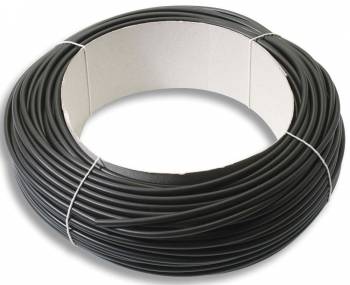
Ses-Sterling 08010657010 Plio-Industriel 7,0mm roll black
| Lieske Part No. | 1323854 |
|---|---|
| Mfg Part No | 08010657010 |
| EAN-Code | 3597470660621 |
| Manufacturer | Ses-Sterling |
| Here only | 15,12 EUR
17,99 EUR incl. VAT
|
Further information for Ses-Sterling 08010657010 Plio-Industriel 7,0mm roll black
| General | |
| Colour | Black |
Insulating sleeve is the central product type described here. It primarily serves mechanical and electrical insulation for cables and wiring. The colour black is standard for this item and meets common requirements in industrial installations, where clear optical differentiation of cables or adaptation to existing installations is necessary. The diameter specification of 7.0 mm refers to the inner diameter of the sleeve, designed to accommodate cables or wiring with a corresponding cross-section. This value is crucial for selecting the correct protective sleeve to ensure a secure and tight fit.
Applications include particularly electrical installation, automation technology, and the assembly of control and drive systems in industry. The sleeve is suitable for indoor use and can be employed in installations with moderate mechanical loads. It is not intended for extreme environments such as high temperatures, aggressive chemicals, or direct mechanical stress such as cable twisting or heavy abrasion. The operating temperature range, according to manufacturer specifications, is from -20 °C to +90 °C, enabling use in climatically moderate to slightly cold environments.
Functions and equipment in detail include mechanical protection against dust, moisture, and minor mechanical impacts. The sleeve is flexible and can be easily pulled over cables or wiring, enabling quick and efficient installation. The material composition is not explicitly stated, but the use as an insulating sleeve typically involves plastics such as polyolefin or similar thermoplastic materials that meet the specified temperature and flexibility requirements. The black colouring serves not only optical harmonisation but may also be UV-resistant, which is relevant for indoor use with light exposure.
Technology explained simply means that the sleeve acts as a covering that envelops cables or wiring, thus protecting them from external influences. The flexibility of the material allows for easy installation without damaging the cables. The insulation prevents electrical short circuits and provides additional protection against mechanical damage. The length of 25 metres per roll provides sufficient quantity for typical installations in small to medium-sized projects, with the packaging being compact and easy to handle.
Compatibility and accessories refers to use with cables and wiring whose outer diameter is up to 7.0 mm. The use does not require additional mounting aids, as the sleeve itself fulfils the protective function. Compatibility is therefore limited to geometric fit.
Installation and mounting is performed by simply sliding the sleeve over the cables or wiring to be protected. No special tools or mounting aids are required. The flexibility of the material allows for clean and quick processing, with the length of 25 metres per roll supporting efficient handling in practice. Installation typically occurs without additional fastening, as the sleeve remains on the cables due to its shape and material strength.
Operational advantages lie in easy handling, high flexibility, and reliable protective function. The sleeve provides durable insulation that can extend the service life of the cables contained within. The black colour supports optical integration into existing installations. Packaging in roll form facilitates transport and storage, with the quantity of 25 metres being sufficient for many standard applications. The temperature resistance from -20 °C to +90 °C enables broad application in various industrial environments.

This is an offer of:
79279 Vörstetten
https://industry-electronics.com
Tel. 07666/88499-0
Fax. 07666/88499-111
Diesen Artikel finden Sie unter:
industry-electronics.com/artikel/1323854

Lieske Elektronik e.K.
Reutener Str. 1079279 Vörstetten
https://industry-electronics.com
Tel. 07666/88499-0
Fax. 07666/88499-111
Diesen Artikel finden Sie unter:
industry-electronics.com/artikel/1323854