
Ses-Sterling 06360402000 CE-MT M16
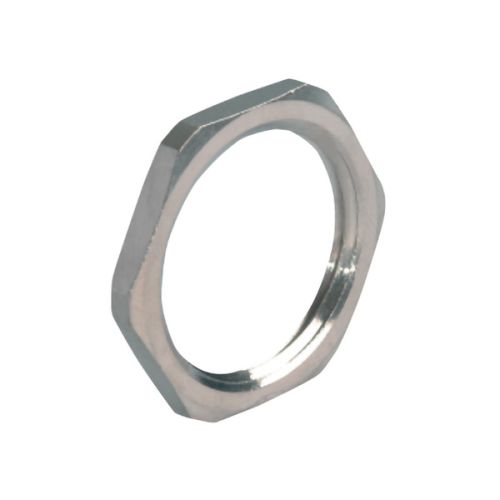
Ses-Sterling 06360402000 CE-MT M16
| Lieske Part No. | 808021 |
|---|---|
| Mfg Part No | 06360402000 |
| EAN-Code | 3597471294597 |
| Manufacturer | Ses-Sterling |
| Here only | 31,38 EUR
37,34 EUR incl. VAT
|
Further information for Ses-Sterling 06360402000 CE-MT M16
| General | |
| Colour | Minimum quantity |
Applications
The CE-MT M16 lock nut is primarily used in plants and devices where cable glands with an M16 thread are employed. This includes industrial electrical engineering, such as machine building, automation technology, and enclosure construction. The lock nut is used in combination with cable glands to ensure secure mechanical fastening and to protect the cable against mechanical stress and pulling out. The lock nut is not intended for direct use on cables or conductors, but serves exclusively as a fastening element for the gland.
Functions and Features in Detail
The lock nut is made of metal and enables the secure fastening of cable glands to enclosures or other mounting surfaces. It is screwed into the corresponding threaded hole, thereby fixing the cable gland against the enclosure. The shape and thread of the lock nut are designed to match the M16 standard, enabling universal use in systems with this thread format. The lock nut is not equipped with additional features such as seals, insulation, or electrical contacts, but serves purely as a mechanical fastening element.
Technology Explained Simply
The CE-MT M16 lock nut is a passive mechanical component that does not perform any electrical or electronic function. Its main purpose is to secure the cable gland against the mounting object, creating a stable and vibration-resistant connection. It is used in conjunction with a cable gland that is attached to a cable and is screwed into the corresponding threaded hole in the enclosure or wall. The lock nut prevents the gland from loosening or the cable from being pulled out of the gland.
Compatibility and Accessories
The CE-MT M16 lock nut is specifically designed for cable glands with an M16 thread. It is compatible with all cable glands that feature an M16 thread, regardless of the manufacturer, provided the thread geometry complies with standards. It is used in combination with a cable gland attached to a cable and is screwed into the corresponding threaded hole in the enclosure. There are no specific accessories supplied with the lock nut; it is a standalone component intended for integration into existing systems.
Installation and Mounting
The lock nut is mounted by inserting it into the threaded hole of the mounting object and then screwing it in using an appropriate tool, such as a screwdriver or wrench. The lock nut is tightened until the cable gland is fully pressed against the enclosure. It is essential to ensure that the threaded hole is clean and free from contaminants to guarantee a secure connection. The lock nut is not specified for use in damp or corrosive environments unless the materials used are specifically designed for such conditions. Mounting requires no additional tools or aids other than the necessary screwing tool.
Advantages in Operation
The CE-MT M16 lock nut provides reliable mechanical fastening for cable glands, protecting the connection against vibrations, mechanical stress, and cable pull-out. Its use in conjunction with cable glands enables simple and quick installation, and the lock nut is a standard component widely used in industrial applications. The packaging unit of 100 pieces allows for economical procurement for larger projects or series installations. The lock nut is not intended for use in electrical or electronic circuits, but serves exclusively for mechanical fastening.
Color and Finish
The lock nut is supplied in a packaging unit of 100 pieces, with each piece weighing 2.9 g. The total packaging weight is 0.29 kg. The lock nut is not equipped with additional features such as markings, color coding, or labeling beyond its functional purpose.

This is an offer of:
79279 Vörstetten
https://industry-electronics.com
Tel. 07666/88499-0
Fax. 07666/88499-111
Diesen Artikel finden Sie unter:
industry-electronics.com/artikel/808021

Lieske Elektronik e.K.
Reutener Str. 1079279 Vörstetten
https://industry-electronics.com
Tel. 07666/88499-0
Fax. 07666/88499-111
Diesen Artikel finden Sie unter:
industry-electronics.com/artikel/808021